Historic Overhaul: Centre Dissolves Panjab University’s 59-Year-Old Senate and Syndicate in Bid for Streamlined Governance
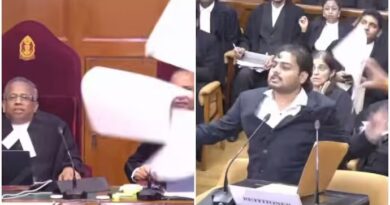
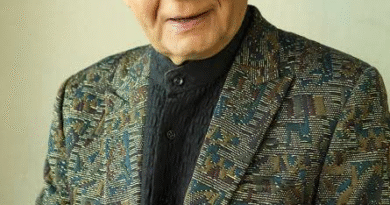
Congress MP Manish Tewari, who raised the issue in Parliament multiple times since December 2024, called it “a blatant assault on institutional autonomy
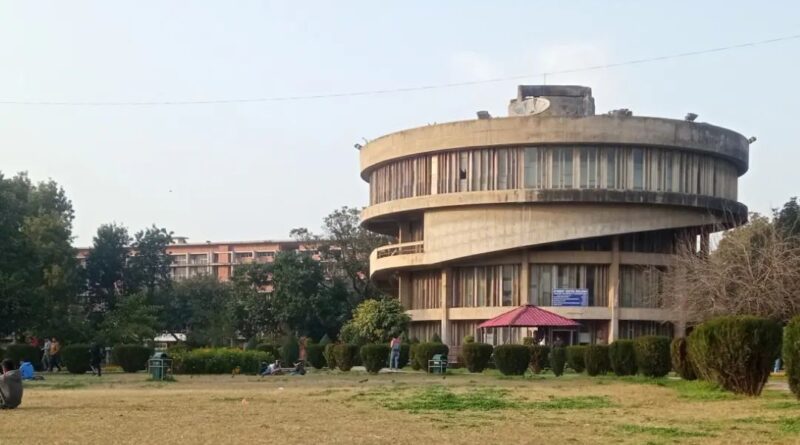
Chandigarh, November 1, 2025 – In a landmark move that has sent ripples through academic circles, the Union Government has dissolved the long-standing Senate and Syndicate of Panjab University (PU), fundamentally restructuring the institution’s governance framework after 59 years of continuity. The decision, notified under the Panjab University Act, 1947, marks the end of an era for what was once hailed as a beacon of democratic academic administration, replacing elected bodies with a predominantly nominated structure amid ongoing debates over efficiency and autonomy.
The dissolution comes exactly one year after the previous Senate’s term expired on October 31, 2024, a period that saw prolonged delays in elections, widespread protests, and growing concerns over central interference. For the past 12 months, PU has operated in a governance vacuum, relying on ad hoc committees and the Vice-Chancellor’s office for day-to-day decisions, a situation that faculty, students, and alumni described as “paralysing” and detrimental to the university’s federal character.
Under the new amendments, the Senate – PU’s apex academic body – has been drastically downsized from 90 members to just 31. Of these, 18 will be elected from a reduced pool of constituencies, including faculty and heads of affiliated institutions, while six will be nominated by the Chancellor (the Vice-President of India) and seven will serve ex-officio. Notably, the Graduate constituency, a hallmark of public representation since the university’s inception in 1882, has been abolished entirely, drawing sharp criticism for eroding democratic inclusivity.
The Syndicate, the executive arm previously composed of elected senators, has undergone an even more profound transformation: it is now a fully nominated body, chaired by the Vice-Chancellor and comprising 15 members in total. These include representatives from the Union Ministry of Education, state education departments, and rotational nominees from deans, professors, and principals. The changes stem from recommendations by a 2021 high-powered committee, chaired by former Vice-President M. Venkaiah Naidu, which argued for a leaner, more “professional” setup to curb delays and factionalism that have plagued recent Senate proceedings.
PU Vice-Chancellor Prof. Jagat Singh welcomed the reforms, stating in a campus address today: “This restructuring aligns with modern governance needs, ensuring swift decision-making while preserving academic excellence. The Senate will now focus on policy, free from electoral distractions.” However, the move has ignited a firestorm of opposition. Student unions, including the PU Students’ Union (PUSU), staged an impromptu protest outside the Vice-Chancellor’s office this morning, chanting slogans against “central overreach.” “This isn’t reform; it’s a death knell for PU’s soul,” said PUSU president Harpreet Singh, echoing sentiments from last year’s demonstrations that drew political heavyweights like Punjab Chief Minister Bhagwant Mann and SAD leader Bikram Singh Majithia.
Opposition leaders have been quick to condemn the dissolution. Congress MP Manish Tewari, who raised the issue in Parliament multiple times since December 2024, called it “a blatant assault on institutional autonomy,” warning that it paves the way for converting PU into a central university – a prospect long feared by Punjab stakeholders. In a statement, Tewari referenced a pending Punjab and Haryana High Court petition demanding elections, which argued that the delay violated the 1947 Act. Shiromani Akali Dal’s Majithia echoed this, urging Punjab’s Legislative Assembly to pass a resolution against the changes and labeling them an attempt to “destroy PU’s democratic setup.”
The backdrop to this upheaval traces back to the Senate’s term ending without fanfare in 2024, amid stalled election notifications from the Chancellor’s office. Protests erupted in November 2024, with students clashing with police during a campus visit by Mann, and faculty bodies filing lawsuits. Union Education Minister Dharmendra Pradhan’s August 2025 response to an MP’s query had vaguely assured action, but no timeline was provided. Earlier this year, Minister of State Sukanta Majumdar reiterated the Centre’s non-interference stance, placing responsibility on the university and Chancellor – a position now overshadowed by the sweeping notification.
Critics, including former Senate member and petitioner Dr. Harpreet Dua, argue that the reforms undermine a 2021 High Court ruling affirming PU’s elected governance model. “For five years, there’s been a systematic effort to hollow out our democratic engine,” Dua told reporters. Alumni groups and the Punjab government have voiced fears that the nominated-heavy system could sideline regional voices, given PU’s unique role as a teaching-cum-affiliating university serving over 300 colleges across Punjab, Haryana, and Chandigarh.
As PU navigates this transition, the immediate focus shifts to constituting the new bodies. Elections for the reduced Senate seats are slated for early 2026, with nominations to follow suit. University officials have promised consultations with stakeholders, but trust remains frayed. With the institution’s 143-year legacy at stake, the dissolution raises broader questions about the balance between reform and tradition in India’s higher education landscape. For now, Panjab University’s “democratic engine,” as one commentator put it, lies in pieces – its future assembly uncertain.