Supreme Court Orders Continuation of Traditional Udayasthamana Pooja at Guruvayur Temple
Faith and tradition must take precedence over administrative convenience, rules apex court
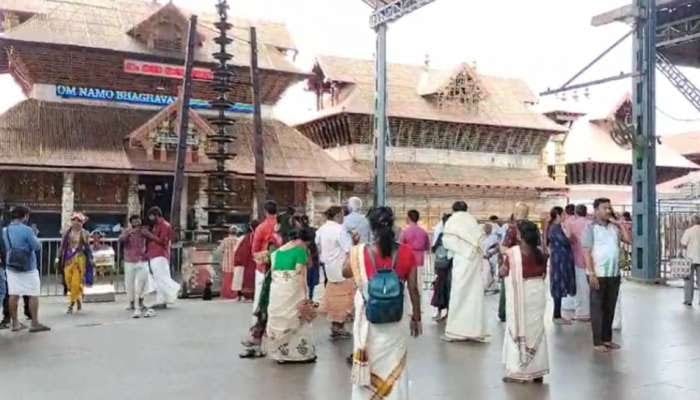
New Delhi, October 30, 2025 – The Supreme Court has directed that the Udayasthamana Pooja at the Guruvayur Sree Krishna Temple be performed on Vrishchikam Ekadasi (December 1, 2025) in accordance with age-old customs and traditions, ruling that rituals of religious significance cannot be discontinued merely on grounds of public inconvenience.
A bench comprising Justice J.K. Maheshwari and Justice Vijay Bishnoi observed that “the faith of the worshippers at large ought not to be put aside on the anvil of managerial and administrative concerns and must be given precedence and respect as far as possible.”
Background of the Dispute
The case arose after the Guruvayoor Devaswom Managing Committee, with the consent of the Thantri (head priest), decided to alter or discontinue the performance of the Udayasthamana Pooja on Vrishchikam Ekadasi, citing public inconvenience caused by the high inflow of devotees on the auspicious day.
According to the Committee’s affidavit, the pooja has been performed since 1972, though petitioners P.C. Hary and others contended it has been conducted since time immemorial. The decision to discontinue the ritual was taken after “ascertaining Devahitham” (welfare of the deity) in consultation with the Thantri.
Court’s Reasoning
The Supreme Court emphasized that any ritual performed as part of long-standing tradition at a place of worship, which has assumed religious significance, “ought not be unsettled on the apprehension that there would be potential public inconvenience.”
The bench noted that the Guruvayur temple has “a rich religious historical background and a large number of devotees depose their faith in the deity.” It observed that the temple’s long-run customs, practices and rituals, “if affected, might run scramble through the sentiments of the devotees/people.”
The court stated that the performance of pooja by Acharyas is conducted for “enhancing the divinity of deity,” and on special occasions such as Vrishchikam Ekadasi, inconvenience to the public cannot be grounds to discontinue or alter rituals.
Interim Directions
As an interim measure, subject to the final outcome of the appeal, the court directed that the Udayasthamana Pooja shall be continued in the manner it was being performed as per temple tradition on Vrishchikam Ekadasi without any change.
The court also noted that if the Thantri believes the Udayasthamana Pooja should also be performed on November 2, 2025, as stated in the counter affidavit, he may do so.
Previous Hearing
The matter had come up for hearing on December 11, 2024, which was also the date of Vrishchikam Ekadasi last year. Since the time for the pooja had already passed by the time the case came up for hearing, the court had only directed that the chart of daily poojas on the temple website should not be changed or deleted until the next date of listing.
The case has now been scheduled for final hearing in March 2026, with parties directed to complete their pleadings within eight weeks.
Legal Representation
Senior advocates C.S. Vaidyanathan, Guru Krishna Kumar, and K. Parameshwar appeared for the petitioners, while senior advocates Rakesh Dwivedi, C. Aryamasundaram, and V. Giri represented various respondents including the temple management and the Thantri.
The ruling underscores the judiciary’s approach to balancing religious traditions with administrative considerations, clearly prioritizing the preservation of long-standing rituals that hold deep religious significance for devotees.