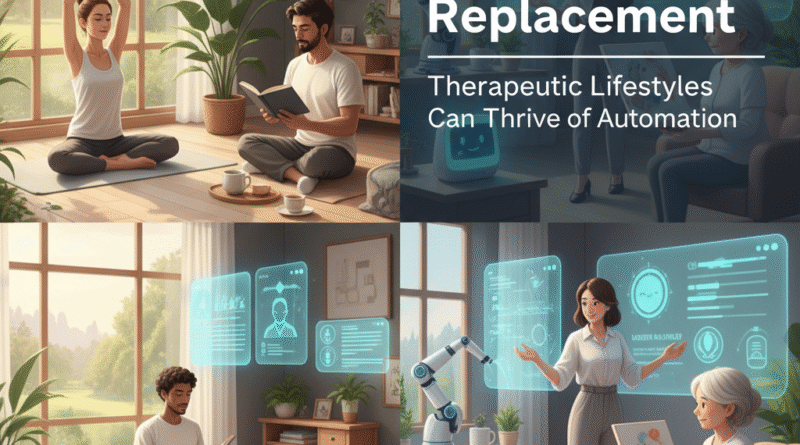
AI as a Partner, Not a Replacement: How Therapeutic Lifestyles Can Thrive in the Age of Automation
Rethinking work culture in the AI era—where automation frees us for rest, creativity, and human connection
Nikita Joshi
In most conversations about artificial intelligence, one narrative dominates: AI will take our jobs and leave humans obsolete. But this limited lens obscures a far more empowering truth. AI, when approached as a tool rather than a threat, has the power to transform not only how we work but how we live and care for our bodies. A healthier work culture in the age of automation requires something radical—a shift in mindset from both employees and employers, where AI becomes a collaborator that supports human growth, well-being, and purpose.
Rethinking the Future: Shared Responsibility Between Employers and Employees
The burden of “adapt or perish” has long been placed on employees. But sustainable AI integration begins from the top. Employers must redefine workplace culture to ensure that AI enhances human life rather than eroding it. Automation should reduce meaningless tasks, not human value. With AI handling repetitive or high-volume work, managers can focus on distinctly human strengths such as empathy, oversight, ethics, and mentorship. To truly build an AI-enabled future, companies must ask: Are we using AI to free people for meaningful work? Are we prioritizing well-being alongside productivity? Are human managers still guiding the ethical use of AI? A humane workplace begins with leaders who treat AI as a support system, not a substitute for human judgment.
Therapeutic Lifestyle Practices for an AI-Enabled Workplace
Here’s how employees and employers can create a work environment where health, rest, and human potential thrive.
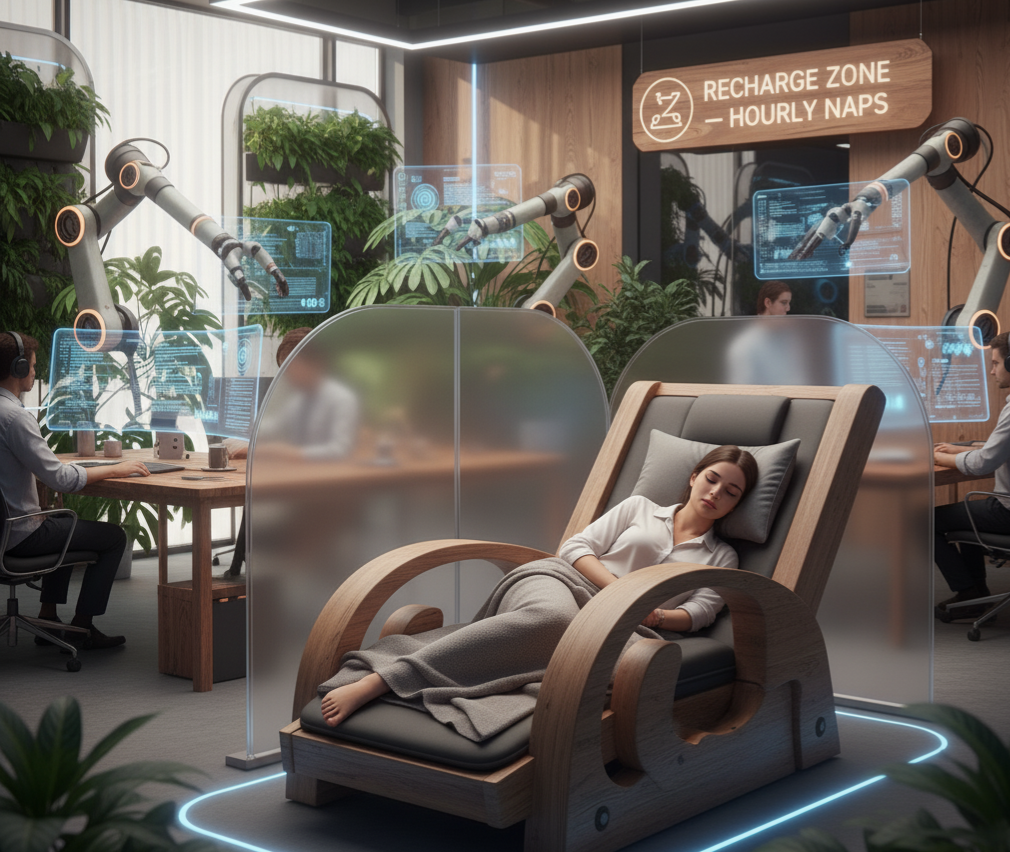
Midday Naps—A Science-Backed Productivity Boost
Short, strategic naps are no longer a luxury; they’re a bio-efficient performance enhancer. Research shows that a twenty- to thirty-minute nap improves alertness, learning, and emotional regulation. Real-world workplace trials demonstrate a two to three percent rise in productivity among employees who nap. Corporations worldwide are adding nap rooms as part of wellness culture. AI reduces cognitive load, and naps recharge the human system. Together, they create a sharper, calmer, more resilient workforce.
Hybrid and Flexible Work Powered by AI
Flexible work is no longer an optional perk; it’s a health requirement. Studies show hybrid work reduces stress, improves sleep, increases productivity, and enhances life satisfaction. With AI automating documentation, scheduling, and reporting, employees gain more autonomy over when and where they work.
Mindful Breaks and Rest Cycles
AI can help reduce workload, but it cannot protect our health unless we make space for rest. Employees should incorporate natural micro-breaks that sync with AI workflows, such as stretching while an output loads, deep breathing between tasks, eye breaks every twenty minutes, and stepping away after long prompting sessions. Well-being is a skill, and AI gives us the time to practice it.
Upskilling for Human-Strength Roles
As AI takes over repetitive processing, humans can focus on what machines lack: creativity, empathy, decision-making, leadership, innovation, and emotional intelligence. Organizations must invest in training that supports these “human-power skills.” We’re not becoming less relevant; we’re evolving.
Cultivating Human Connection in an Automated World
Ironically, as work becomes more automated, human connection becomes even more vital. Companies should prioritize team reflections, weekly check-ins, mentorship circles, and community building. These are the experiences AI cannot replicate and the ones that protect mental health.
Why Human Oversight Still Matters: Consciousness and the Hard Problem
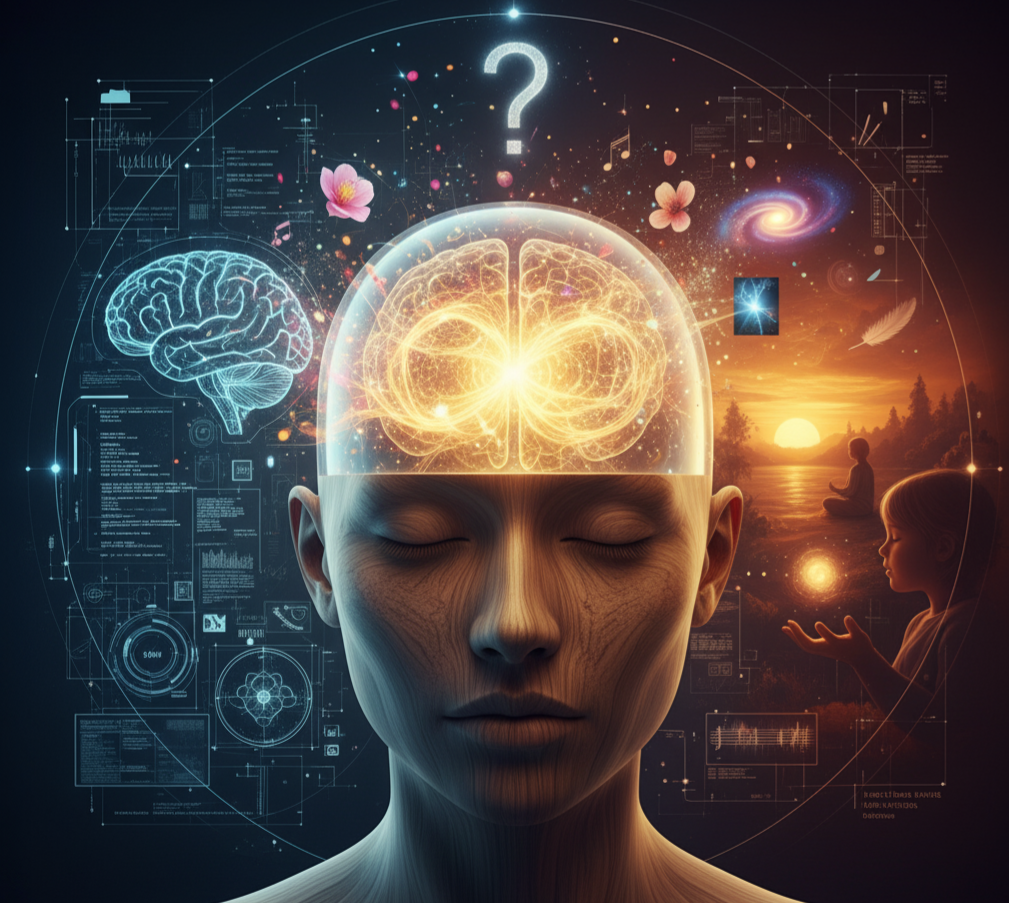
AI can learn patterns, process data, and generate language—but it cannot experience the world. This is tied to what philosophers call the hard problem of consciousness: Why does the brain’s physical activity produce awareness, emotions, or subjective experience? No AI system today has consciousness, self-awareness, lived experience, or ethical intuition. This gap is the very reason humans must remain in the loop. Human oversight ensures moral decision-making, contextual judgment, empathy-based leadership, mental health protection, and collaborative alignment. AI may be intelligent, but only humans can be responsible. Moreover, over-reliance on AI carries risks. Studies suggest that heavy dependence on automated tools can isolate employees, reduce collaboration, and harm mental health.
Challenges to Expect—and How to Navigate Them
Every transformation faces friction. Some teams may resist naps and rest policies. Not all roles easily shift to hybrid work. AI skills training requires time and funding. Ethical questions around AI responsibility will grow. But thoughtful design and leadership can make the transition smooth and equitable.
Conclusion: A Balanced, Human-Centered Future
AI is not a threat to humanity; it is a tool, much like our own minds. Used intentionally, it frees us from overwork, stress, and exhaustion. The goal of the AI era should not be more output; it should be more life. AI, at its core, is just a tool, no different from the human mind itself. A tool can heal or harm, elevate or destroy, depending entirely on the hands and intention that guide it.
The real question is not what AI will do to us, but what we choose to do with the freedom it creates. Do we use it to value our own species, to build workplaces where compassion comes before profit? Or do we repeat the oldest human mistake, treating those with less power as disposable?
The future will not be shaped by algorithms, but by the consciousness behind them. AI reflects our choices: the humanity we protect, or the humanity we abandon. The outcome is in our hands—always has been, always will be.