
G20 2025: When Sustainability Promises Meet Survival Realities
The Johannesburg Summit spoke of solidarity and equality—but without clean air, water, and health, who are these pledges really for?
By Nikita Joshi
The 2025 G20 Summit in Johannesburg came wrapped in a powerful theme: “Solidarity, Equality, Sustainability.” Leaders from the world’s largest economies stood together once again, speaking of shared responsibilities, global unity, and a future where people and planet coexist in balance. But beyond the grand speeches and carefully drafted declarations lies an uncomfortable truth: sustainability has no meaning unless it protects the most fundamental unit of all progress—human life.
If people continue to breathe toxic air, drink contaminated water, and suffer increasing disease burdens from climate change, then who are these promises really meant for? This year’s G20 has reignited this question louder than ever.
G20 2025: Goals and Aspirations
The Johannesburg presidency centered on three pillars: Solidarity, Equality, and Sustainability. The summit concluded with renewed pledges for climate financing, just energy transitions, global health collaboration, and digital equity. Leaders agreed on the urgency of reducing global emissions, investing in climate-resilient infrastructure, and prioritizing public health as a pillar of sustainable development.
But the gap between signing a statement and delivering change on the ground remains large—and growing.

India: Progress, Promises, and the Reality on the Ground
India plays a major role in global sustainability conversations. Through missions like Swachh Bharat, the National Clean Air Programme, Namami Gange, renewable energy expansion, and a commitment to Net Zero by 2070, the country has demonstrated intent.
But the lived reality for millions of Indians continues to contradict the narrative of sustainability and equality.
Air Pollution: Our First and Biggest Health Emergency
Cities like Delhi still face hazardous winter smog where the Air Quality Index crosses 500+, directly increasing rates of asthma and bronchitis, lung cancer risk, cardiac problems, and mental health issues due to chronic stress and inflammation.
If clean air—the most basic need for survival—is out of reach, how can we speak confidently about progress?
Water and Rivers: A Battle Still Unwon
The Yamuna remains frothy, toxic, and suffocated by industrial waste and sewage despite years of promises. Clean rivers are not an environmental luxury; they are a public health necessity, affecting waterborne diseases, sanitation, food safety, and entire ecosystems.
Land and Waste: Mountains of Garbage
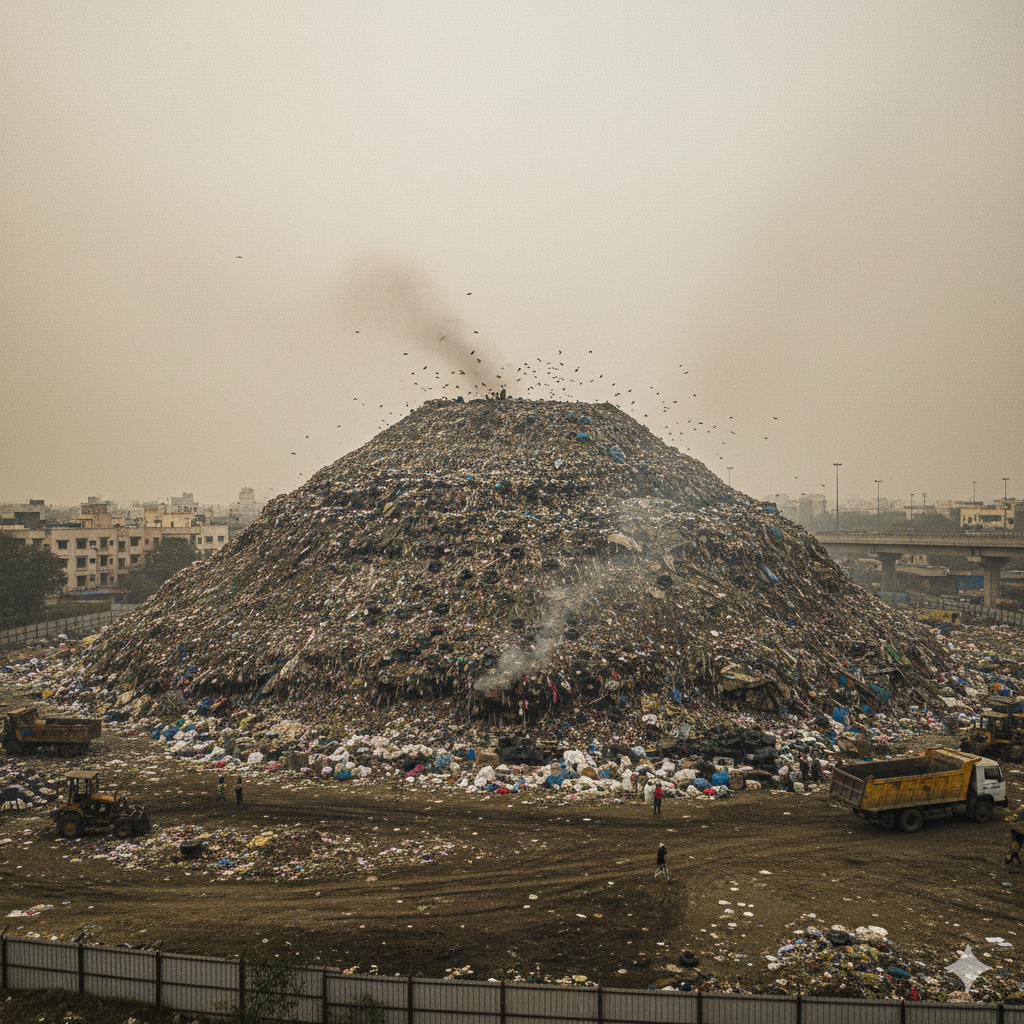
The garbage hills of Delhi—Ghazipur, Bhalswa, and Okhla—still stand like monuments to broken systems. Their toxic fires release chemicals that harm lungs, immunity, and neurological health.
Inequality: The Missing Link in Sustainability
From drought-hit farming communities to urban slums lacking safe drinking water to rural areas without primary healthcare, the gaps within India highlight why sustainability must be people-centric, not policy-centric.
Health Matters: Sustainability Has No Meaning Without Human Life
Every conversation on sustainability must start with a simple question: If the health of citizens is collapsing, what are we sustaining?
Climate change and environmental degradation are no longer abstract issues—they are health emergencies.
- Heatwaves are causing more deaths
- Air pollution is reducing life expectancy
- Contaminated water increases infections
- Mental health is deteriorating due to ecological stress and climate anxiety
If humans themselves are weakened—physically, mentally, or emotionally—then development, economy, innovation, and global leadership cannot stand strong.
Sustainability equals human survival, not just environmental preservation.
History Repeating Itself: Are We Stuck in a Loop of Promises?
Since its formation, the G20 has repeatedly highlighted sustainability, climate resilience, public health security, and inclusive growth. Whether it was the push for net-zero commitments, promises to reduce fossil fuel dependency, or calls to fortify health systems after COVID-19, the declarations have been consistent.
What’s inconsistent is execution.
Every year, leaders gather, discuss, negotiate, promise—and then return home to domestic challenges, political pressures, budget limitations, and shifting priorities. The world is not short of plans. It is short of action.
G20 Needs Evidence, Not Just Eloquence
The world will not become sustainable because leaders talk about it. It will become sustainable when leaders are required to prove what they have done, not what they intend to do.
Imagine a model where each G20 nation must:
- Show yearly evidence of measurable change
- Demonstrate reductions in pollution
- Present improvements in public health indicators
- Report progress on renewable energy, waste management, and clean water access
This kind of accountability would not only inspire nations—it would push them. Until action becomes mandatory and measurable, sustainability will remain a beautifully worded dream.
Because in the end, the planet doesn’t need promises. It needs results.