Karnataka Political Crisis Explained: Power Struggle Between Siddaramaiah and DK Shivakumar
Congress government completes halfway mark amid leadership tensions over alleged power-sharing deal and cabinet reshuffle demands
Karnataka’s Congress government finds itself embroiled in a political crisis as Chief Minister Siddaramaiah and Deputy Chief Minister DK Shivakumar navigate a high-stakes power struggle that has drawn intervention from the party’s central leadership.
The Core Dispute
The tension centers on a rumored power-sharing agreement from 2023 when both leaders vied for the chief minister’s position after Congress swept the state polls. Shivakumar’s camp is pressing for a promised chief ministerial rotation after the government completed 2.5 years, while Siddaramaiah asserts he will complete his full five-year term.
Reports suggest a compromise was reached based on a rotational chief minister formula, according to which Shivakumar would become CM after 2.5 years, though this has not been officially confirmed by the party. Siddaramaiah’s camp disputes the existence of any such agreement.
Recent Developments
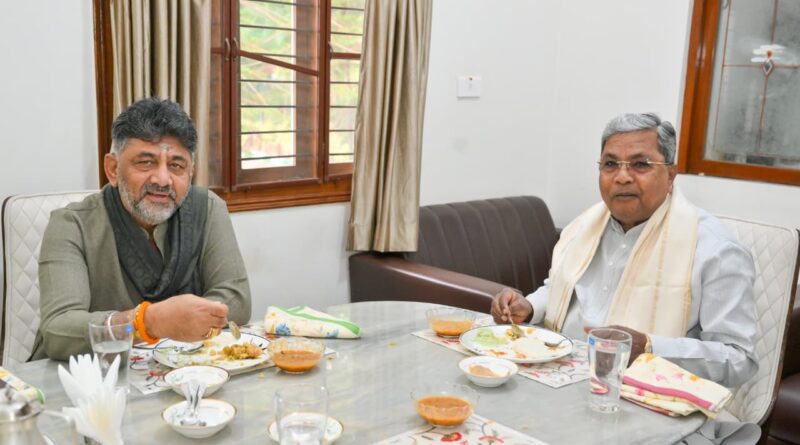
The situation escalated when Congress government completed its half-term on November 20, and party leadership intervened after prolonged power tensions in Karnataka. Congress President Mallikarjun Kharge asked both leaders to meet Saturday morning over breakfast to discuss ways to resolve the ongoing dispute.
The breakfast meeting took place at the chief minister’s official residence, with both leaders maintaining their stance that they will accept whatever decision the party high command makes.
Prior to this meeting, the two leaders engaged in a public exchange through social media posts. Shivakumar wrote “word power is world power,” which is seen as a reminder about the rumored power-sharing agreement, while Siddaramaiah responded that “a word is not power unless it betters the world for the people”.
Cabinet Reshuffle vs Leadership Change
Sources indicate that between eight and twelve ministers are likely to be removed from the cabinet, intensifying anxiety within the ruling party. The situation has created two competing demands: Siddaramaiah favors a cabinet reshuffle while Shivakumar is not ready to accept a reshuffle, wanting instead a change of guard as per the reported power-sharing agreement.
Political analysts suggest the reshuffle is designed to consolidate Siddaramaiah’s influence in the government by inducting loyalists and sidelining certain ministers. A cabinet reshuffle approved by the high command would effectively signal Siddaramaiah completing the full five-year term, sidelining Shivakumar’s chances of taking over.
Public Support and Electoral Impact
Recent polling data reveals challenges for the Congress government. Satisfaction with the government’s performance dropped from 30.3 percent in January 2024 to 26.9 percent currently, while dissatisfaction rose from 39 percent to 42 percent by November 2025.
When asked who should lead Karnataka, a majority across social groups preferred a BJP or NDA chief minister, indicating increasing disenchantment with Congress. However, Siddaramaiah remains Congress’s most preferred face within the party among its supporters.
What Happens Next?
Congress President Mallikarjun Kharge confirmed a decision will be made after discussions involving Rahul Gandhi and other central leaders, with both leaders agreeing to attend a crucial meeting in Delhi if summoned.
Analysts suggest Siddaramaiah could voluntarily step down after January 15, when he becomes the longest-serving chief minister of Karnataka, potentially paving the way for a negotiated transition. Others believe the process may be delayed until after the state budget.
The Congress high command faces the delicate task of managing egos, electoral bases, and party cohesion while avoiding destabilization of the state government. The party’s central leadership must weigh multiple factors including electoral strategy, caste equations, and organizational loyalty.
The Stakes
Karnataka remains of paramount importance to Congress, as the state’s decisive 2023 verdict restored power to the party after BJP’s 2018 maneuver that brought down the previous coalition government through defections. How the party manages the delicate balance between Siddaramaiah’s mass appeal and Shivakumar’s organizational strength will be critical as the countdown begins for the 2028 Assembly elections.
The resolution of this crisis will not only determine Karnataka’s immediate political future but also set precedents for power-sharing arrangements within the Congress party across other states.