Iran Protests Turn Deadly: 217 Deaths Reported as Military Issues Stark Warning
Army warns parents to keep children away from demonstrations amid escalating violence over inflation crisis; international concern grows over crackdown
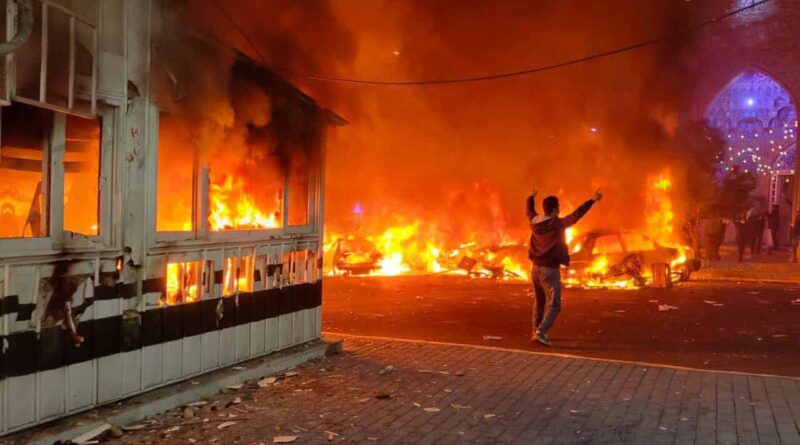
TEHRAN — Violent protests across Iran have reportedly claimed at least 217 lives, according to opposition groups and human rights organizations, as widespread demonstrations against the country’s inflation crisis and economic hardships continue to escalate.
The unrest has prompted a chilling warning from Iranian military authorities, who cautioned parents to keep children away from protest sites, stating that the military would not be held responsible if minors are injured or killed during security operations.
Military’s Controversial Warning
In an unprecedented statement that has drawn international condemnation, Iranian military officials issued a stark message to citizens: “Keep your children away from the protests. Do not complain if they get shot.”
The warning underscores the increasingly confrontational stance adopted by Iranian security forces as they attempt to suppress demonstrations that have spread across multiple cities and provinces.
Human rights advocates have condemned the statement as a tacit threat against civilians and an abdication of responsibility for protecting non-combatants, including minors.
Mounting Death Toll
While official government figures remain significantly lower, opposition groups and international human rights organizations claim that at least 217 people have been killed in the protests, with thousands more injured and detained.
The disputed death toll reflects the information vacuum surrounding events in Iran, where internet shutdowns and restrictions on independent journalism have made it difficult to verify casualty figures independently.
Eyewitness accounts and videos shared on social media platforms depict scenes of security forces using live ammunition, tear gas, and violent dispersal tactics against demonstrators.
Economic Crisis Fuels Unrest
The protests were initially triggered by Iran’s spiraling inflation crisis, which has devastated household budgets and eroded living standards for millions of ordinary Iranians. The country has faced economic pressures from international sanctions, mismanagement, and regional instability.
Food prices have skyrocketed, currency values have plummeted, and unemployment remains stubbornly high, creating a perfect storm of economic discontent that has translated into street protests.
“People cannot afford basic necessities anymore,” said one protester in a video circulated online. “We have no choice but to demand change.”
Nationwide Demonstrations
Reports indicate that protests have erupted in Tehran, Isfahan, Shiraz, Mashhad, and numerous smaller cities across Iran. The demonstrations have brought together diverse segments of Iranian society, including students, workers, merchants, and middle-class citizens.
What began as economic protests have, in some locations, evolved into broader calls for political change and greater civil liberties, echoing previous waves of unrest in the Islamic Republic.
Government Response
Iranian authorities have characterized the protests as foreign-instigated riots and have accused external powers of fomenting unrest to destabilize the country. State media has downplayed both the scale of demonstrations and casualty figures.
Security forces, including the Revolutionary Guards and paramilitary Basij units, have been deployed in major cities. Internet connectivity has been severely disrupted in affected areas, limiting the flow of information out of the country.
The government has announced some economic relief measures, including subsidies and price controls, but protesters argue these steps are insufficient to address systemic economic problems.
International Reaction
The international community has expressed growing concern over the violent suppression of protests and the mounting death toll. Human rights organizations have called for independent investigations into the use of lethal force against demonstrators.
Several Western governments have condemned the crackdown and called on Iranian authorities to respect the rights of peaceful protesters and exercise restraint in security operations.
The United Nations High Commissioner for Human Rights has urged Iran to allow independent monitors access to assess the situation and investigate alleged human rights violations.
Information Blackout Challenges
Verifying information from Iran remains extremely challenging due to government-imposed internet restrictions and limitations on independent journalism. Social media platforms have become crucial channels for information, though the authenticity and accuracy of all reports cannot be independently confirmed.
International journalists have been denied access to protest sites, and domestic reporters face severe restrictions and potential reprisals for covering demonstrations.
Historical Context
Iran has experienced several waves of significant protests in recent years, including demonstrations in 2009, 2017-2018, and 2019. Each episode has been met with varying degrees of force by security services.
The current unrest appears to be among the most sustained and geographically widespread, reflecting deep-seated frustrations with economic conditions and governance.
Uncertain Path Forward
As the situation continues to evolve, observers are watching closely to see whether the protests will sustain momentum or whether the government’s security response will succeed in suppressing dissent.
The economic pressures driving the protests show no signs of abating, suggesting that underlying tensions will persist regardless of the immediate outcome of current demonstrations.
The military’s warning about children in protests has added a particularly disturbing dimension to the crisis, raising fears of further casualties and intensified crackdowns.
International pressure and domestic discontent appear to be placing Iranian authorities in an increasingly difficult position, though the government has historically shown willingness to use significant force to maintain control.