Major Relief for Chhagan Bhujbal: Mumbai Court Discharges NCP Minister in ED’s Maharashtra Sadan Money Laundering Case
After nearly a decade of legal battles, special PMLA court clears Bhujbal and 24 others citing lack of evidence in alleged Rs 800 crore scam case
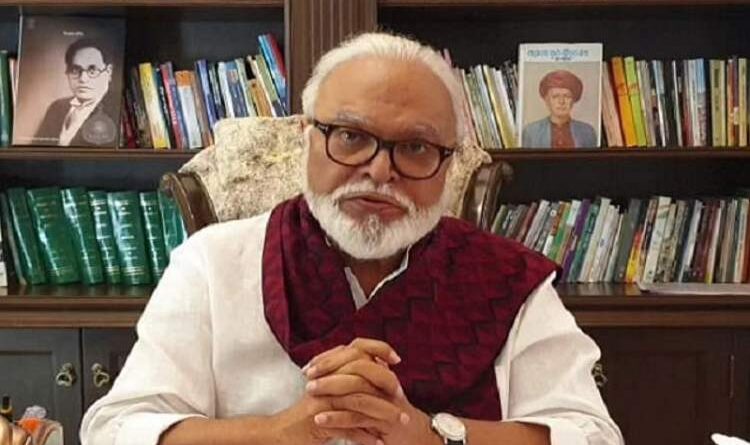
MUMBAI, JANUARY 23, 2026 — In a significant legal victory, a special court in Mumbai on Friday discharged Maharashtra’s Food and Civil Supplies Minister and Nationalist Congress Party (NCP) leader Chhagan Bhujbal in a money laundering case linked to the controversial Maharashtra Sadan construction project in New Delhi.
The discharge, granted by the special Prevention of Money Laundering Act (PMLA) judge, brings an end to a nearly decade-long investigation by the Enforcement Directorate that had once threatened to derail the political career of the 73-year-old veteran OBC leader and former Deputy Chief Minister of Maharashtra.
Court Clears 25 Accused in ED Case
The Mumbai special court discharged approximately 25 accused persons, including Bhujbal, in the PMLA case, citing the discharge of accused in the Anti-Corruption Bureau case as a key factor. The court’s decision follows a pattern established in September 2021, when Bhujbal, his son Pankaj, nephew Sameer, and five others were discharged by a special ACB court in the underlying corruption case.
“Truth Can Be Troubled, But Not Defeated”
In his first reaction after being discharged, Bhujbal said, “Satya pareshan ho sakta hain, lekin parajit nahi (The truth can be troubled, but not defeated).” The minister appeared relieved but measured in his response to the court’s decision.
The Allegations: A Rs 800 Crore Scam
The case stemmed from a 2005-2006 contract period when Bhujbal served as the state Public Works Department minister, with the ED accusing him of granting construction contracts to K S Chamankar in exchange for kickbacks. The allegations centered on three major projects: the construction of Maharashtra Sadan in Delhi, a new Regional Transport Office building in Andheri, and a state guest house in Malabar Hill.
According to the Enforcement Directorate’s chargesheet, Bhujbal and his family members allegedly received kickbacks amounting to approximately Rs 13.5 crore from contractors who earned profits of around Rs 190 crore from the construction work. The ED claimed that the total proceeds of crime in the money laundering case amounted to nearly Rs 800 crore.
The prosecution alleged that the construction contract was awarded to Chamankar Developers without following proper tender procedures, and that the contractor further sub-contracted the work to what the investigating agencies claimed were benami firms connected to the Bhujbal family.
A Decade-Long Legal Battle
The Maharashtra Sadan case has been a political and legal rollercoaster spanning over a decade. The controversy began in July 2012, when BJP leaders Devendra Fadnavis and Kirit Somaiya filed a complaint with the Anti-Corruption Bureau alleging graft in the awarding of the Maharashtra Sadan construction contract.
However, the case gained momentum only after the BJP-led government came to power in Maharashtra in 2014. In December 2014, then Chief Minister Fadnavis gave clearance to the ACB to probe Bhujbal in the Maharashtra Sadan case. The Bombay High Court subsequently ordered a special investigation team to probe the allegations based on a PIL filed by activist Anjali Damania.
In 2015, the ACB registered an FIR against Bhujbal and filed a chargesheet the following year. The Enforcement Directorate then filed a separate case under the Prevention of Money Laundering Act based on the ACB’s findings.
Arrest and Imprisonment
In March 2016, the Enforcement Directorate arrested Bhujbal after 10 hours of interrogation at its Mumbai office, while the budget session of the state legislative assembly was underway. The arrest shocked Maharashtra’s political circles, as Bhujbal was a prominent cabinet minister known for his flamboyant lifestyle and designer accessories.
Bhujbal spent two years in Mumbai’s Arthur Road jail before the Bombay High Court granted him bail in May 2018. His lawyers had argued that he had already spent significant time in custody while the maximum punishment for the sections he was charged under was seven years.
Recent Legal Developments
The discharge comes just days after another legal victory for Bhujbal. On January 21, 2026, the Supreme Court dismissed the Enforcement Directorate’s plea seeking cancellation of the bail granted to Bhujbal and his nephew Sameer in 2018. The apex court noted that the bail had been granted way back in 2018 and found no grounds for interference at this stage.
In September 2021, the special ACB court had discharged Bhujbal and seven others in the corruption case, finding no prima facie evidence of conspiracy or illegal monetary transactions. The court accepted Bhujbal’s defense that decisions on awarding contracts were taken collectively by a cabinet sub-committee chaired by the then Chief Minister Vilasrao Deshmukh, not by him alone.
Defense Arguments Accepted
Throughout the legal proceedings, Bhujbal’s legal team, led by counsel Prasad Dhakephalkar along with advocates Sajal Yadava and Sudarshan Khawase, argued that all allegations were false and based on wrong calculations, assumptions, and presumptions. They contended that despite the voluminous chargesheet running into thousands of pages filed in 2016, there was insufficient evidence to proceed to trial.
The defense maintained that Bhujbal, as PWD minister, did not act unilaterally in awarding the contracts, and that the decision-making process involved multiple stakeholders and approval from cabinet committees. They also argued that there was no concrete evidence linking Bhujbal to any kickbacks or illegal monetary transactions.
Political Implications
The discharge comes at a politically significant time for Bhujbal, who currently serves as a minister in the Maharashtra government. After the split in the NCP, Bhujbal joined the Ajit Pawar faction and became part of the ruling coalition with the BJP and Shiv Sena. He continues to represent the Yeola constituency in Nashik district, which he has won for four consecutive terms.
Bhujbal is the founder-president of the Mahatma Phule Samata Parishad and is considered one of the most prominent OBC leaders in Maharashtra politics. He has been one of the oldest associates of NCP supremo Sharad Pawar, though he is currently aligned with the Ajit Pawar camp.
Other Cases Continue
While the ED’s money laundering case has been closed with Friday’s discharge, legal challenges may not be entirely over for Bhujbal. He reportedly still faces proceedings related to alleged irregularities in the construction of a library at the University of Mumbai’s Kalina campus, which was also part of the original investigation.
The Income Tax Department has also been separately examining alleged income discrepancies related to the case. In December 2021, the Bombay High Court had dismissed Bhujbal’s challenge to a show-cause notice issued by the IT Department regarding income allegedly escaping assessment for the financial year 2012-13.
A Case That Changed with Governments
The Maharashtra Sadan case has been seen by political observers as one that evolved with changing political fortunes in the state. What began as allegations by opposition BJP leaders against a Congress-NCP minister saw rapid progress only after the BJP came to power in 2014.
The case also intersected with other high-profile corruption cases in Maharashtra politics, including the irrigation scam involving other NCP leaders. Over the years, various accused in different cases received relief as political equations changed in the state.
Conclusion
Friday’s discharge marks a significant chapter closure in what has been one of Maharashtra’s most prominent corruption cases of the past decade. For Chhagan Bhujbal, it represents vindication after years of legal battles, imprisonment, and political uncertainty. However, the case also highlights the complex interplay between politics, law enforcement, and the judicial process in India’s largest state.
As Bhujbal resumes his ministerial duties without the shadow of the money laundering case, the discharge raises broader questions about investigation procedures, evidence standards, and the treatment of high-profile political figures in corruption cases.