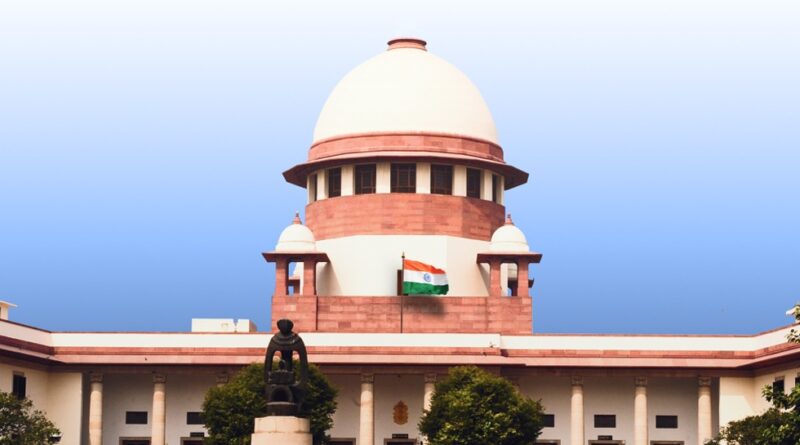
Accused Cannot Be Said To Be Delaying Trial By Legally Challenging Trial Court Orders : Supreme Court
Apex court clarifies that accused persons have procedural rights to challenge cognizance orders without being accused of delaying justice
NEW DELHI, February 3, 2026 – The Supreme Court of India has reinforced the fundamental principle that an accused person cannot be deemed to be delaying trial proceedings merely by exercising their legal right to challenge orders passed by trial courts.
A bench led by Chief Justice of India Surya Kant, along with Justice Joymalya Bagchi and Justice Vipul Pancholi, made these observations while hearing a petition filed by former Chhattisgarh Excise Minister Kawasi Lakhma in connection with the state’s liquor scam case.
The court was considering granting interim bail to Lakhma, who had been in custody for over a year, when the Enforcement Directorate, represented by Additional Solicitor General SV Raju, argued that the delay in trial commencement was attributable to the accused challenging the cognizance order.
Justice Bagchi firmly rejected this contention, stating that challenging a cognizance order cannot be treated as causing delay. “Someone having a procedural right has every justification to challenge the order,” the judge observed.
The bench further questioned whether the act of a court setting aside a cognizance order on procedural grounds could be used as a basis to deny an accused’s right to speedy trial. When the ASG suggested the High Court had erred in quashing the cognizance order without considering Section 460 of the Criminal Procedure Code, Justice Bagchi pointed out that the Enforcement Directorate had not challenged that order.
“We cannot hear you in collateral proceedings a challenge against the High Court order when you did not take steps to challenge it. You cannot be heard to say that the High Court’s order is the reason for the delay,” Justice Bagchi remarked.
The court also clarified that while Section 436A of the CrPC sets an outer limit for bail consideration when an undertrial has served half the maximum sentence, constitutional courts retain the authority to grant bail regardless of this threshold.
Ultimately, the Supreme Court granted interim bail to Lakhma, subject to various conditions, affirming that one year of custody for a money laundering offence carrying a maximum sentence of seven years warranted relief.
This ruling reinforces the judiciary’s commitment to protecting procedural rights while balancing the interests of justice and the constitutional guarantee of speedy trial.