The Storm Returns: How the World Is Bracing for Round Two of the Iran War
Ishita Hota
A nuclear standoff, a shattered ceasefire, and an American blockade are pushing the Middle East toward the point of no return.
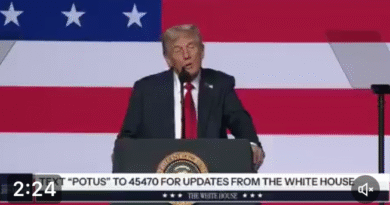
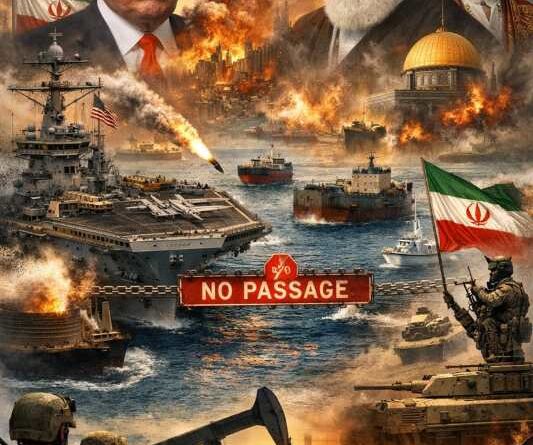
When President Donald Trump declared a blockade of the Strait of Hormuz — announcing that no ship would be permitted to pass — and U.S. Navy vessels took up positions across the mouth of the Persian Gulf on Monday afternoon, sealing Iranian ports from global commerce, it was not merely a military manoeuvre. For the United States, Israel, and Iran alike, it marked the beginning of a second, potentially more dangerous phase: an economic siege layered atop a nuclear standoff and a diplomatic crisis that the world’s institutions appear powerless to resolve.
The blockade came into effect at 14:00 GMT, just hours after long-awaited peace talks between Iran and the United States collapsed in Islamabad. The negotiations ran for more than twenty hours, ending without agreement. Oil prices surged past $100 a barrel and Asian markets fell sharply as traders absorbed the implications of a prolonged closure of the Strait of Hormuz — the narrow waterway through which roughly one-fifth of the world’s daily oil supply normally passes.
The Nuclear Gap That Broke the Talks
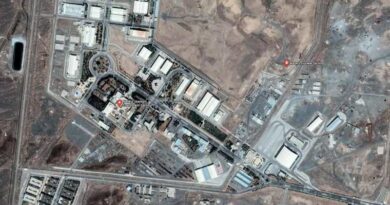
Iran’s nuclear programme emerged as the red line for both sides and was the principal reason the diplomatic talks failed. Washington held firm on a proposal requiring Iran to accept a twenty-year prohibition on uranium enrichment. Tehran’s formal response, delivered on Monday, was a counteroffer the Trump administration flatly rejected: a suspension of up to five years. With fifteen years of disagreement separating the two positions, no middle ground could be found. The impasse reflects two fundamentally irreconcilable visions of what a post-war Iran should look like. Washington wants a long-term, verifiable end to Iranian nuclear ambitions; Tehran insists that domestic enrichment is a sovereign right it will not permanently surrender.
The United States further demanded that Iran physically remove its stockpile of highly enriched uranium from its territory. Iran countered that the material could remain on Iranian soil but would be significantly diluted so it could no longer serve as weapons-grade material. Vice President JD Vance, who led the U.S. delegation in Islamabad, stated that the administration had drawn clear red lines on the nuclear programme that Iran was unwilling to accept. Iranian parliamentarian Seyyed Mahmoud Nabavian, a member of the negotiation team, confirmed that the dispute over freezing and removing enriched material was what ultimately caused the talks to break down.
Pakistani, Egyptian, and Turkish mediators continue to work behind the scenes, seeking a compromise before the two-week ceasefire expires on April 21st. Egypt’s Foreign Minister, Badr Abdelatty, is expected in Washington this week for meetings with Secretary of State Marco Rubio. Whether diplomacy can outpace the clock remains to be seen.
The Blockade and Its Global Consequences
The U.S. blockade of the Strait of Hormuz is not a conventional military confrontation — it is a form of economic warfare with consequences that extend far beyond the Persian Gulf. More than 10,000 U.S. personnel are actively enforcing the naval blockade of Iranian ports. Brent crude has risen approximately 40 per cent since the conflict began, and the U.S. Energy Secretary has acknowledged that prices will remain elevated, and may continue to rise, until meaningful shipping traffic resumes through the strait.
The effects are being felt worldwide. Asian manufacturing hubs heavily dependent on Gulf energy are facing spiralling input costs. Europe, which has not seen an energy crisis of this magnitude since the early part of this decade, is also experiencing the strain. South Korea has been hit particularly hard, facing simultaneous economic and political pressure as a direct consequence of the conflict.
China’s position warrants close attention. As the world’s largest energy importer and one of Iran’s principal oil buyers, Beijing has the most to lose from a prolonged disruption to Iranian supply — both economically and in terms of strategic leverage. Iran, for its part, has made its position clear: what hurts Iran ultimately hurts the world, and the United States along with it.
The Voices Washington Cannot Silence
Opposition to the blockade is growing and coming from unexpected quarters. Pope Leo XIV, the first American-born pontiff, publicly condemned Trump’s remarks about destroying Iran’s “whole civilisation” as “truly unacceptable,” arguing that the issue raises not only questions of international law but fundamental moral concerns affecting people across the globe. Trump responded on social media, calling the Pope “weak on crime” and “terrible for foreign policy.” The Pope was unmoved, stating that he had “no fear of the Trump administration.”
European governments have also pushed back. Italian Prime Minister Giorgia Meloni described Trump’s comments about the Pope as unacceptable and announced the suspension of Italy’s defence agreement with Israel. French President Emmanuel Macron called for a swift diplomatic resolution, offering a framework for lasting peace and regional security. British Prime Minister Keir Starmer announced a joint UK-France summit of more than forty nations to develop an independent, multinational plan for safeguarding international shipping once the conflict ends.
UN Secretary-General António Guterres has been unequivocal: this war will not end through military force, and all parties must return to the negotiating table.
Three Futures, One Ticking Clock
With the ceasefire set to expire on April 21st and mediators still in the field, three scenarios are now in play.
The first — and most desirable — is a negotiated settlement. Though the Islamabad talks failed, analysts note that it was the first time Iran had made a serious nuclear offer since the war began. An extension of the ceasefire, proposed by Turkish Foreign Minister Hakan Fidan, could create space for a second round of talks rather than a second round of missiles. Whether that happens depends on whether Washington is prepared to pause its maximum-pressure strategy.
The second scenario is a prolonged, grinding conflict characterised by proxy warfare in Lebanon, episodic exchanges of fire across the Gulf, and the slow economic strangulation of both Iran and global energy markets. This path carries its own catastrophic risks: continued civilian casualties, deepening regional instability, and the steady erosion of the international norms governing armed conflict.
The third scenario — full regional escalation — is the one keeping strategists awake at night. Hezbollah remains an active combatant. Houthi forces in Yemen have already reopened a front against Israel. Iranian-backed militias in Iraq have attacked American diplomatic facilities. The architecture of a wider war is already being assembled, piece by piece.
What separates the world from that outcome may ultimately come down to a gap of fifteen years — the distance between a five-year freeze and a twenty-year moratorium on Iranian uranium enrichment. It is a narrow strait, far narrower in its way than Hormuz itself, and right now, no one is certain it can be crossed.
(The writer is a student of Mass Communication and Film Studies at SGT University, Gurugram)