Sisodia Follows Kejriwal, Writes to HC Judge Refusing to Participate in Liquor Policy Case, Cites ‘Satyagraha’
Invoking Gandhian conscience, the former Delhi Deputy Chief Minister says he cannot in honesty continue proceedings before Justice Swarana Kanta Sharma, whose recusal he had sought over allegations of bias — but insists his stand is not an attack on the judiciary.
By Court Reporter | April 28, 2026 | New Delhi
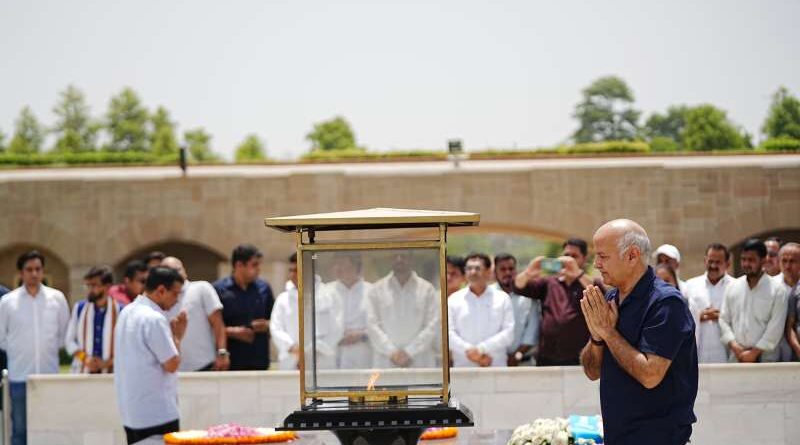
Former Delhi Deputy Chief Minister Manish Sisodia has written to Delhi High Court judge Justice Swarana Kanta Sharma, informing her that he will not participate in further proceedings in the CBI case arising from the alleged Delhi liquor policy scam pending before her. The move mirrors a similar step taken by AAP national convenor Arvind Kejriwal last week, signalling a coordinated political and legal posture by the party’s top leadership against the ongoing proceedings.
Background: What is the case?
The Delhi liquor policy case relates to alleged corruption and irregularities in the now-scrapped 2021-22 excise policy of the AAP government. The CBI and the Enforcement Directorate launched parallel investigations, leading to the arrest of several senior AAP leaders including Sisodia, who spent over a year in custody before being granted bail. A trial court subsequently discharged Kejriwal, Sisodia, Rajya Sabha MP Sanjay Singh and other accused in the CBI’s case. The CBI challenged those discharge orders in the Delhi High Court through revision petitions, which are currently being heard by Justice Sharma.
The recusal dispute
Sisodia and Kejriwal had earlier filed applications seeking Justice Sharma’s recusal from the matter, raising what they described as an apprehension of bias. In his letter, Sisodia identifies two specific concerns that have troubled him: Justice Sharma’s repeated appearances at events organised by the Akhil Bhartiya Adhivakta Parishad — a lawyers’ body with ideological links to the RSS — and the professional engagement of her children on multiple Union Government panels. Last week, Justice Sharma dismissed both recusal applications and decided to continue hearing the matter herself.
Sisodia’s letter: conscience over participation
In his letter, Sisodia invokes Mahatma Gandhi’s principle of Satyagraha — peaceful, conscience-driven non-cooperation — as the basis for his decision, echoing the language Kejriwal used when he announced his own boycott. He is careful, however, to contain the scope of his stand: the refusal is limited to the excise policy case and should not be read as a general distrust of Justice Sharma or of the judiciary as an institution.
“Constitutional maturity would have it that one may disagree with a particular course being followed in a particular case without losing faith in the institution as a whole. My respect for the judiciary remains undiminished,” he writes.
Sisodia frames his decision around the legal standard for judicial impartiality — that public confidence in courts must be sustained not merely by the absence of actual wrongdoing, but by the absence of circumstances that create a serious appearance of conflict of interest. “Can I, with honesty, continue to take part in these proceedings while carrying a serious apprehension about the appearance of impartial justice? After much reflection, my answer is similar to Mr. Kejriwal’s. I cannot,” the letter states.
Legal and political implications
The boycott strategy places the Delhi High Court in a difficult position. A party’s unilateral refusal to participate does not halt proceedings — courts can and do proceed ex parte — but it creates optics that the AAP leadership is likely calculating will resonate with their voter base ahead of future electoral contests. By framing the boycott in Gandhian rather than adversarial terms, both leaders are attempting to occupy moral high ground while simultaneously keeping alive their allegation that the cases against them are politically motivated.
Legal experts note, however, that non-participation carries real risks for the accused, as it forfeits the opportunity to contest the CBI’s revision petitions at a crucial stage of the proceedings.
The matter is expected to come up before Justice Sharma shortly, when the court will have to determine how to proceed in the absence of the accused’s participation.