The Rs 370 Biryani Row: Who Is Himanshu Jangra, and Why Did His Employer Fire Him?
A quip about a plate of chicken biryani at a stand-up show has snowballed into one of India’s sharpest online controversies of 2026, raising hard questions about consent, entitlement, and whether employers bear responsibility for what their workers say and do in their personal lives.
NewsArc Bureau | New Delhi | June 10, 2026
WHO IS HIMANSHU JANGRA?
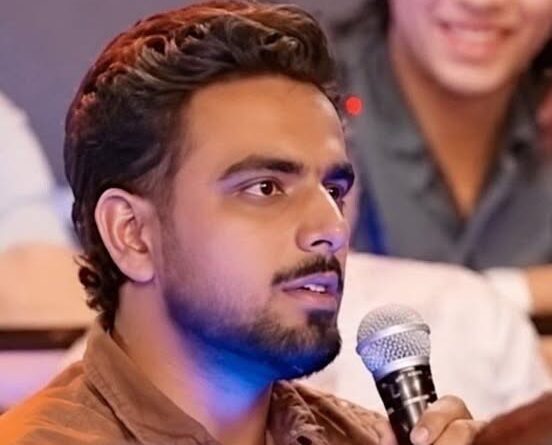
Himanshu Jangra is a 23-year-old web developer who was employed at Starvik Design, a Gurugram-based design and branding firm. Until a few days ago, he was entirely unknown beyond his immediate professional circle. That changed when a clip from a live comedy show began circulating rapidly across Instagram and other social media platforms.
THE COMEDY SHOW THAT SET IT OFF
The backlash began after clips from comedian Pranit More’s stand-up performance circulated across social media platforms. During a crowd-work segment — in which comedians invite audience members to share personal anecdotes — Jangra spoke about a date he had been on. He described going on a date during which he spent Rs 370 on a plate of chicken biryani, and then suggested that because he had paid for the meal, he expected something “in return.” According to the clip, he said that when the woman asked to be dropped home, he insisted on recovering what he had spent. He also described taking her to a dark park despite what he characterised as her reluctance.
The remarks drew further attention when comedian Pranit More laughed and responded by calling it “Peak Gurgaon content.”
THE BACKLASH
Clips from the exchange quickly spread online. Many social media users criticised what they saw as a troubling sense of entitlement and a disregard for consent. Critics argued that the episode was not merely an awkward joke but a window into an attitude that treats financial expenditure on a date as a transaction entitling the payer to compliance. The backlash also extended to More, who was questioned over his response to Jangra’s account rather than challenging it.
The controversy, widely referred to as the Rs 370 Ki Biryani row, triggered heated discussions about entitlement, consent, accountability, and whether people deserve a second chance after making public mistakes.
As the backlash intensified, Himanshu reportedly apologised for his remarks and deactivated his social media account. However, the controversy continued to grow, with many users demanding accountability beyond an apology.
WHAT STARVIK DESIGN SAID
As the video gained traction, social media users identified Jangra as an employee of Gurugram-based design and branding firm Starvik Design. In a video statement shared on Instagram, founder Vivek Vishwakarma said the company had received “hundreds of messages, emails, calls” regarding the incident. He stated that the comments were “offensive” and did not represent the company’s values.
Vishwakarma also said Starvik Design conducted an internal review before making its decision. According to him, colleagues, including women employees, described Jangra as professional, respectful and hardworking at work. He added that there had been no complaints against him during his employment.
The company’s explanation centred on reputational impact rather than misconduct inside the office. Vishwakarma said the controversy had begun affecting the workplace, and that employers have responsibilities towards their teams, clients and workplace environment when an employee’s public actions become inseparable from the organisation’s image. “What happened outside the workplace has now affected the workplace, and I have a responsibility towards the company, our team, our clients, and the environment we create here,” he said while announcing that the company had decided to part ways with Jangra.
Notably, Vishwakarma cautioned against excessive online harassment directed at Jangra. He noted that the consequences of the incident would likely affect the 23-year-old for a long time, and said social media trolling should not be treated lightly.
THE WIDER DEBATE: CONSENT AND THE COST OF A MEAL
At the heart of the controversy is a question that resonates well beyond this individual incident. The strongest reactions to the clip were not centred on the amount of money involved. They focused on the idea that paying for a date creates an expectation of intimacy. Legal and social commentators have noted that consent requires voluntary agreement and cannot be assumed because one party paid for dinner or arranged transport.
The controversy has therefore moved beyond stand-up comedy. It has prompted discussions among young Indians about dating norms, gender expectations, and the language people use when recounting personal experiences.
CAN EMPLOYERS ACT ON CONDUCT OUTSIDE WORK?
The termination has itself sparked a secondary debate. The incident has triggered debate about whether employers should discipline employees for actions that take place beyond office premises. Starvik Design’s position was that once a public controversy begins affecting the internal workplace and client relationships, the distinction between personal conduct and professional accountability collapses. Legal experts note that while Indian labour law does not straightforwardly permit dismissal on the basis of off-duty behaviour, employers in the private sector retain considerable discretion when reputational damage to the organisation can be demonstrated.
CONTEXT: NOT THE FIRST, LIKELY NOT THE LAST
The Jangra episode joins a growing list of incidents — from the India’s Got Latent controversy involving Ranveer Allahbadia to earlier cases of comedians and audience members being called out for viral moments — in which the line between entertainment, personal expression and public accountability has become intensely contested in India’s digital public sphere.
For employers, it raises questions about values and reputation. For internet users, it highlights the power and risks of online accountability. For young audiences, it serves as a reminder that the stories people tell about themselves can shape how others perceive their judgement, character and suitability in professional spaces. The debate surrounding Himanshu Jangra’s remarks is unlikely to end with one termination. Instead, it reflects broader tensions around consent, digital accountability and the expectations placed on individuals whose words travel far beyond the room in which they were first spoken.