The Thief Who Wouldn’t Die: How ‘Jaani Chor’ Kept Haryana’s Folk Soul Alive for 25 Years
From the cells of Hisar Jail to the stages of Denmark and Australia, a Haryanvi folk play has done what no streaming platform could — outlast the algorithm
NewsArc Bureau | Hisar, Haryana
On a winter evening in 2001, inside the walls of Hisar Central Jail, a group of performers took to a makeshift stage before an audience of inmates. What unfolded was not a rehabilitation exercise in the conventional sense — it was a Swang, Haryana’s centuries-old form of musical folk theatre, and the play was Jaani Chor: the story of a silver-tongued, Robin Hood-like thief who confounds kings with disguise and wit. The man who directed it that night was a former veterinary surgeon who had walked away from a stable career to chase a dying art form. His name was Dr. Satish Georgy Kashyap.
Twenty-five years later, Jaani Chor has clocked more than 300 performances. It has been staged at the National School of Drama in New Delhi, at Prithvi Theatre in Mumbai, at Bharat Rang Mahotsav, at Theatre Olympics, and before audiences in Denmark, Sweden, and Australia. It has survived the arrival of satellite television, the explosion of social media, and the dominance of OTT platforms — a feat virtually unmatched in Indian folk theatre. The silver jubilee of the production, which Dr. Kashyap and his troupe at Swang — A Folk Art Academy recently marked, is not merely a milestone for one play. It is, in many ways, the story of a tradition refusing to be buried.
THE FORM AND THE STORY
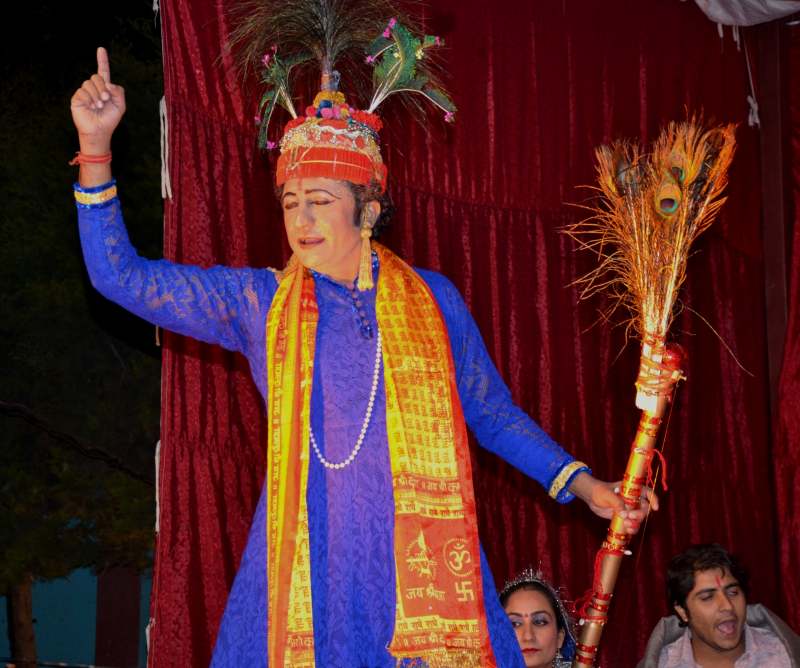
Swang — also rendered as Saang — is among the oldest performing traditions of North India. A folk dance-drama form popular across Haryana, Rajasthan, Uttar Pradesh, and the Malwa region of Madhya Pradesh, it blends music, dance, poetry, and dialogue into open-air theatrical performances rooted in stories of valour, love, sacrifice, and humour. Traditionally performed overnight — sometimes stretching to five or six hours — Swang artists, called saangis, deliver topical social commentary through crisp dialogue and high-pitched ragnis, accompanied by musicians playing the dholak, harmonium, chimta, and nagada.
Among its most celebrated narratives, Jaani Chor occupies a place apart. Originally written by legendary Haryanvi folk poet Pandit Lakhmi Chand, the story follows a clever thief — a Robin Hood figure who robs the corrupt rich and helps the poor and needy without revealing his identity, packed with entertainment, suspense, drama, mystery, and thriller elements. The play has, over centuries, served as a vehicle not just for entertainment but for social commentary — a wink at authority, a celebration of the underdog.
THE MAN BEHIND THE REVIVAL
Dr. Satish Georgy Kashyap, a former veterinary surgeon, gave up his profession to immerse himself in the world of Saang. The move seemed improbable at the time. He later trained in Commedia Dell’Arte in Copenhagen, Denmark, before going on to perform at national and international theatres ranging from the National School of Drama and Prithvi Theatre to venues across Denmark, Sweden, France, and Australia.
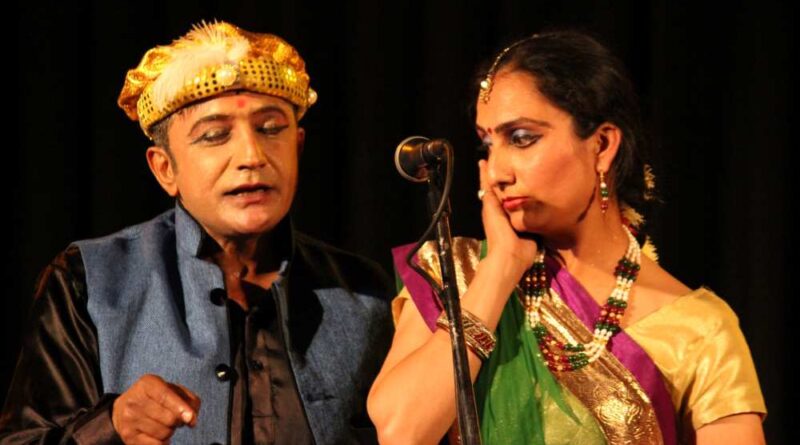
But his departure from convention did not stop at career choices. Dr. Kashyap modified the conventional Saang, presenting it on a proscenium stage rather than an operatic one, with female characters played by female artists — not by men in traditional drag — and with costumes and music adapted to appeal to newer generations. These were not small adjustments. In a form where the male-dominated Mandali structure had held for centuries, introducing women as lead performers was a cultural rupture.
Dr. Satish Kashyap and Dr. Sandhya Sharma, in the guidance of Pandit Suraj Bhan Shastri — a disciple of the Pt. Lakhmi Chand gharana — made revolutionary changes to Swang performance. Dr. Sharma, who collaborated extensively with Dr. Kashyap, went on to become a scholar of Haryana folklore in her own right, eventually joining CCS Haryana Agricultural University in Hisar.
FROM JAIL TO THEATRE OLYMPICS
The journey of Jaani Chor follows an arc that is almost theatrical in itself. Its debut in Hisar Jail in 2001 was an exercise in using folk theatre as a tool of social engagement with marginalised audiences — prisoners who found, in the story of a cunning rebel, something that spoke to them. From there, it moved to village chaupals, the traditional community gathering spaces of rural Haryana. Then to university stages, as Dr. Kashyap pushed the form into youth festivals and academic platforms.
The production has since been staged in Denmark, Sweden, and Australia as part of its silver jubilee journey, and has performed on major stages including Prithvi Theatre in Mumbai and the National School of Drama in Delhi. The production’s selection for Bharangam — the NSD’s flagship international festival — and its appearance at Theatre Olympics marked formal acknowledgement of what had until then been a grassroots cultural crusade.
Dr. Kashyap noted that the production, originally around twelve hours long, has been condensed to a nearly two-hour performance — a concession to modernity that he views as necessary survival. “Times have changed in today’s 30-second reel era,” he has said, acknowledging that even further compression may be needed. The core, however, remains: the wit, the ragnis, the moral architecture of the folk original.
THE STAKES OF THE TRADITION
That a single production has survived 25 years and over 300 performances is a data point that folk theatre scholars find significant. Cultural historians describe Saang as the jewel in the crown of Haryanvi folk theatre, yet old-timers lament that many folk art forms are falling into oblivion owing to OTT platforms, video games, and internet culture, with very few youngsters joining folk theatre as full-time artists due to a lack of professional viability.
The Jaani Chor story is a partial counter-narrative to this decline — but only partial. Dr. Kashyap has built and sustained the production without consistent government support, a fact that underscores both his commitment and the structural indifference that folk arts practitioners frequently cite as the primary threat to their survival. He leads what is described as the only surviving Mandali of Swang, performing in both operatic and proscenium formats at national and international levels.
The silver jubilee celebrations held recently paid tribute to the pioneers on whose shoulders the tradition rests — Pandit Lakhmi Chand, Dhanpat Singh, Pandit Mange Ram, and others — while also framing the milestone as a forward-looking promise. In the age of Netflix, Dr. Kashyap argues, a form rooted in the soil of Haryana still has the power to hold a room.
He may well be right. The thief, it turns out, is still at large.