How the government resolved India’s Gen Z uprising: the inside story of the CJP protest’s end
From a satirical social media page to a two-month standoff that shook Delhi — an explainer on how the Cockroach Janta Party’s agitation forced a Cabinet resignation and ended with the Centre conceding on compensation and amnesty
NewsArc Bureau | New Delhi
What began in May 2026 as an online joke aimed at a Supreme Court remark about unemployed youth snowballed, over ten weeks, into one of the most consequential student movements independent India has seen — one that has now ended with a Union minister’s resignation and the government caving to the protesters’ remaining demands. Here is how it unfolded, and how it was finally resolved.
HOW IT ALL STARTED
The origins of the Cockroach Janta Party trace back to mid-May 2026, when a remark made during a Supreme Court hearing allegedly referred to unemployed youth as “cockroaches.” Digital strategist Abhijeet Dipke turned the jibe into a satirical online movement, initially conceived as political commentary rather than an organised protest.
The satire found real fuel when the 2026 NEET-UG paper leak broke, alongside irregularities in CBSE’s on-screen evaluation process. The campaign gathered momentum around the NEET-UG paper leak and irregularities in public examinations, with CJP demanding a transparent probe, reforms to the examination system, accountability for exam-stress-linked student deaths, and Education Minister Dharmendra Pradhan’s resignation.
THE PROTEST TAKES SHAPE
On June 6, CJP held its first physical demonstration at Jantar Mantar in New Delhi, marking the start of an indefinite sit-in that steadily drew students from universities and coaching centres nationwide. The movement, joined by established student bodies including SFI, AISA and AISF, came to be described in national and international media as India’s “Gen Z protest” — a label that stuck given the demographic driving it and its echoes of similar youth-led uprisings elsewhere in the region.
Momentum built further when veteran education reform activist Sonam Wangchuk joined in support with an indefinite hunger strike starting June 28. His participation lent the protest a moral weight beyond its satirical branding and widened its national visibility.
THE CRACKDOWN
The turning point toward confrontation came in mid-July. On July 18, Wangchuk was forcibly removed from the protest site by Delhi Police and taken for medical evacuation, a move that triggered outrage among protesters and sympathisers.
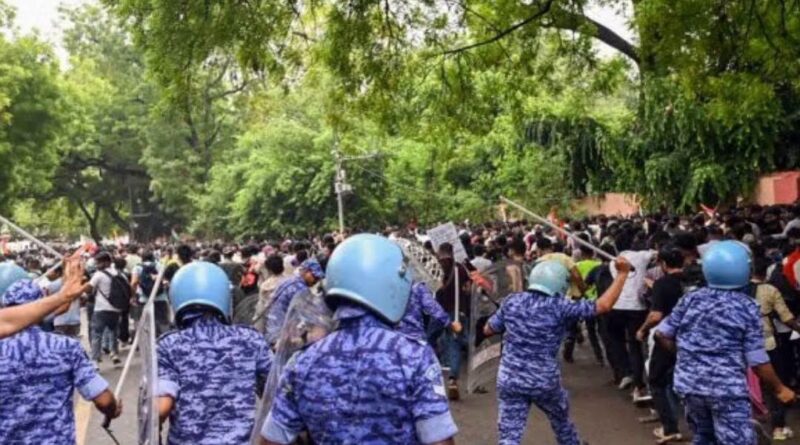
Two days later, on July 20, thousands of protesters attempted to march on Parliament. Police had declared the march unlawful and imposed prohibitory orders beforehand; when demonstrators pushed past barricades, police fired tear gas and baton-charged the crowd, injuring more than 100 personnel by police accounts, while protesters displayed injuries they said were inflicted during the crackdown. The camp at Jantar Mantar was demolished and rebuilt within a day, with protesters vowing to hold their ground.
Video and eyewitness accounts described chaotic scenes, with demonstrators alleging indiscriminate use of force against students, women and elderly participants. The crackdown, rather than dispersing the movement, intensified it — solidarity marches spread to other Indian cities and among the diaspora abroad.
THE TALKS
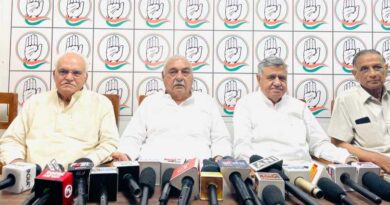
Facing escalating pressure, the government opened a formal dialogue with CJP representatives. Talks were held at a neutral venue — the Constitution Club of India — where CJP placed three non-negotiable written demands: Dharmendra Pradhan’s resignation or dismissal, ₹1 crore compensation for the families of NEET aspirants who died by suicide, and withdrawal of FIRs and other cases against protesters, along with a commitment against fresh punitive action.
The Centre initially gave in-principle approval on the compensation and case-withdrawal demands while seeking time until the afternoon of July 25 on the question of Pradhan’s resignation. Union Ministers J.P. Nadda and Jitendra Singh represented the government side across the rounds of negotiation, with CJP’s Ashutosh Ranka and Saurav Das leading talks for the protesters.
Separately, the Centre had already sought to defuse tensions by committing to a new law and fast-track courts to address examination paper leaks — a gesture aimed partly at the wider public anger over the NEET controversy, and partly at Wangchuk, whose 26-day fast ended after these assurances.
THE RESOLUTION
The deadlock finally broke on Saturday, July 25. Dharmendra Pradhan announced his resignation as Union Education Minister, submitting his letter to Prime Minister Narendra Modi and stating the decision was taken to protect students’ future amid the NEET row. Hours later, at the concluding round of talks, the government accepted CJP’s two remaining demands — the ₹1 crore compensation package and immunity from action for protesters involved in the July 20 demonstrations.
Announcing the outcome, CJP declared its agitation formally withdrawn and asked demonstrators to return home, calling the resignation and the accepted demands a vindication of the two-month movement.
WHAT’S NEXT
Even as the sit-in winds down, CJP has signalled the fight is not entirely over. The organisation has said its protest is far from finished, insisting that comprehensive examination reforms, accountability for the alleged paper leaks and systemic changes to India’s education system remain its core, unresolved demands. Attention now shifts to whether the government follows through on compensation disbursal, case withdrawals, and the promised structural reforms to the National Testing Agency — the tests that will determine whether Saturday’s resolution holds, or whether India’s Gen Z movement regroups.