BJP Leader Suvendu Adhikari Calls for ‘Gaza-Like Treatment’ of Bangladesh, Sparks Nationwide Condemnation
West Bengal Opposition Leader’s Inflammatory Remarks Outside Bangladesh Mission Trigger Political Firestorm, TMC Accuses BJP of ‘Genocidal Hate Speech’
KOLKATA – West Bengal’s Leader of Opposition and BJP leader Suvendu Adhikari has triggered a massive political controversy after openly calling for Bangladesh to be taught a “lesson like Israel has taught Gaza,” drawing sharp condemnation from opposition parties and raising serious concerns about inflammatory political rhetoric.
The Controversial Statement
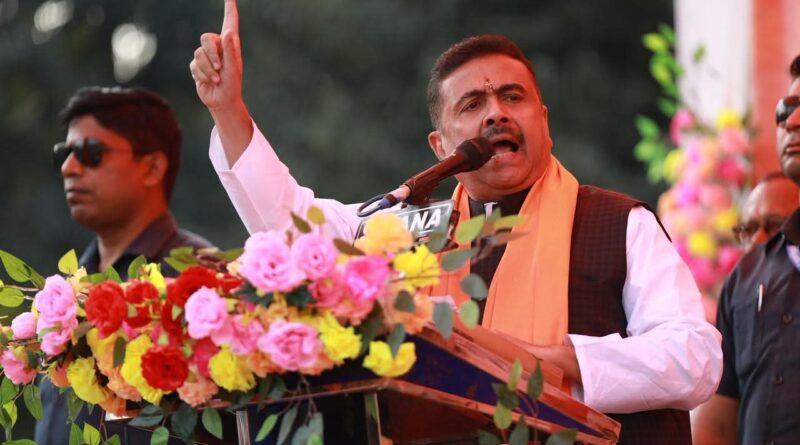
Speaking to reporters outside the Bangladesh Deputy High Commission in Kolkata on Friday, December 26, Adhikari made the incendiary remark while addressing ongoing protests over alleged attacks on Hindu minorities in Bangladesh.
“These people must be taught a lesson, just like Israel taught Gaza. Our 100 crore Hindus and the government working in the interest of Hindus must teach them a lesson just as we taught Pakistan a lesson in Operation Sindoor,” the BJP MLA stated.
Adhikari was accompanied by several hundred Hindu monks and was leading a delegation that had met with officials from the Bangladesh Deputy High Commission. The protests have been ongoing since December 22 following the brutal lynching of Dipu Chandra Das, a 27-year-old garment factory worker in Bangladesh.
Context: Violence in Bangladesh
The statement came against the backdrop of escalating violence in Bangladesh since December 18. At least two Hindu youths were lynched and houses of minorities in Bangladesh were ransacked and torched in the wake of the violence following the killing of Osman Hadi, a leader of the July 2024 uprising against Sheikh Hasina and a prospective candidate for upcoming parliamentary elections.
According to reports, Das was killed on December 18 in the Mymensingh district, where his body was allegedly hung from a tree and set on fire in public view, sparking outrage among Hindu communities in India and demands for stronger action from the government.
Political Firestorm and Condemnation
TMC’s Scathing Response
The All India Trinamool Congress launched a fierce attack on Adhikari and the BJP, calling his statement “genocidal bile” and accusing the party of promoting hate speech.
In a strongly-worded post on X (formerly Twitter), the TMC stated that the BJP had “perfected hate and intolerance into an artform,” describing Adhikari as their “venomous loudmouth” who “just bared his fascist fangs again, spewing genocidal bile by proclaiming that India must teach Muslims a lesson like Israel taught Gaza”.
The party characterized the statement as “naked hate speech, a bloodthirsty call for MASS MURDER and ETHNIC CLEANSING,” questioning why no FIR, arrest, prosecution, or UAPA charges had been filed against what they called “this Hitler-in-the-making.”
Criticism from Journalists and Activists
Journalist Sagarika Ghose also criticized the statement on social media, questioning whether Prime Minister Narendra Modi and External Affairs Minister S. Jaishankar concurred with Adhikari’s position. She described it as the BJP’s Bengal face wanting “a Gaza like operation against Bangladesh” and accused the party of “dog whistles that the government is for ‘Hindus’ only.”
Adhikari’s Escalating Rhetoric
This latest statement is part of Adhikari’s increasingly aggressive posture regarding Bangladesh. During his appearance outside the Bangladesh mission, he issued a direct threat, stating he would return with a much larger force.
“Monks will set up camps at Babughat on their way to the Gangasagar mela. I will return with five lakh Hindu pilgrims of Gangasagar at the beginning of next year and uproot these barricades on our march to the high commission office,” he warned.
Why the Gaza Comparison Is Explosive
The reference to Gaza carries particular weight given the ongoing humanitarian crisis in the Palestinian territory. Israel’s military operations in Gaza have resulted in massive civilian casualties, widespread destruction of infrastructure, and what many international observers have characterized as a humanitarian catastrophe.
By invoking Gaza as a model for action against Bangladesh, Adhikari’s statement has been interpreted by critics as:
- A call for violent military action that could result in mass civilian casualties
- Inflammatory communal rhetoric that targets Bangladesh’s Muslim-majority population
- A dangerous escalation of political discourse that normalizes violence
- A violation of principles of diplomatic engagement between neighboring countries
Legal and Ethical Questions
The statement raises several critical questions:
Legal Implications: Critics have pointed out that despite the apparent incitement to violence and communal hatred, no legal action has been initiated against Adhikari. The TMC specifically highlighted the absence of FIRs, arrests, or application of the Unlawful Activities (Prevention) Act (UAPA), which has been invoked in other cases involving allegedly inflammatory speech.
Political Responsibility: The controversy puts pressure on the BJP’s national leadership to clarify whether Adhikari’s views represent the party’s official position on Bangladesh. So far, neither Prime Minister Modi nor the party’s central leadership has publicly commented on the statement.
Diplomatic Fallout: The remarks could complicate India’s diplomatic relations with Bangladesh, particularly at a time when both countries are already grappling with tensions over minority protection and border issues.
Background: Adhikari’s Bangladesh Stance
Suvendu Adhikari, who defected from the Trinamool Congress to the BJP in 2020, has consistently taken a hardline position on Bangladesh-related issues. He has been vocal about:
- Alleged infiltration of Bangladeshi immigrants into West Bengal
- Attacks on Hindu minorities in Bangladesh
- Implementation of the Citizenship Amendment Act (CAA)
- Border security concerns
In November 2024, the TMC filed a complaint with the Election Commission claiming Adhikari had violated the Model Code of Conduct by making communal remarks during by-poll speeches.
Earlier in December, he had warned of up to one crore Hindu refugees potentially fleeing to West Bengal and called for increased surveillance at the border.
The Gaza Parallel: International Context
The timing of Adhikari’s statement is particularly sensitive. The Gaza Strip has been the site of intense military operations, with international humanitarian organizations documenting severe civilian suffering, mass displacement, and infrastructure destruction. Multiple countries and international bodies have expressed grave concerns about the humanitarian situation.
By explicitly calling for Bangladesh to receive “Gaza-like treatment,” critics argue that Adhikari is endorsing what many view as excessive military force against civilian populations—a stance that contradicts India’s traditionally stated commitment to peaceful resolution of disputes and protection of civilians in conflict zones.
Political Calculations in Bengal
Adhikari’s inflammatory rhetoric must also be understood within West Bengal’s political context. As the Leader of Opposition, he has positioned himself as the BJP’s primary challenge to Chief Minister Mamata Banerjee’s TMC government.
The BJP has been attempting to mobilize Hindu voters in Bengal by highlighting alleged persecution of Hindus in Bangladesh and claiming that the TMC government is soft on infiltration and minority appeasement. Adhikari’s strong statements appear designed to consolidate this vote bank, even at the risk of communal polarization.
What Happens Next?
The controversy raises several immediate questions:
Will the Government Respond? The silence from the BJP’s central leadership and the Prime Minister’s Office will be closely watched. Any explicit endorsement or condemnation will have significant political implications.
Legal Action? Whether state or central authorities will take legal action against Adhikari for his statement remains to be seen. The lack of action could embolden similar rhetoric from other political figures.
Diplomatic Impact: Bangladesh’s response to these remarks could affect bilateral relations, particularly regarding ongoing negotiations on various issues including river water sharing, border management, and trade.
Electoral Impact: In the run-up to future elections in West Bengal, such polarizing statements could reshape the political landscape, potentially consolidating Hindu votes for the BJP while alienating moderate voters concerned about communal harmony.
Broader Implications
This incident highlights growing concerns about the coarsening of political discourse in India, particularly regarding communal and international issues. The explicit invocation of violent military action as a model for bilateral relations represents a significant departure from traditional norms of diplomatic engagement.
Critics argue that such rhetoric normalizes violence, undermines democratic values, and creates an environment where hate speech becomes acceptable political currency. Supporters, however, frame it as necessary strong language to protect Hindu interests in the face of alleged persecution in neighboring countries.
The controversy underscores the delicate balance India must maintain between addressing legitimate concerns about minority protection in Bangladesh and maintaining diplomatic relations with a crucial neighbor. How political leaders navigate this balance will have lasting implications for regional stability and domestic communal harmony.
As protests continue outside the Bangladesh Deputy High Commission and political parties trade accusations, Adhikari’s “Gaza lesson” statement has become the latest flashpoint in India’s increasingly polarized political landscape—one where the line between protecting national interests and promoting communal violence appears increasingly blurred.