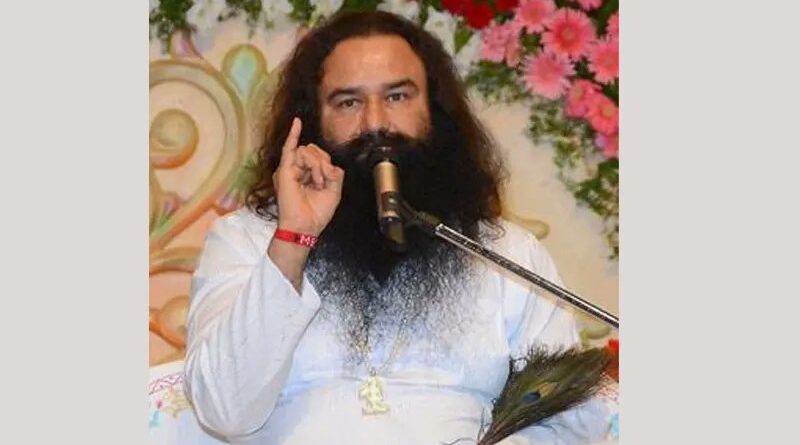
Dera Sacha Sauda Chief Gurmeet Ram Rahim Granted 40-Day Parole for the 15th Time
Convicted rapist and murderer continues pattern of frequent temporary releases amid allegations of political favouritism by BJP-led governments in Haryana
Chandigarh/Rohtak, January 4, 2026 — Gurmeet Ram Rahim Singh, the self-styled spiritual leader and head of the Dera Sacha Sauda sect, has once again been granted a 40-day parole from Sunaria Jail in Rohtak, Haryana. This marks the 15th such temporary release for Singh since his initial convictions in 2017, sparking renewed outrage from opposition parties, Sikh organizations, and civil society groups who argue that the repeated paroles undermine the justice system and reflect undue political influence.
Singh, who has been incarcerated since August 2017, is serving multiple severe sentences for heinous crimes. His legal troubles stem from a series of high-profile cases that exposed allegations of systemic abuse within his sprawling sect, which claims millions of followers across northern India, particularly in Haryana, Punjab, and Rajasthan.
Detailed Convictions and Legal History
Gurmeet Ram Rahim Singh’s convictions began with a landmark rape case. In August 2017, a special Central Bureau of Investigation (CBI) court in Panchkula convicted him of raping two female disciples, known as “sadhvis,” in incidents dating back to 1999 and 2002. The court found that Singh had exploited his position of authority within the Dera Sacha Sauda headquarters in Sirsa, Haryana, where he allegedly coerced the women into sexual acts under the guise of spiritual purification. He was sentenced to 20 years of rigorous imprisonment—10 years for each count, to be served consecutively—along with a fine of ₹30 lakh (approximately $36,000), half of which was awarded as compensation to the victims. The verdict triggered widespread violence by his devotees, resulting in over 30 deaths and hundreds of injuries in Haryana and Punjab, prompting a massive security deployment.
Beyond the rape convictions, Singh faced murder charges in two separate cases. In January 2019, the same CBI court sentenced him to life imprisonment for the 2002 murder of journalist Ram Chander Chhatrapati. Chhatrapati, a reporter for the local newspaper Poora Sach, had published an anonymous letter accusing Singh of sexual exploitation within the Dera. Singh, along with three accomplices, was found guilty of orchestrating the assassination to silence the journalist. The court imposed a fine of ₹50,000 on Singh and ordered compensation for the victim’s family.
In October 2021, Singh received another life sentence for the murder of Ranjit Singh, a former Dera manager who was killed in 2002 after being suspected of circulating the same anonymous letter about sexual abuses. The CBI court in Panchkula convicted Singh and four others, noting that the murder was part of a broader pattern of intimidation and elimination of dissenters within the sect. Additional fines and compensations were levied in this case as well.
Singh has also been implicated in other controversies, including allegations of forcing male followers to undergo castration to “bring them closer to God,” though he was acquitted in that specific case in 2021 due to lack of evidence. His trials have highlighted the Dera’s cult-like structure, where Singh portrayed himself as a divine figure, often through extravagant films and music videos in which he starred as a superhero-like character.
Pattern of Frequent Paroles and Releases
Since his incarceration, Singh has benefited from an unusually high number of temporary releases under the Haryana Good Conduct Prisoners (Temporary Release) Act, which allows well-behaved convicts parole for reasons such as family events, medical needs, or good behavior. However, critics argue that these grants—totaling over 15 instances by January 2026—have allowed him to spend a significant portion of his sentence outside prison walls, effectively diluting his punishment.
Key details of his parole history include:
– Early Releases (2019-2020): Singh’s first paroles came in 2019, with short furloughs of 21 days each. By 2020, he had received multiple extensions, including a 21-day parole in February and another in October, often cited for “humanitarian” reasons like attending family functions.
Escalating Frequency (2021-2022): In 2021, amid the COVID-19 pandemic, he was granted a 21-day emergency parole. This was followed by longer stints in 2022, including a 40-day parole in February and a 30-day release in June, coinciding with Haryana’s political activities. By the end of 2022, he had spent nearly 100 days out of jail that year alone.
2023-2024 Surge: 2023 saw him receive three paroles totaling over 90 days, including a 50-day release in January, prompting accusations that he had spent a third of the year free. In 2024, additional 40- and 50-day paroles were granted, often just before local elections or festivals.
Recent Years (2025-2026): In 2025, Singh secured his 12th parole in January (40 days), followed by the 13th and 14th in May and August, respectively, pushing his time outside prison to over 250 days cumulatively by mid-2025. The latest 40-day parole, approved on January 3, 2026, allows him to reside at the Dera’s ashram in Barnawa, Uttar Pradesh, or Sirsa, Haryana, under conditions like no public gatherings or political involvement—though enforcement has been questioned in the past.
Sikh bodies, such as the Shiromani Gurdwara Parbandhak Committee (SGPC), have repeatedly protested these releases, labeling them as “preferential treatment” for a convicted criminal and demanding intervention from the central government. Opposition leaders have filed petitions in the Punjab and Haryana High Court, arguing that the paroles violate guidelines for serious offenders.
Alleged Closeness with BJP and Political Ties
Singh’s frequent paroles have fueled speculation about his deep ties with the Bharatiya Janata Party (BJP), particularly in Haryana, where the party has held power intermittently since 2014. The Dera Sacha Sauda, with its estimated 3-5 million followers in key electoral districts like Sirsa, Hisar, and Fatehabad, wields significant vote-bank influence. In the 2014 Haryana assembly elections, Singh openly endorsed BJP candidates after a brief meeting with party leaders, reportedly helping the BJP secure a majority in a state where it had limited prior presence.
Critics point to a quid pro quo: In exchange for electoral support, BJP-led governments in Haryana have allegedly facilitated Singh’s paroles, especially ahead of polls. For instance, releases in 2022 and 2025 coincided with by-elections and panchayat polls, where Dera followers’ votes could sway outcomes. Even after his convictions, BJP figures have been accused of maintaining covert links, with some leaders visiting Dera ashrams. In 2017, amid the rape verdict violence, the BJP government in Haryana faced backlash for inadequate preparation, hinting at reluctance to alienate Singh’s base.
While Singh’s influence extends to other parties—leaders from Congress and Aam Aadmi Party have also sought Dera blessings in the past—the pattern of paroles under BJP rule has drawn particular scrutiny. The Haryana government defends the decisions as per legal norms, but ongoing court challenges may force greater transparency.
As Singh steps out for his latest parole, questions linger about accountability in India’s intersection of faith, politics, and justice.