From Haryana’s Humble Village to India’s Apex Court: Justice Surya Kant Set to Become 53rd Chief Justice
From a benchless village school in Hisar to the Chief Justice’s chair: Justice Surya Kant, Haryana’s son, sworn in as India’s 53rd CJI on Monday
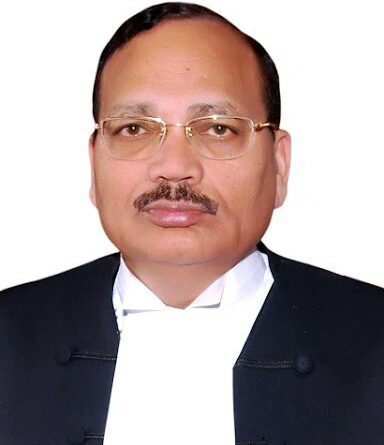
New Delhi – November 23, 2025 – In a milestone that underscores the judiciary’s meritocratic ethos, Justice Surya Kant, the senior-most judge of the Supreme Court of India and a son of Haryana’s agrarian heartland, is poised to take oath as the 53rd Chief Justice of India (CJI) on Monday, November 24. Born into a modest middle-class family in the nondescript village of Petwar in Hisar district, Justice Kant’s ascent from a rural school lacking even basic benches to the nation’s highest judicial perch marks him as the first jurist from Haryana to helm the apex court. His 15-month tenure, ending with retirement on February 9, 2027, comes at a pivotal moment for India’s overburdened judiciary, with Justice Kant pledging to prioritize case pendency reduction and alternative dispute resolution mechanisms.
The appointment, formalized by President Droupadi Murmu on October 30 under Article 124(2) of the Constitution, follows convention by elevating the senior-most Supreme Court judge after the retirement of incumbent CJI B.R. Gavai on Sunday. Union Law Minister Arjun Ram Meghwal hailed the move as a “testament to judicial integrity and competence,” noting Justice Kant’s balanced wisdom and commitment to constitutional values. Colleagues and contemporaries describe him as a “jurist of deep learning,” admired for his rigorous work ethic, social sensitivity, and ability to infuse empathy into legal precedents—qualities forged in the soil of Hisar, where he studied at a government school under open skies.
Justice Kant’s early life reads like a narrative of quiet determination. Born on February 10, 1962, to a Sanskrit teacher father and homemaker mother, he was the first in his family to pursue law, breaking free from the “privileged Chandigarh crowd” that often dominates high court barrooms. He earned a Bachelor of Arts from Government Post Graduate College, Hisar, in 1981, followed by an LL.B. from Maharshi Dayanand University, Rohtak, in 1984—a institution celebrated for alumni like Olympic wrestler Sakshi Malik. Later, in 2011, he topped his LL.M. class with first-class first honors from Kurukshetra University’s Directorate of Distance Education, while already a sitting high court judge, showcasing his lifelong pursuit of scholarship.
His legal career ignited at the Hisar district court, where he practiced briefly before shifting to the Punjab and Haryana High Court in 1985. Specializing in constitutional, service, and civil matters, Justice Kant quickly rose to prominence as a sought-after advocate, becoming the youngest Advocate General of Haryana in 2001—a role he discharged with distinction amid political turbulence. Despite facing opposition during his judicial appointments— including dissent from then-Supreme Court judge A.K. Goel in 2004—Justice Kant’s merit prevailed, earning him elevation as a Punjab and Haryana High Court judge on January 9, 2004, where he served over 14 years.
During this period, Justice Kant’s bench left an indelible mark on social justice. In the landmark Jasvir Singh judgment, he directed the Punjab government to form a Jail Reforms Committee, pioneering conjugal and family visits for inmates to uphold reformatory goals and mitigate incarceration’s toll on families—a nod to Justice V.R. Krishna Iyer’s innovative “break-up and weekend prison” concept, which he later invoked in a 2022 lecture at HP National Law University. His rulings consistently safeguarded public resources, land acquisition rights, and marginalized voices, blending constitutional precision with humanitarian insight.
In October 2018, Justice Kant assumed charge as Chief Justice of the Himachal Pradesh High Court, a brief but impactful stint marked by administrative reforms and conference engagements. The Supreme Court Collegium, led by then-CJI Ranjan Gogoi, recommended his elevation on May 9, 2019, emphasizing his integrity, astuteness, and the need for high court diversity in the apex bench. Sworn in on May 24, 2019, he has since authored over 80 judgments and participated in more than 1,000 benches, tackling thorny issues from human rights to education.
At the Supreme Court, Justice Kant’s footprint spans landmark constitutional matters. He sat on the five-judge bench upholding the 2019 abrogation of Article 370, stripping Jammu and Kashmir of its special status—a verdict that reshaped federal dynamics. In the Pegasus spyware saga (Manohar Lal Sharma v. Union of India, 2021), he co-authored the order appointing an expert committee to probe allegations of surveillance on citizens, underscoring the court’s role in safeguarding privacy amid digital threats. More recently, as part of a seven-judge bench in Aligarh Muslim University v. Naresh Agarwal (2024), he helped overrule the 1967 verdict, reopening the debate on the institution’s minority status and its implications for reservations.
His tenure has not shied from controversy. In the high-profile India’s Got Latent case involving comedian Ranveer Allahabadia’s provocative remark on a talent show—”Would you rather watch your parents have sex every day or join in once?”—Justice Kant voiced strong disapproval, highlighting the judiciary’s evolving stance on free speech versus societal decency. He also contributed to suspending the colonial-era sedition law (Section 124A IPC), barring new FIRs pending review, and upheld the One Rank-One Pension scheme for armed forces veterans as constitutionally sound. Currently, he hears petitions from women officers seeking permanent commissions in the military, advancing gender parity.
Beyond the bench, Justice Kant’s administrative zeal shines through his roles as Executive Chairman of the National Legal Services Authority (NALSA) since May 2025, where he has championed tech-driven legal aid for underserved communities; Chairman of the Supreme Court Legal Services Committee (since November 2024); and Visitor to the National University of Study and Research in Law, Ranchi. A member of the Indian Law Institute’s committees, he has organized national and international conferences, fostering global judicial dialogue.
As CJI-designate, Justice Kant has outlined a reformist vision. Speaking at a felicitation in New Delhi on Saturday, he emphasised, “Tackling the huge pendency of cases and encouraging mediation as an alternative dispute resolution mechanism will be my priority.” He questioned, “Why should people come to courts? Why do they feel their disputes will get resolution only here?” His push for alternative redressal, coupled with reciprocity-driven international exchanges—several foreign chief justices are expected at his oath-taking—signals a tenure focused on efficiency, accessibility, and global respect for India’s judiciary.
Justice Kant’s story—from Petwar’s dusty classrooms to the Supreme Court’s hallowed halls—embodies the Constitution’s promise of equal opportunity. “Education is dignity, and law is the people’s shield,” he once reflected in a lecture. As he prepares to lead a court grappling with over 80,000 pending cases, his Haryana-honed humility and reformist drive offer hope for a more agile, inclusive justice system. The oath ceremony at Rashtrapati Bhavan on Monday, administered by President Murmu, will not just mark a transition but celebrate a judiciary where roots run deep, yet aspirations soar unbound.