Haryana CM Nayab Singh Saini Launches Kharif Krishi Mela 2026, Unveils Major Push for Sustainable Farming
From a new millet research centre to 85% irrigation subsidies, the Hisar agricultural fair showcased Haryana’s sweeping agenda to future-proof farming amid climate and water challenges
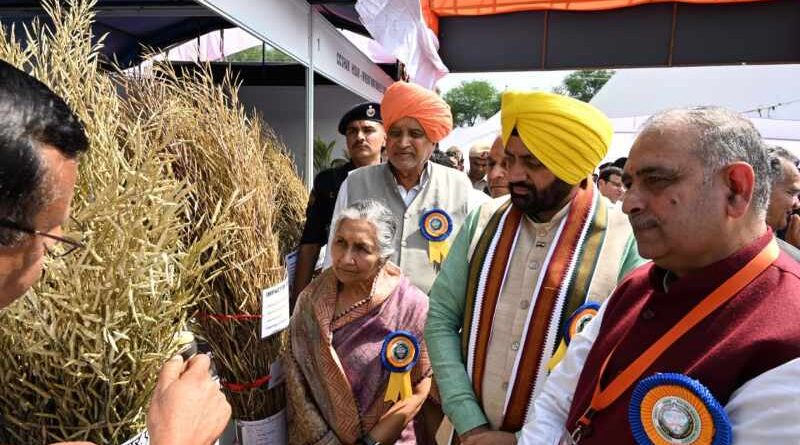
Haryana Chief Minister Nayab Singh Saini on Monday inaugurated the Kharif Krishi Mela-2026 at Chaudhary Charan Singh Haryana Agricultural University (CCS HAU) in Hisar, laying out an ambitious roadmap for sustainable agriculture as the state grapples with declining groundwater levels, soil degradation and the mounting pressures of climate change.
Speaking at the fair, themed “Sustainable Agriculture – Path to Prosperity,” Saini described farmers as the backbone of the Viksit Bharat 2047 vision and called for an urgent shift away from conventional farming practices. “Sustainable agriculture is the foundation of future prosperity,” he declared, urging farmers to embrace modern technology, crop diversification and water conservation without delay.
New Millet Research Centre Inaugurated
One of the flagship announcements of the day was the inauguration of a Nutri-Cereals Research Centre at Gokulpura village in Bhiwani district — spread across 64 acres and built at a cost of Rs. 11.67 crore. The centre will focus on developing disease- and pest-resistant millet varieties, improving the shelf life of millet flour, establishing market linkages for producers, and creating modern processing technologies for millet-based products. The move is seen as a significant step towards promoting nutritious indigenous grains and reducing dependence on the traditional paddy-wheat cycle.
Women Farmers in the Spotlight
In a notable highlight, the Chief Minister felicitated 42 progressive farmers — 21 of them women — describing them as an inspiration for the state. The recognition of women farmers drew considerable applause and underscored the government’s push for gender inclusion in agricultural development.
Water Conservation at the Centre of Policy
With groundwater depletion posing an existential threat to Haryana’s farming economy, Saini placed water conservation at the heart of his address. He highlighted the “Mera Pani Meri Virasat” scheme, under which farmers adopting alternative crops receive financial assistance of Rs. 8,000 per acre. So far, Rs. 157 crore has been disbursed across 2.20 lakh acres under the scheme, with an additional bonus of Rs. 2,000 per acre announced in the latest budget.
Up to 85% subsidy is being extended for micro-irrigation technologies including drip and sprinkler systems, while farmers are also eligible for up to 85% subsidy for constructing rainwater harvesting ponds. A new Agri DISCOM is to be formed to strengthen power supply in the agriculture sector, and 35,000 new solar pumps are to be installed under the PM Kusum scheme.
A Raft of Farmer-Friendly Measures
The Chief Minister outlined an extensive package of support for Haryana’s farming community. Key highlights included the procurement of 24 crops at Minimum Support Price, with Rs. 1.64 lakh crore already paid to 12 lakh farmers through the e-Kharid portal — with payments now processed within 48 hours. Under the Pradhan Mantri Kisan Samman Nidhi scheme, Rs. 7,562 crore has been transferred to 20 lakh farmers, while crop insurance claims worth Rs. 16,160 crore have been settled.
Over one lakh machines have been distributed for stubble management, more than 35,000 farmers have benefited under the Bhavantar Bharpai Yojana for horticulture, and a 2,000-acre smart agriculture cluster for natural farming is to be developed — with government-assured compensation in the event of crop losses. The incentive for sugarcane sowing through the single-eye bud method has also been raised from Rs. 3,000 to Rs. 5,000 per acre.
Under the National Agriculture Development Scheme, Rs. 16.66 crore has been allocated for pulses and Rs. 25 crore for oilseeds, while a target has been set to bring 1.40 lakh acres of saline and alkaline land under cultivation.
A Warning on Pesticides and Import Dependence
Agriculture Minister Shyam Singh Rana sounded a note of caution, warning that excessive pesticide and fertilizer use, combined with reckless groundwater extraction, risks rendering agricultural land barren. He pointed to India’s continued dependence on imported pulses as evidence that self-reliance in agriculture remains an unfinished task, urging greater diversification beyond wheat and paddy.
CCS HAU Vice Chancellor Prof. B.R. Kamboj echoed this sentiment, calling sustainable farming “a strong foundation for farmers’ prosperity” in an era of changing climatic conditions, and encouraging farmers to combine traditional knowledge with modern technology for long-term soil health and productivity.
The fair, which featured stalls from the university’s extension, cotton, oilseeds and other departments, was attended by Cabinet Ministers, MLAs, senior officials and a large number of farmers from across the state.