Iran refuses to join Islamabad peace talks until Lebanon ceasefire takes hold
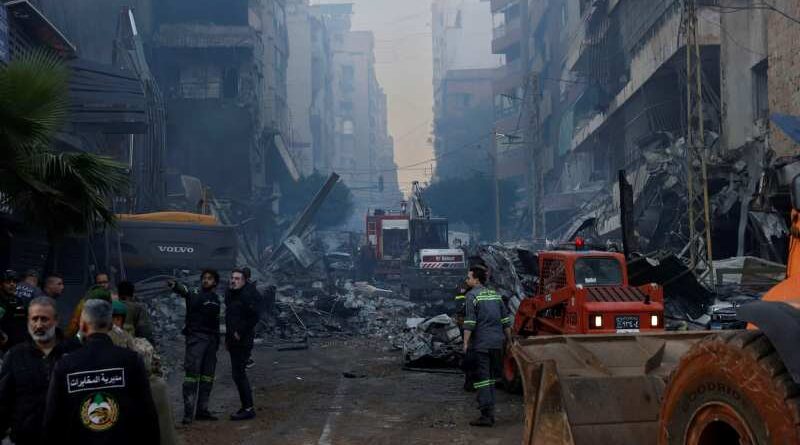
Tehran walks away from scheduled US–Iran negotiations in Pakistan, demanding an immediate halt to Israeli strikes on Lebanon as a precondition for dialogue — while over 800,000 Lebanese civilians remain displaced.
800,000+
displaced in Lebanon
125,630
civilian sites hit in Iran
300+
killed in Lebanon this week
6
ships through Hormuz yesterday
Iran has refused to participate in the scheduled US–Iran ceasefire negotiations in Islamabad, stating it will not come to the table until Israel stops its bombardment of Lebanon. The announcement, confirmed by Iran’s state-run Fars News Agency, casts serious doubt over talks that were due to begin on Saturday.
Earlier reports — including from the Wall Street Journal — claimed an Iranian delegation including parliamentary speaker Ghalibaf and foreign minister Araghchi had already arrived in Pakistan. Tehran flatly denied this, calling the reports false and saying no delegation had been dispatched, nor was one planned.
The collapse of the talks comes just days after Washington and Tehran agreed to a two-week ceasefire on April 7, with the Islamabad summit intended to address broader disputes including Iran’s nuclear programme, the Strait of Hormuz, its ballistic missile development, and international sanctions relief.
Iran’s foreign ministry spokesman Ismail Baghaei reinforced the condition, saying any peace process requires the United States to uphold ceasefire commitments “on all fronts” — particularly Lebanon. Tehran’s concern is strategic: Hezbollah, the Iran-backed militia operating in Lebanon, is a cornerstone of Iran’s regional influence. Continued Israeli strikes, which killed more than 300 people in Lebanon on Wednesday alone, threaten to dismantle that network.
On the ground, Lebanon’s crisis deepens. More than 800,000 people have been displaced and entire neighbourhoods reduced to rubble. Lebanon’s Prime Minister Nawaf Salam is expected to travel to Washington DC for talks, while Pakistan — which offered visa-on-arrival to all delegations and deployed 10,000 police across Islamabad — watches its mediation effort hang in the balance.
France and Pakistan have jointly condemned Israeli violations of the ceasefire agreement. France has called for Lebanon to be included in any broader ceasefire framework. The UAE, meanwhile, announced it will review its international alliances in the wake of recent Iranian strikes.
In the Strait of Hormuz, shipping activity remains critically low. Only six vessels transited the strait on Thursday, with Iran reportedly demanding a $1-per-barrel transit fee payable in cryptocurrency — a claim condemned by UK Foreign Secretary Yvette Cooper as a violation of international maritime law. India and Japan have pledged to work together to stabilise energy supplies amid the disruption.
Former US CENTCOM commander General Kenneth McKenzie suggested Iran may yet return to the table under sufficient pressure, arguing that a genuine threat to the regime’s survival could push Tehran toward compromise without necessarily requiring regime change