Iran Says It Does Not Trust America. America Says Do Not Play Games. Yet Both Sides Sit Down in Islamabad.
With Trump threatening fresh military strikes if talks fail, deep mutual distrust clouding the negotiations, and 60 empty oil tankers already heading to the US Gulf Coast, the high-stakes diplomacy in Pakistan’s capital is balanced on a knife’s edge
ISLAMABAD / NEW DELHI, APRIL 11, 2026
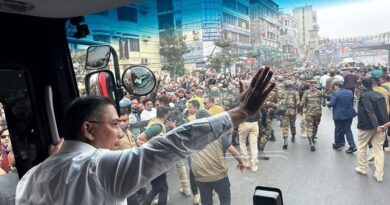
Pakistan’s capital Islamabad became the unlikely venue on Saturday for one of the most consequential diplomatic encounters of the ongoing West Asia conflict, as United States Vice President JD Vance and Iranian Parliament Speaker Mohammad Bagher Ghalibaf arrived separately to hold ceasefire negotiations — with Pakistan playing host to both delegations in a bid to position itself as a neutral facilitator.
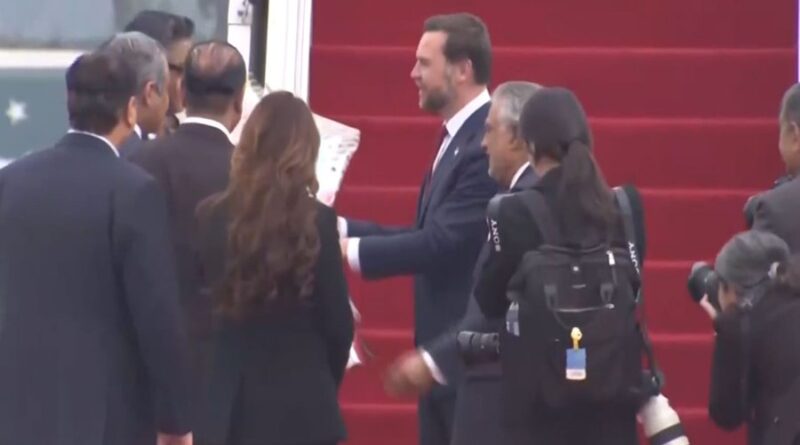
The White House confirmed that Vance met Pakistani Prime Minister Shehbaz Sharif in Islamabad. Pakistan’s Army Chief General Asim Munir, Foreign Minister Ishaq Dar and Minister Mohsin Naqvi received Vance on arrival. Munir, notably, was dressed in a suit for this reception — a contrast to the previous evening when he had appeared in full military uniform to receive the Iranian delegation at the airport, a sartorial distinction that was not lost on observers.
Vance is leading the American side in the negotiations. Ghalibaf is heading the Iranian delegation. The two sides were expected to begin formal talks shortly after both delegations settled in.
Before the talks even began, however, Ghalibaf set a charged emotional tone. Upon landing in Islamabad, the Iranian Parliament Speaker shared a photograph on social media platform X showing the seats of his aircraft bearing portraits of four children, accompanied by their blood-stained school bags and shoes, with flowers placed alongside. The images are of children killed on February 28 — the first day of the war — when a primary school in the Iranian city of Minab was struck in an attack that killed 168 people, including children and school staff. Iran has blamed the United States and Israel for the attack. Washington has said it is investigating the incident.
The gesture was unmistakably deliberate — a statement, before a single word of negotiation had been exchanged, of what Iran believes is at the moral core of this conflict.
The talks are expected to be difficult. According to Al Jazeera, both sides have arrived with different expectations and are attempting to find a middle path, with a fundamental deficit of trust being the single biggest obstacle. Iran has placed two core conditions on the table: first, a halt to the ongoing fighting in Lebanon; and second, the release of billions of dollars of Iranian funds frozen in various countries since 1979.
On the second condition, the United States has already drawn a firm line. The White House also moved to dismiss reports suggesting that America was prepared to release Iranian assets held in Qatar and other countries, calling those reports incorrect.
Iran’s Foreign Minister Abbas Araghchi underlined just how wide the trust gap is. In a phone call with his German counterpart Johann Wadephul, Araghchi said Iran has no trust whatsoever in the United States, and that even the Iranian delegation attending the Islamabad talks does not believe in the process. He accused Washington of repeatedly breaking its promises and betraying diplomatic commitments, while asserting that his government would fight with full strength to protect the rights and interests of the Iranian people.
On the American side, the language being used is no less stark. President Donald Trump has warned Iran that if a peace deal is not reached, the United States will strike again. Vance, speaking en route to Islamabad, said he hoped for good results from the talks but cautioned that Iran should not attempt to play games with America.
In a significant separate disclosure, former US Secretary of State John Kerry stated that Israeli Prime Minister Benjamin Netanyahu had on multiple occasions demanded that the United States attack Iran. Kerry noted that Presidents Barack Obama, Joe Biden and George W. Bush had all rejected those demands — but that Donald Trump is the only American president who has shown willingness to agree to such action.
Meanwhile, in a sign of how the conflict is already reshaping global energy flows, shipping data shows that more than 60 large empty oil tankers — Very Large Crude Carriers — are currently heading toward the United States Gulf Coast from various parts of the world, amid the ongoing disruption in the Strait of Hormuz. Each such tanker is capable of carrying approximately two million barrels of crude oil. The movement suggests that American crude is being looked to as a substitute for supplies disrupted by the Hormuz crisis.
On the Lebanon front, the situation remains volatile. Hezbollah claimed multiple attacks on Israeli military positions, tanks and soldiers using rockets, drones and missiles. Israel has continued retaliatory strikes. The death toll in Lebanon from Israeli attacks has now crossed 1,953, with more than 6,300 injured. Israel has separately stated it will not hold ceasefire talks directly with Hezbollah, even as reports indicate that American-mediated talks between Israeli and Lebanese representatives are scheduled to begin on April 14 in the United States.
Saudi Arabia’s Finance Minister Mohammed Al-Jadaan is also expected to visit Pakistan in the coming days — a visit that carries added significance given Pakistan’s acute economic pressures and its recent announcement that it intends to repay more than three billion dollars in loans owed to the UAE.
What emerges from Islamabad — if anything — will shape not just the immediate trajectory of the US-Iran conflict but the broader architecture of West Asian geopolitics for years to come. As of Saturday evening, the outcome remains deeply uncertain.