Madras High Court Orders Temple Car to Enter Dalit Colony, Rejects ‘Tradition’ Defence Against Caste Discrimination
Justice Balaji declares “Faith cannot be fenced by caste or creed” in landmark verdict ensuring equal access to temple festivities for Scheduled Caste community
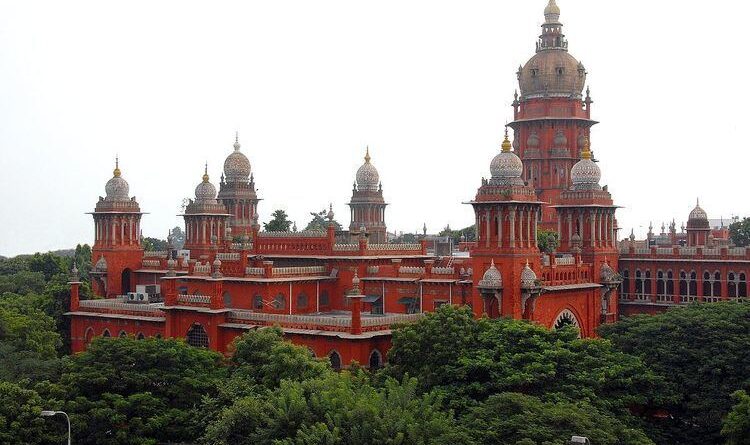
Chennai, November 7, 2025 – In a landmark judgment striking at the heart of caste-based discrimination in religious practices, the Madras High Court has directed that the temple car procession of Muthu Kolakki Amman Temple in Puthagaram village, Kancheepuram district, must pass through the Dalit Colony, rejecting arguments based on decades-old customs and traditions.
Justice P.B. Balaji, delivering the judgment, observed: “Faith cannot be fenced by caste or creed and divinity cannot be confined by human prejudice. God does not reside in certain streets alone. No street is unworthy of the chariot or the god it carries. God never discriminates. So discrimination cannot be wrapped in the sanctity of tradition.”
The petition was filed by Selvaraj, a Scheduled Caste resident of Puthagaram village, seeking permission for his community to enter the temple, worship the deity, and participate in the car festival with the temple car visiting the Dalit Colony during both trial and main runs of the annual procession.
Historical Discrimination
According to the petition, despite the temple being under the control of the Hindu Religious and Charitable Endowment (HR&CE) Department, discrimination against Dalit community members continued, with upper caste residents preventing them from worshipping and participating in temple festivities.
In September 2025, when the temple car festival was announced, Scheduled Caste community members were prevented from participating, leading to multiple representations to the district administration and peace committee meetings. However, respondents representing the upper caste community remained “adamant” in opposing Dalit participation.
District Collector’s Feasibility Report
Following the Court’s earlier direction on September 4, 2025, the District Collector of Kancheepuram conducted a detailed field inspection with the Superintendent of Police, Sub Collector, HR&CE Assistant Commissioner, Tahsildar, Village Administrative Officer, and TNEB officials.
The inspection team examined both the existing temple car route and the proposed extensions into the Scheduled Caste habitation. In their status report dated September 12, 2025, they concluded that the requested route extensions were “feasible without affecting the historic character of the procession” while addressing the grievances of the petitioner and local community.
The District Collector submitted an integrated route plan, finding it “technically and operationally feasible” subject to minor repairs in certain stretches.
Opposition from Upper Caste Representatives
Senior Counsel G. Karthikeyan, appearing for upper caste community representatives (respondents 6 to 8), argued that the existing car route had been in practice for “several decades” and there was no necessity to alter it. He contended that changing the route would “open a pandora’s box” with other residents potentially demanding the temple car visit their streets.
Karthikeyan denied allegations of untouchability, claiming there was no objection to any community entering the temple. He argued that Scheduled Caste and Scheduled Tribe community members were already permitted to put up “Padayal” at the end of the procession—a practice he claimed had been in vogue for centuries.
Court’s Strong Rejection
Justice Balaji firmly rejected these arguments, stating: “We as a Society have evolved over time and have adapted to several changes and therefore, to resist change citing settled custom, tradition and practice can never be a valid defence available to the private respondents.”
The Court observed that the petitioner was not pursuing a “selfish motive” but espousing the cause of Dalit Colony residents who had expressed keen interest in the temple car visiting their area.
Significantly, the Court found that the existing route itself did not merely follow the traditional “Four Mada Streets” around the temple, as claimed by upper caste representatives. The Court’s examination of maps revealed that the current route already extended beyond the immediate temple precincts in various directions.
Constitutional Principles Upheld
Invoking Article 17 of the Constitution, which abolished untouchability, Justice Balaji emphasized that the abolition was “not just in physical form but in true letter and spirit.”
“Therefore, none can dictate terms as to who is entitled to stand before the deity and worship and who cannot,” the judge stated.
The Court also noted that all respondents, including government authorities, had confirmed there was no bar for any community to enter the temple and worship the deity.
Court’s Directions
The Court issued the following directions:
- Temple Access: Recorded the stand that there is no bar for the petitioner and Scheduled Caste community to enter Muthu Kolakkiamman Temple and worship. Authorities must ensure no discrimination is practiced.
- Integrated Route: Accepted the District Collector’s status report and directed that the temple car shall proceed on the integrated route during both trial and main runs.
- Police Protection: Directed the Inspector of Police to ensure sufficient protection during both runs to conduct the festival peacefully.
- Route Map: The approved integrated route map was made part of the court order.
The new integrated route extends from Annamar Temple eastward to MGR Bus Stop, and includes a stretch toward Muni Eswaran Temple, effectively bringing the temple car procession through areas inhabited by the Dalit community.
Broader Implications
The judgment represents a significant judicial intervention against caste-based discrimination in religious practices. Legal experts view it as an important precedent that prioritizes constitutional rights over claims of tradition and custom.
R. Thirumoorthy, counsel for the Tamil Nadu Untouchability Eradication Front (TNUEF), which was impleaded in the case, supported the petitioner’s cause and corroborated allegations of oppressive casteist practices in the village.
The verdict reinforces the principle that religious traditions cannot be used to perpetuate social discrimination, and that administrative authorities have a constitutional duty to ensure equal access to public religious spaces and festivities for all communities.
The case also highlights the continuing challenge of caste discrimination in rural Tamil Nadu, where despite constitutional protections and legal prohibitions, Dalit communities continue to face barriers to full participation in religious and social life.
– NewsArc Bureau