Modi Addresses Lok Sabha on West Asia Crisis, Vows to Shield India from Economic Fallout
The Prime Minister outlined a sweeping strategy covering energy security, evacuations, diplomacy, and domestic resilience as conflict in the Gulf enters its fourth week
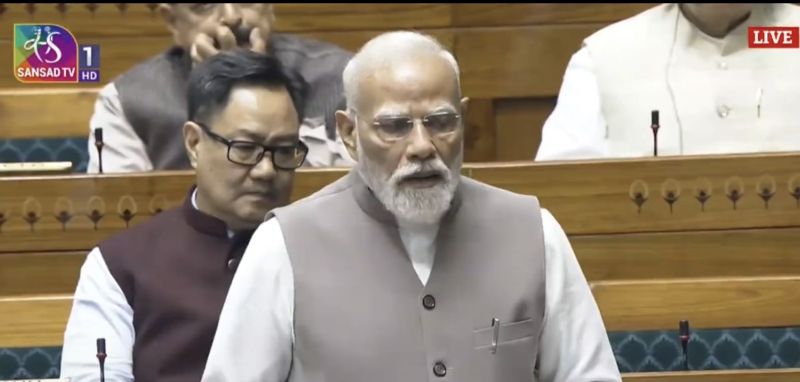
Prime Minister Narendra Modi on Monday addressed the Lok Sabha on the escalating conflict in West Asia, warning of its “very adverse impact on the global economy” while reassuring Parliament that India is prepared on every front — from protecting its citizens abroad to safeguarding fuel and food supplies at home.
Indians Abroad Protected, Over 3.75 Lakh Evacuated
Modi informed the House that more than 3,75,000 Indians have safely returned home since the conflict began, including around 1,000 from Iran — over 700 of them young medical students. He confirmed that he has personally spoken with heads of state across West Asia in two separate rounds, all of whom have given assurances regarding the safety of Indian nationals. “All Indian missions in the affected countries are continuously providing help,” he said, adding that 24/7 control rooms and emergency helplines have been activated both within India and in the affected region.
With nearly one crore Indians living and working in Gulf countries, and a significant number of Indian crew members aboard commercial ships navigating those waters, the Prime Minister stressed the personal stakes for India. “India’s concerns are naturally greater, and it is essential that a united and unanimous voice goes out to the world from India’s Parliament on this crisis,” he declared.
Energy Security at the Forefront
Acknowledging that crude oil, gas, fertilizers and other essentials reach India through the Strait of Hormuz — where shipping has become “highly challenging” — Modi outlined India’s multi-layered energy strategy. He pointed to the expansion of India’s oil import sources from 27 to 41 countries over the past eleven years, a Strategic Petroleum Reserve exceeding 53 lakh metric tonnes with plans to scale it beyond 65 lakh metric tonnes, and a surge in refining capacity as key buffers against the current disruption.
On the domestic front, the Prime Minister cited ethanol blending rising from around 1–1.5 percent a decade ago to nearly 20 percent today, saving approximately 4.5 crore barrels of oil imports annually. He also highlighted the electrification of railways, saving roughly 180 crore litres of diesel per year, the expansion of the metro network from under 250 km to about 1,100 km since 2014, and the deployment of 15,000 electric buses. With renewable energy capacity crossing 250 gigawatts and solar power alone growing from 3 to 140 gigawatts in eleven years, he affirmed, “India’s energy future will be even more secure.”
Farmers and Food Supplies Insulated
Modi moved to reassure farmers and consumers, stating that adequate foodgrain stocks are in place and that the government is actively supporting the upcoming Kharif sowing season. Drawing a parallel with the COVID-19 pandemic, he recalled how the government ensured farmers received urea at under ₹300 per bag even when international prices touched ₹3,000. Six new urea plants commissioned in the last decade, domestic fertilizer production increases, and import diversification were cited as structural safeguards against global supply shocks.
Diplomatic Push and Internal Security
On the foreign policy front, Modi stated that India’s position has been consistent — deep concern, calls for de-escalation, and firm opposition to attacks on civilians and energy infrastructure. He described attacks on commercial ships and obstruction of international waterways as “wholly unacceptable” and confirmed ongoing diplomatic engagement with all relevant West Asian leaders.
On the home front, Modi revealed that all law-and-order agencies have been placed on high alert, with coastal, border, cyber and strategic installation security being reinforced. He cautioned against those seeking to exploit the crisis through misinformation, hoarding or black-marketing, urging all state governments to take swift action.
A Call for National Unity
Closing his address, the Prime Minister drew on the spirit of national solidarity demonstrated during the pandemic, calling on citizens and state governments to stand together. “When every government and every citizen of this country walk together, we can challenge every challenge — this is our identity, and this is our strength,” he said.