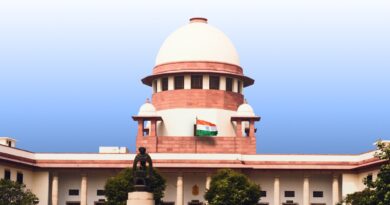
One Slap to Wife Isn’t Cruelty, Rules Gujarat High Court — After 30 Years of Legal Drama
A banjo player, a late-night habit, and a marriage that ended tragically: Gujarat’s highest court finally drops the curtain on a case older than most law students
In what may go down as one of the more musically-flavoured matrimonial disputes in Indian legal history, the Gujarat High Court has acquitted a man convicted of driving his wife to suicide — because, as the court essentially found, a husband who comes home late from playing banjo gigs and slaps his wife once is not automatically a criminal.
Justice Gita Gopi, delivering her judgment on February 5, 2026 — nearly three decades after the incident of May 1996 — set aside the Sessions Court conviction of Dilipbhai Manglabhai Varli, who had been sentenced to a rather grim seven years for abetment of suicide and one year for cruelty to wife under the IPC.
The Plot, Briefly
Dilip had a day job at GIDC. He also had a passion: the banjo. Wedding season meant late nights, extra income, and — as it turned out — a seriously unhappy wife named Premila. By all accounts, Premila deeply disliked her husband rolling in at odd hours after performing at marriage parties. Quarrels followed. Words were exchanged. On one occasion, when Premila returned from an overnight stay at her parents’ home without telling him, Dilip lost his temper and slapped her — in front of her own mother, no less.
Tragically, in May 1996, Premila was found dead, having hanged herself from a tree in the family field. Her family alleged years of brutal physical and mental abuse. Dilip was arrested, tried, convicted, and sentenced. He appealed. And then everyone waited. And waited.
What Took So Long Is Anyone’s Guess. What the Court Found Is Clearer.
After painstakingly combing through testimony from eleven prosecution witnesses — the father, the mother, the brother, the paternal aunt, the doctor, the panch witnesses, and the investigating officer — Justice Gopi found the prosecution’s case riddled with more holes than a banjo’s resonator.
The mother claimed she had taken Premila for medical treatment after beatings. The brother said no such thing ever happened. The father couldn’t remember dates of alleged abuse. No prior police complaint had ever been filed. No medical records surfaced. The police themselves, upon investigation, found no evidence of a quarrel on the night in question.
Most tellingly, every single witness — friend, foe, and family alike — told the same underlying story: Premila didn’t like Dilip coming home late from his banjo performances. That was the heart of the conflict.
“One Slap Does Not Cruelty Make” (in spirit, if not exact words)
The court, leaning on Supreme Court precedents, was categorical: to convict under Section 306 (abetment of suicide), there must be a positive act with clear criminal intent that pushed the deceased into a corner with no way out. Domestic friction — however real and painful — is not the same thing as criminal abetment.
The single slapping incident, the court noted, occurred because Dilip was upset that his wife had stayed overnight at her parents’ home without informing him. Regrettable? Certainly. Criminal cruelty under Section 498A? The court said no.
No dowry demand. No financial harassment. No pattern of documented, provable, cogent abuse. Just a young marriage, a banjo, late nights, and a domestic storm that ended in the most heartbreaking way possible.
The Irony Is Not Lost
The man spent years under conviction for a crime the High Court has now found unproven. The woman lost her life at a tragically young age. A family lost a daughter. And the Indian legal system took roughly 30 years to arrive at a conclusion — longer than the marriage itself lasted by a factor of approximately thirty.
Justice, as they say, moves at its own tempo. Sometimes, it appears, even slower than a banjo ballad.