Pakistan Threatens T20 World Cup Boycott Over Bangladesh Controversy
PCB Chairman Naqvi accuses ICC of ‘double standards’ as Prime Minister Sharif to make final call on Pakistan’s participation; ICC warns of severe sanctions
LAHORE/DUBAI — Pakistan’s participation in the upcoming T20 World Cup 2026 has been thrown into serious doubt after Pakistan Cricket Board (PCB) Chairman Mohsin Naqvi stated that the final decision on whether the team will compete rests with Prime Minister Shehbaz Sharif. The development comes amid escalating tensions between the PCB and the International Cricket Council following Bangladesh’s elimination from the tournament.
The controversy erupted after the ICC refused Bangladesh’s request to relocate their matches from India to Sri Lanka citing security concerns. Bangladesh ultimately declined to participate in the tournament, leading the ICC to replace them with Scotland. Pakistan was the only member nation to vote in favor of relocating Bangladesh’s matches during last week’s ICC board meeting.
Naqvi, who also serves as Pakistan’s Interior Minister, has been outspoken in his criticism of the ICC’s handling of the situation. He accused the world governing body of applying double standards when it comes to treatment of member nations, noting that Pakistan had previously been granted a hybrid model for matches against India while Bangladesh’s similar security concerns were dismissed.
“I think Bangladesh has been hard done by,” Naqvi stated. “You can’t have double standards. You can’t say for one country they can do whatever they want and for the others to have to do the complete opposite.”
Speaking after the ICC’s formal announcement on Saturday, Naqvi made clear that Pakistan’s stance would be determined by the government. “Our stance will be what the government of Pakistan instructs me. The Prime Minister is not in Pakistan right now. When he returns, I’ll be able to give you our final decision. It’s the government’s decision. We obey them, not the ICC.”
The PCB is reportedly exploring multiple options to register its protest, including potentially boycotting the high-profile India versus Pakistan match scheduled for February 15 in Colombo, or withdrawing from the tournament entirely. On Sunday, Naqvi met with the national squad to brief players on the uncertain situation, with skipper Salman Agha and other players expressing support for whatever decision the PCB and government make.
Former Pakistan captain Rashid Latif has urged the PCB to take a firm stand. He suggested that if the India-Pakistan match doesn’t happen, half of the tournament’s appeal would be lost, presenting an opportunity to challenge what he called the existing cricket order.
However, any boycott decision would carry severe consequences for Pakistan cricket. The ICC has reportedly warned the PCB of strict sanctions should Pakistan withdraw from the tournament. According to sources, potential penalties could include stripping Pakistan of ICC T20I rankings, loss of hosting rights for future ICC events including the Women’s T20 World Cup 2028, reduced voting power in ICC decisions, and substantial financial losses.
Pakistan would forfeit the guaranteed $500,000 participation fee from the ICC, potential prize money of up to $2 million, and revenue shares from broadcasting rights and sponsorships. The India-Pakistan match alone is estimated to generate approximately $500 million in revenue for the ICC, making any boycott a significant financial blow to world cricket.
Additionally, if Pakistan skips only the India match rather than withdrawing completely, they would face a two-point deduction in the tournament standings, severely impacting their chances of progression.
The timing of the controversy is particularly sensitive given that the tournament begins in just over two weeks. Pakistan is scheduled to play the opening match against Netherlands on February 7 in Colombo under the hybrid model arrangement agreed upon during the 2024-2027 ICC rights cycle.
Under this agreement, both India and Pakistan play each other at neutral venues for all ICC global events, with Pakistan’s T20 World Cup matches being held in Sri Lanka rather than India. This arrangement was implemented following India’s refusal to tour Pakistan for last year’s Champions Trophy over security concerns.
If Pakistan does withdraw, Uganda has been mentioned as a potential replacement in Group A, which also includes India, Namibia, the United States, and the Netherlands.
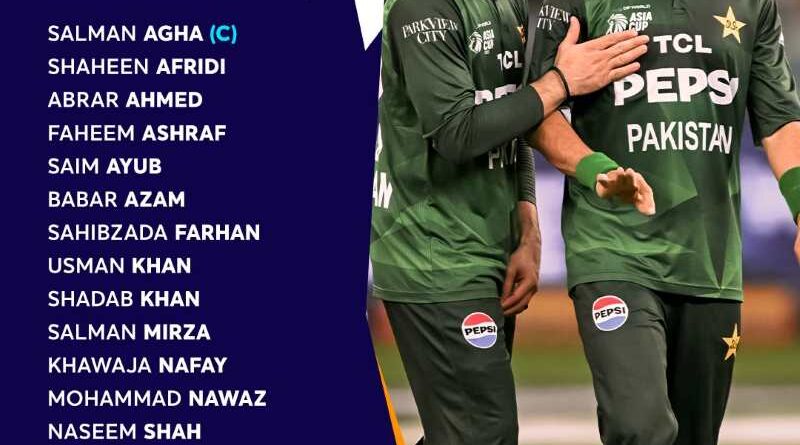
Pakistan announced their squad for the tournament on Sunday, with notable omissions including ace pacer Haris Rauf and wicketkeeper Mohammad Rizwan, while Babar Azam and Shaheen Afridi retained their spots under captain Salman Ali Agha.
The cricket world now awaits Prime Minister Sharif’s decision, which could have far-reaching implications not only for the T20 World Cup but for Pakistan’s standing in international cricket governance and future ICC events.