Punjab Government Moves to Reclaim 800 Acres from BBMB, Grant Ownership Rights to Nangal Residents
The Bhagwant Mann government’s latest land announcement is the newest flashpoint in a long and bitter tussle between Punjab and the Bhakra Beas Management Board — a body the state says overstepped its mandate decades ago
Punjab Education Minister Harjot Singh Bains on Sunday announced that the Bhagwant Mann government will soon confer ownership rights on shopkeepers, residents and other occupants of over 800 acres of surplus land in Nangal and Talwara townships — land currently controlled by the Bhakra Beas Management Board (BBMB). The Water Resources Department has already served formal notices to the BBMB, asserting that the land belongs to Punjab, not to the Board. A new judicial complex for Nangal has also been promised.
“For over 50 years, the BBMB — an authority meant only to operate the project — began acting like a landlord, harassing the very people who built it,” Bains said.
But to understand why this announcement matters, you need to know what the BBMB is, how it ended up controlling large swaths of land in Punjab, and why the two have been at loggerheads for years.
EXPLAINER: THE PUNJAB–BBMB DISPUTE
What is the BBMB?
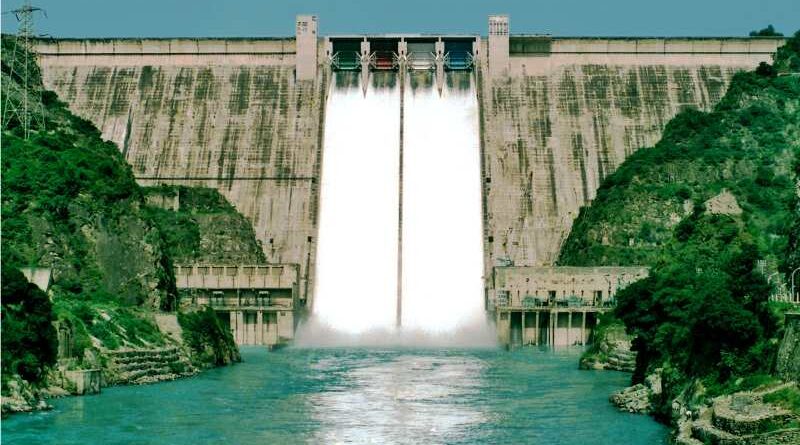
The Bhakra Beas Management Board was constituted under Section 79 of the Punjab Reorganisation Act, 1966, following the reorganisation of Punjab and the creation of Haryana. The administration, maintenance and operation of the Bhakra Nangal project was handed over to the Board on October 1, 1967. Drishti IAS On May 15, 1976, when the Beas Projects Works were completed and handed over, the Bhakra Management Board was renamed the Bhakra Beas Management Board. Since then, BBMB regulates the supply of water and power to Punjab, Haryana, Rajasthan, Himachal Pradesh, Delhi and Chandigarh. CivilsDaily
In short, the BBMB is a central body that manages some of India’s most critical water and power infrastructure — but Punjab has long argued that it has far exceeded that brief.
How did the BBMB end up controlling land in Nangal?
When the Bhakra-Nangal Dam and Beas projects were being built in the 1950s and 1960s, large tracts of land were acquired from Punjab villages to house the construction workforce and project staff. Large tracts of land and residential infrastructure were originally developed to accommodate manpower during the construction phase of the Bhakra and Beas projects. However, with the completion of these projects decades ago, much of this land and housing became surplus. The Tribune
Many Bhakra Dam oustees and traders were settled in Nangal town by the BBMB in the 1960s. They were given plots and shops on lease by the Board. The Tribune For generations, families lived, worked and built their lives on this land — paying rent to the BBMB as their landlord. But after roughly six decades, many of these families began receiving eviction notices.
Why are residents now facing eviction?
After around 60 years, a number of residents are facing eviction cases filed by the Board. The eviction cases have been filed against them over minor issues, including alterations in the buildings. The Tribune Adding to the uncertainty, many original leaseholders had over the years sold their plots to others, and those who bought these properties are now also facing BBMB eviction proceedings.
The BBMB had proposed a fresh lease policy to regularise the situation, but Punjab flatly rejected its authority to do so.
What is Punjab’s legal argument?
Citing provisions of the Punjab Reorganisation Act, 1966, the state government has argued that under Section 48(1), land of the erstwhile Punjab vests with the successor state in which it is located. The BBMB, constituted under Section 79 of the Act, is mandated only to operate and maintain the Bhakra-Nangal and Beas project works. “The BBMB can manage only those properties which are necessary for discharging its functions. Any land beyond that scope remains under the control of the state.” The Tribune
Punjab has also leaned on a central government-accepted report. Punjab has referred to a report submitted by former Chairperson of the Central Electricity Authority, Neerja Mathur, in December 2014, which was accepted by the Union Government in October 2016. The report clearly stated that land forming part of the project should remain under BBMB, while surplus land should be owned, controlled and administered by the respective state government. The Tribune Punjab argues that since this report was accepted by the Centre and never challenged, the BBMB is bound by its conclusions.
Has this dispute gone beyond land?
Very much so. The Punjab–BBMB standoff has repeatedly spilled over into water politics. In May 2025, the BBMB sued Punjab in the Punjab and Haryana High Court after Chief Minister Bhagwant Mann deployed state police at the Nangal headworks to block an additional 8,500 cusecs of water being released to Haryana. Substack In its petition, BBMB claimed that Punjab’s actions were unconstitutional and illegal, infringing on its statutory authority under the Punjab Reorganisation Act, 1966. On May 1, Punjab Police personnel took control of the Nangal Dam and Lohand Control Room Water Regulation Office, obstructing the release of water to Haryana as decided in board meetings. The Tribune The High Court subsequently restrained Punjab from interfering in the day-to-day operations of the dam.
What is the broader political context?
The AAP government in Punjab has made the BBMB dispute a centrepiece of its federalism narrative, framing the Board as an instrument of central overreach. Punjab has argued that BBMB’s creation, coupled with central overreach, laid the foundation for decades of conflict, spawning disputes, agitations, political opportunism, and even bloodshed over water sharing. Substack
The land ownership announcement is therefore not just an administrative measure — it is the latest move in a years-long political and legal battle over who controls Punjab’s resources: the state government, or a central body that Punjab says has outgrown its mandate.
What happens next?
The Bhagwant Mann government says it is framing a comprehensive policy under the Water Resources Department to grant ownership rights to existing occupants. Eligible shopkeepers, families and residents will need to pay only stamp duty charges. The BBMB, for its part, has not yet responded publicly to the latest notice. Given the history of this dispute, a legal challenge from the Board cannot be ruled out.
For the thousands of families in Nangal who have lived under decades of tenure uncertainty, the announcement offers the first real prospect of security — though whether it survives BBMB and central scrutiny remains to be seen.