Sir Mark Tully, BBC’s Legendary ‘Voice of India’, Passes Away at 90
Veteran journalist and chronicler of modern India dies at Max Hospital, New Delhi, following multi-organ failure after stroke; Chandigarh Press Club and journalism fraternity pay heartfelt tributes to the Padma Bhushan awardee
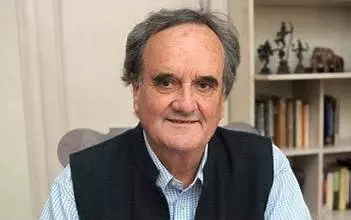
Sir William Mark Tully, the legendary British journalist whose rich, warm voice became synonymous with reporting on India for over three decades, passed away on Sunday, January 25, 2026, at Max Super Speciality Hospital in Saket, New Delhi. He was 90 years old.
The cause of death was multi-organ failure following a stroke, with Tully passing away at 2:35 PM, according to an official hospital statement. The award-winning journalist had been admitted to Max Hospital for the past week due to age-related health issues, confirmed his close friend and veteran journalist Satish Jacob.
A LIFE DEVOTED TO INDIA
Born in Tollygunge, Calcutta on October 24, 1935, Tully served as the Bureau Chief of BBC, New Delhi, for 20 years and worked with the BBC for 30 years before resigning in July 1994. His death marks the end of an era in journalism, as he was widely admired for his insightful reporting and nuanced portrayal of India to audiences worldwide.
For decades, the rich, warm tones of Sir Mark were familiar to BBC audiences in Britain and around the world as a much-admired foreign correspondent and respected reporter and commentator on India.
What made Tully unique among foreign correspondents was his deep connection to India. He eventually became fluent in Hindi, a rare achievement in Delhi’s foreign press corps and one which endeared him to many Indians for whom he was always “Tully sahib”. His good cheer and evident affection for India won him the friendship and trust of many of the country’s top politicians, editors and social activists.
COVERING INDIA’S DEFINING MOMENTS
He covered all the major incidents in South Asia during his tenure, ranging from Indo-Pakistan conflicts, Bhopal gas tragedy, Operation Blue Star and the subsequent assassination of Indira Gandhi, anti-Sikh riots, assassination of Rajiv Gandhi to the demolition of Babri Masjid.
Among his most harrowing experiences was reporting from Ayodhya in 1992. He witnessed a huge crowd of Hindu hardliners tear down an ancient mosque, and some of the mob, suspicious of the BBC, threatened him, chanting “Death to Mark Tully”. He was locked in a room for several hours before a local official and Hindu priest came to his aid.
He was barred from entering India during Emergency in 1975-77 when Prime Minister Mrs Gandhi had imposed censorship curbs on the media, a testament to the impact and fearlessness of his reporting.
PROLIFIC AUTHOR AND BROADCASTER
Beyond journalism, Tully made a lasting mark as an author. His books offered readers thoughtful and humane looks at India’s complexities. Among his most significant works was “Amritsar: Mrs Gandhi’s Last Battle” (1985), co-authored with Satish Jacob, which is widely regarded as one of the most balanced and comprehensive accounts of Operation Blue Star.
His books, including ‘No Full Stops in India’, ‘India in Slow Motion’, and ‘The Heart of India’, offered readers a thoughtful and humane look at the country’s complexities. Other notable works included “Raj to Rajiv: 40 Years of Indian Independence” (1988) and “India’s Unending Journey” (2008).
Tully also connected with audiences through radio as the presenter of the popular BBC Radio 4 programme ‘Something Understood’, where he reflected on faith, society and human values, further showcasing his thoughtful approach to storytelling. The programme continued until the BBC announced its cessation in 2019.
HONORS AND RECOGNITION
Tully was made an Officer of the Order of the British Empire in 1985 and was awarded the Padma Shri in 1992. He was knighted in the New Year Honours 2002, receiving a KBE, and in 2005 he received the Padma Bhushan. He also received a BAFTA in 1985 for lifelong achievement.
The dual honors from both Britain and India reflected his unique position as a bridge between two cultures, earning respect and admiration from both nations.
DEPARTURE FROM BBC
He resigned from the BBC in July 1994, after an argument with John Birt, the then Director General, accusing Birt of “running the corporation by fear” and “turning the BBC into a secretive monolith with poor ratings and a demoralised staff”.
Following his resignation, he continued to work as a freelance journalist and broadcaster based in New Delhi, maintaining his association with the BBC through various programmes until 2019.
CHANDIGARH PRESS CLUB TRIBUTE
The Chandigarh Press Club expressed deep sorrow over the passing of the veteran journalist, issuing a heartfelt tribute to Tully’s legacy.
In their press note, the Club stated: “The Chandigarh Press Club expresses deep sorrow over the passing of veteran journalist, author, and noted chronicler of India, Mark Tully, who breathed his last at a private hospital in New Delhi on Sunday. He was 90.”
“An award-winning journalist and one of the most respected foreign correspondents to report from India, Tully had been unwell for some time and was admitted to Max Hospital, Saket, where he was undergoing treatment for the past week.”
The press note highlighted his journalistic excellence: “Best known for his incisive reportage and deep understanding of India’s social and political fabric, Mark Tully made an indelible contribution to journalism through his decades-long association with the BBC. His writings reflected empathy, balance, and a rare ability to contextualise complex events with clarity.”
Specifically referencing his work on Operation Blue Star, the Club noted: “Among his most significant works is ‘Amritsar: Mrs Gandhi’s Last Battle’, co-authored with fellow journalist Satish Jacob, which is widely regarded as one of the most balanced and comprehensive accounts of Operation Blue Star.”
“The Chandigarh Press Club extends its heartfelt condolences to his family, friends, and the global fraternity of journalists and readers who admired his work. His legacy as a truthful, courageous, and thoughtful journalist will continue to inspire generations.”
TRIBUTES POUR IN
Senior Congress leader Pawan Khera paid tribute on social media, recalling his personal connection to Tully. “Many like me, grew up listening to his voice, reading his books. I ended up living in the very locality in which he lived for years and fell in love with. Travel well, Padma Shri Sir Mark Tully. RIP,” Khera posted.
Former BBC journalist Ram Dutt Tripathi remembered working with Tully, particularly during coverage of the Ayodhya dispute, calling it a privilege to have collaborated with him on major stories.
A UNIQUE PERSPECTIVE
Throughout his life, he performed a balancing act: English, without doubt; but not, he insisted, an expat who was passing through India. He had roots there; it was his home. It’s where he lived for three-quarters of his life.
Born into a wealthy British family in colonial India, young Mark was initially raised with the prejudices of the time. He was sent to a British boarding school in Darjeeling at age four before going to England for further schooling at age nine. He studied theology at Cambridge and initially intended to become a priest in the Church of England but abandoned this path after two terms at Lincoln Theological College.
He joined the BBC in 1964 and returned to India in 1965 as the corporation’s India Correspondent, beginning a relationship with the country that would define his life and career.
LEGACY
Mark Tully leaves behind a legacy that transcends journalism. He was a cultural bridge, a voice of reason during turbulent times, and a chronicler who helped the world understand India’s complexities with empathy, balance, and profound insight.
His work bridged cultures and brought India’s stories to global audiences with honesty, empathy, and integrity. As one reader reflected online, “No Full Stops in India’ is the best book to understand our complex nation. He got the chaos, the contradictions, and the spirit perfectly.”
For millions of listeners and readers across the globe, Mark Tully’s voice will forever remain the “voice of India” – informed, compassionate, and deeply human.
Sir Mark Tully is survived by his vast body of work, nine published books, countless broadcasts, and the respect of two nations that honored him equally. His funeral arrangements have not yet been announced.