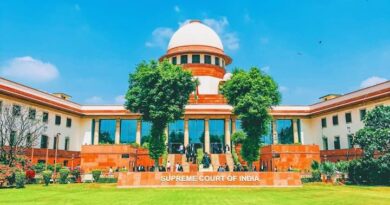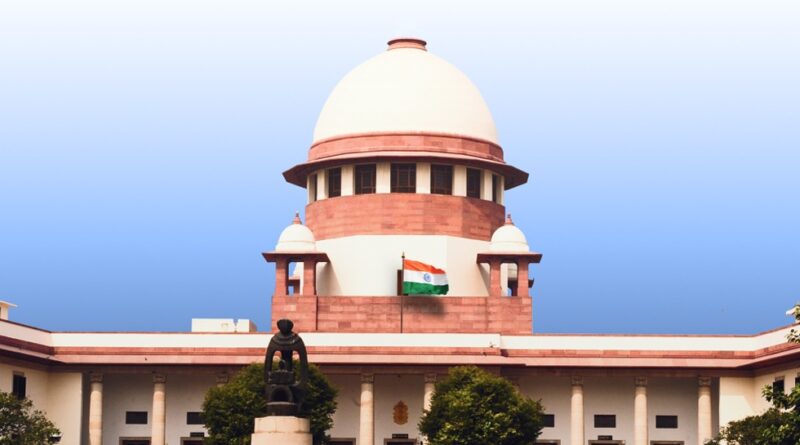
Supreme Court Bench Divided Over Section 17A: Prior Sanction Provision For Corruption Probes Faces Opposing Verdicts
Justice Nagarathna Declares Provision Unconstitutional While Justice Viswanathan Upholds It With Lokpal Safeguard; Matter Referred to Larger Bench For Final Decision
NEW DELHI — In a significant development that underscores deep judicial disagreement on anti-corruption measures, the Supreme Court on Tuesday issued contrasting opinions on Section 17A of the Prevention of Corruption Act, with the matter now set to be heard by a larger constitutional bench.
The division bench consisting of Justice BV Nagarathna and Justice KV Viswanathan reached opposing conclusions about whether the 2018 amendment, which requires government approval before initiating corruption probes against public officials, aligns with constitutional principles.
Justice Nagarathna’s Position: Protection Becomes Shield for Wrongdoing
Justice Nagarathna invalidated the provision entirely, arguing it undermines the fundamental purpose of anti-corruption legislation. Her opinion characterized the requirement as creating an impermissible barrier to investigating misconduct.
The judgment emphasized that requiring advance permission contradicts earlier Supreme Court rulings that rejected similar protective mechanisms. According to her analysis, the provision revives concepts that prior judgments had already rejected as incompatible with effective corruption enforcement.
Her concerns centered on practical implementation challenges. Given that government officials would be deciding whether investigations into other government officials could proceed, Justice Nagarathna questioned whether approvals would realistically be granted. This structural issue, she reasoned, transforms what claims to be protection for honest officials into immunity for dishonest ones.
The judgment stressed that genuine integrity does not require legislative protection from investigation. Those acting honestly have nothing to fear from proper inquiry processes, while the provision’s real effect is preventing legitimate investigations from even beginning.
Justice Viswanathan’s Perspective: Safeguarding Decision-Making Authority
Taking the opposite view, Justice Viswanathan validated the provision while modifying its implementation. His judgment transfers approval authority from government departments to independent anti-corruption institutions like Lokpal and state Lokayuktas.
This approach attempts to preserve the protective purpose while addressing conflict-of-interest concerns. By placing decision-making power with independent bodies rather than executive officials, the modification aims to balance accountability with protection against harassment.
Justice Viswanathan’s reasoning focused on protecting legitimate governmental functions. Without safeguards against frivolous complaints, he argued, officials would become overly cautious, undermining effective administration. His judgment suggested that eliminating all protections would create more problems than it solves.
The opinion acknowledged misuse possibilities but rejected this as grounds for complete invalidation. Constitutional frameworks must account for both protecting public interest and preventing abuse of legal processes.
The Constitutional Challenge
The Centre for Public Interest Litigation brought the case challenging the amendment’s validity. Their argument centered on constitutional equality principles and separation of powers concerns.
Senior counsel representing the petitioners contended that allowing executive officials to prevent investigations into their own ranks violates basic accountability principles. This creates situations where those potentially involved in decisions under scrutiny control whether investigations proceed.
The challenge drew parallels to previous Supreme Court decisions that eliminated similar protections, arguing the 2018 amendment effectively reintroduced what courts had already rejected. The petitioners emphasized that practical experience shows such approvals are rarely granted, effectively nullifying corruption investigations before they begin.
Government lawyers defended the provision as necessary for protecting official decision-making. Their position emphasized distinguishing between protecting corruption versus protecting legitimate administrative discretion. The argument stressed that officials facing constant investigation threats cannot effectively perform their duties.
Section 17A’s Framework
The disputed provision, added through 2018 amendments, prohibits starting investigations or inquiries regarding decisions made by public servants in their official capacity without obtaining prior authorization from designated authorities.
Proponents argue this prevents weaponization of corruption allegations against officials making difficult but necessary decisions. Critics counter that it creates unacceptable obstacles to investigating genuine corruption, particularly at senior levels where approval requirements are most problematic.
Path Forward
The divergent opinions trigger automatic referral to the Chief Justice for larger bench constitution. This expanded panel will hear comprehensive arguments and issue a binding resolution.
During this interim period, the provision remains operative, meaning investigations continue requiring prior approval under current procedures. The timeframe for larger bench hearing and final determination remains uncertain.
Broader Implications
This judicial split reflects fundamental tensions in corruption enforcement. One perspective prioritizes removing all barriers to investigating wrongdoing. The opposing view emphasizes protecting legitimate governance from interference through malicious allegations.
The eventual resolution will influence corruption investigation protocols across government levels. It addresses questions about balancing official protection with accountability that extend beyond this specific provision.
Legal observers note the outcome will affect not just investigation procedures but broader questions about institutional independence and executive accountability. The larger bench’s approach to reconciling these competing concerns will provide important guidance for anti-corruption frameworks.
The case represents a critical juncture in defining how India addresses corruption while maintaining functional governance. Both judicial opinions acknowledge legitimate concerns; their disagreement centers on which considerations should take precedence when they conflict.