Supreme Court Hands FIR Alleging Sexual Assault of 11-Year-Old Girl to CBI, Orders Child to Stay With Mother
In a case marked by bitter matrimonial warfare and allegations that stretch, in the Court’s own words, “beyond imagination,” a Supreme Court bench transfers investigation of POCSO charges against a father who held custody of his minor daughter, and stays criminal proceedings against him pending the CBI probe
NEW DELHI, APRIL 11, 2026
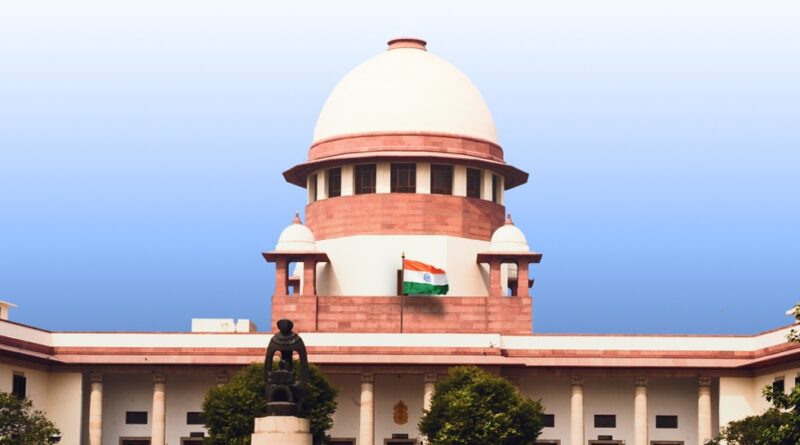
The Supreme Court of India has transferred to the Central Bureau of Investigation the investigation of a First Information Report lodged by a mother against her husband, alleging sexual offences under the Protection of Children from Sexual Offences Act against their 11-year-old daughter — a child who had, at the time the FIR was filed, been living in the custody of the accused father.
A bench comprising Justices JB Pardiwala and KV Viswanathan passed the order, citing the sensitivity of the case and expressing its desire that the investigation be conducted “in the right direction and in accordance with law.” The bench directed the CBI to constitute a committee headed by an officer not below the rank of Deputy Inspector General, and said the committee must include a renowned lady psychologist. The CBI was simultaneously instructed not to take any coercive steps against the parties, while both parties were directed to extend their full cooperation to the investigating agency.
The case has its origins in a matrimonial dispute that has spiralled over several years into what the Supreme Court itself described as a situation where the minor daughter “is unnecessarily being tormented.” Litigation between the estranged couple is pending not only before the Supreme Court but also before the Karnataka High Court, and the present Supreme Court proceedings — which arose from a challenge to a High Court order modifying visitation rights — have themselves been pending for two years.
The sequence of events that led to the Supreme Court’s order is layered and contested. The petitioner-husband had secured custody of the minor daughter, with visitation rights granted to the respondent-wife. However, in 2024, the wife lodged an FIR against the husband for offences punishable under Sections 323, 504 and 506 read with Section 34 of the Indian Penal Code, Section 75 of the Juvenile Justice (Care and Protection of Children) Act 2015, and critically, Section 10 of the POCSO Act — the provision dealing with aggravated sexual assault. During the investigation of the FIR, the minor daughter was medically examined and the resulting medical reports were placed before the court.
On multiple occasions, the Supreme Court urged both parties to arrive at an amicable resolution of their disputes in the best interest of their child. In one of its earlier orders, the bench observed that the allegations levelled by the parties against each other were “something beyond imagination” — language that signals the court’s acute awareness of the gravity of what is being alleged, while also reflecting its concern at the manner in which the child has been placed at the centre of an acrimonious legal battle.
Having interacted with both parties and with the child herself, the court ultimately decided that the child should stay with the mother. It also stayed the criminal proceedings against the petitioner-husband under the POCSO Act, a stay that will operate while the CBI conducts its investigation.
The decision to hand the investigation to the CBI is significant on multiple counts. It signals the court’s dissatisfaction with the direction of the investigation as it stood, and its view that a case of this nature — involving a child, serious sexual offence allegations, contested custody, and what appears to be a deeply dysfunctional parental conflict — requires investigation by an agency of the highest calibre and with insulation from local influences.
The case was argued before the bench by Senior Advocates Indira Jaising and Lakshmy Iyengar, along with Advocates on Record A Velan, Patil Rekha Chandra Gouda and Divya Swami. Additional Advocate General Avishkar Singhvi also appeared in the matter.
The transfer of custody to the mother and the CBI referral together represent a significant course correction in a case that has dragged on for years while a young child has lived through the consequences of her parents’ unresolved war. The CBI’s investigation — and whether it ultimately confirms or dispels the allegations — will now determine what comes next for the family, and for the child at its centre.