Supreme Court Stays Bail Order for Kuldeep Sengar in Unnao Rape Case; “Even Finest Judges Prone to Errors,” Says CJI
Court halts Delhi HC’s sentence suspension for convicted ex-BJP MLA; survivor breaks down, vows to fight until perpetrator hanged
New Delhi, December 30, 2025 – In a significant intervention that brought relief to the 2017 Unnao rape survivor, the Supreme Court on Monday stayed the Delhi High Court’s order granting bail to former BJP legislator Kuldeep Singh Sengar, ensuring he remains in custody while his appeal is examined on merit.
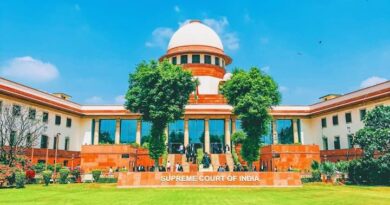
A three-judge vacation bench led by Chief Justice of India Surya Kant, along with Justices J.K. Maheshwari and Augustine George Masih, passed the order while hearing pleas filed by the Central Bureau of Investigation and two women advocates challenging the High Court’s December 23 decision to suspend Sengar’s life sentence.
“We are not sitting in ivory towers,” CJI Kant observed, acknowledging public outrage while cautioning against social media trials. The bench noted that “even the finest judges are prone to errors” and emphasized that correction through appellate processes was intrinsic to constitutional adjudication.
Survivor’s Emotional Response
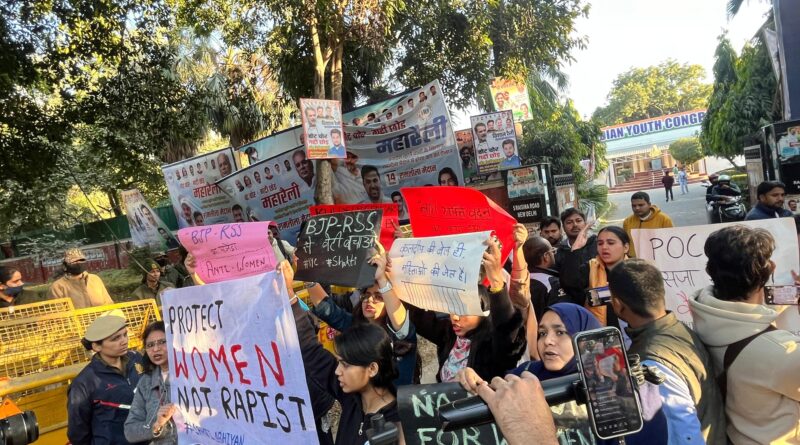
Outside the Supreme Court, the survivor, now an adult, broke down while addressing protesters and media, expressing both relief and determination to continue her fight for justice.
“I will ensure he gets the death penalty. I will not rest until he is hanged,” the survivor stated emotionally during protests organized by women’s rights groups and Congress workers. She had earlier alleged that Sengar bribed officials, including a CBI investigating officer and Delhi High Court judges, and that her family faced severe threats since the bail announcement.
The survivor’s mother joined demonstrations outside the Delhi High Court last week, stating that while she did not blame the entire judiciary, the bail order had shattered their trust. “Earlier judges delivered justice to our family, but now the accused has been granted bail,” she said.
Court Flags Substantial Legal Questions
While staying the High Court order, the Supreme Court bench identified several substantial questions of law requiring examination, particularly regarding the interpretation of “public servant” under the Protection of Children from Sexual Offences (POCSO) Act.
The court issued notice to Sengar, directing him to file his response within four weeks. The matter will be heard again after counter-affidavits are submitted.
Solicitor General Tushar Mehta, appearing for the CBI, argued that the Delhi High Court erred in holding that aggravated offence provisions under the POCSO Act were not attracted merely because Sengar could not be treated as a public servant in the conventional sense.
“For the purposes of POCSO, a public servant would mean a person who is in a dominant position with respect to the child,” Mehta submitted. He emphasized that Sengar, being a powerful four-time MLA from Unnao at the time of the offence, clearly exercised such dominance over the minor victim.
“POCSO Act has overriding effect. This convict is also guilty of killing the survivor’s father and others. We are answerable to the child who was 15 years old!” the Solicitor General stated emphatically.
The bench questioned whether the CBI’s interpretation would render the concept of “public servant” irrelevant once the victim is established to be a minor. Mehta clarified that penetrative sexual assault on a child itself constitutes an offence under POCSO, with aggravation depending on circumstances such as abuse of dominance or position of authority.
High Court’s Controversial Decision
The Delhi High Court, in its December 23 order, had suspended Sengar’s life sentence, noting he had already spent seven years and five months in prison. The court granted him bail on a personal bond of Rs 15 lakh with three sureties and imposed strict conditions, including staying at least five kilometers away from the survivor’s residence and refraining from contacting or intimidating her or her family.
However, Sengar was not expected to walk free even after this order, as he continues to serve a separate 10-year sentence for culpable homicide in the custodial death of the survivor’s father in 2018.
The High Court had reasoned that the offence of aggravated penetrative sexual assault under Section 5(c) of the POCSO Act—which carries a mandatory minimum sentence of 20 years—was not applicable because Sengar, though an MLA, did not fall within the definition of “public servant” for the purposes of POCSO prosecution.
This interpretation drew sharp criticism from legal experts and women’s rights activists. Senior advocate Dushyant Dave described the judgment as “perverse beyond imagination” and said it had deeply shaken his faith in the justice system.
A Case That Shocked the Nation
The Unnao rape case became a symbol of power abuse and the vulnerability of justice when confronting political influence. On June 4, 2017, the then 17-year-old girl was lured to Sengar’s residence on the pretext of employment assistance and was raped. Her ordeal was compounded by a year-long suppression of the case despite repeated attempts to register complaints.
In April 2018, after her father was brutally beaten by Sengar’s supporters and later died in judicial custody, and after she attempted self-immolation outside Chief Minister Yogi Adityanath’s residence, the case finally gained national attention. The Supreme Court subsequently transferred all five related cases to Delhi and ordered protection for the survivor and her family.
In December 2019, a special CBI court convicted Sengar of rape under the Indian Penal Code and the POCSO Act, sentencing him to life imprisonment. The court also fined him Rs 25 lakh, with Rs 15 lakh designated for the survivor as compensation.
Sengar was separately convicted in 2020 and sentenced to 10 years’ imprisonment for the custodial death of the survivor’s father, where his brother Atul Sengar and other associates were also found guilty.
The case took another horrific turn in July 2019 when an over-speeding truck rammed into a car carrying the survivor, her lawyer, and two aunts. Both aunts died, while the survivor and her lawyer sustained critical injuries. The incident was widely suspected to be a deliberate attack, though Sengar was ultimately acquitted in this matter.
Political and Public Reactions
Congress leaders, including former party president Rahul Gandhi and Sonia Gandhi, met with the survivor last week and expressed solidarity with her fight for justice. Rahul Gandhi condemned the bail order, questioning what kind of justice system grants bail to rapists while treating victims like criminals.
All India Mahila Congress chief Alka Lamba led protests outside the Supreme Court on Monday, with police detaining several demonstrators. Women activists from various organizations, including the All India Progressive Women Association and the All India Democratic Women’s Association, joined the protests demanding justice for the survivor.
Union Environment Minister and senior BJP leader Bhupender Yadav has not commented on the matter, and the BJP has maintained silence on the case since expelling Sengar from the party in 2019.
Supreme Court’s Balanced Approach
CJI Kant’s observation that the court was “not sitting in ivory towers” reflected judicial awareness of the intense public scrutiny and political dimensions surrounding the case. However, the bench also cautioned against allowing social media outrage to dictate judicial processes.
“We are conscious that attempts are being made to take political advantage of the situation,” the Chief Justice stated, emphasizing that judicial scrutiny through proper appellate mechanisms was the appropriate path forward.
The court acknowledged that ordinarily, bail orders are not stayed without hearing the accused, but made an exception given the peculiar facts—particularly that Sengar remains convicted and incarcerated in another serious offence.
The survivor welcomed the Supreme Court’s decision with cautious optimism. “I have faith I will get justice in the Supreme Court,” she said, while appealing to Chief Minister Yogi Adityanath for enhanced security so she can pursue her legal battle without fear.
What Happens Next
Sengar will continue to remain in Tihar Jail, where he has been lodged since 2018. He must file his counter-affidavit within four weeks, after which the Supreme Court will examine the substantial legal questions on merit.
The key issues before the apex court include:
- Whether a sitting MLA constitutes a “public servant” for POCSO Act purposes
- Whether dominance over a minor victim, regardless of official designation, triggers aggravated offence provisions
- Whether the Delhi High Court correctly interpreted the sentencing framework under POCSO
- Whether suspension of sentence was appropriate given the nature of the offence and Sengar’s continued conviction in related crimes
The case continues to test India’s criminal justice system’s ability to deliver justice when powerful political figures are accused, and whether protective legislation like POCSO can effectively safeguard vulnerable children from those in positions of authority.
As the survivor stated with determination amid tears: “This is not just about me anymore. It’s about every girl who faces powerful men. I will fight until justice is truly served.”