Supreme Court To Examine Video Evidence Authentication as 13-Year-Old Election Petition Against Stalin Reaches Final Hearing
Bench to Consider Extent of Proof Required for Electronic Records Authenticated by Section 65B Certificate in Electoral Dispute Case
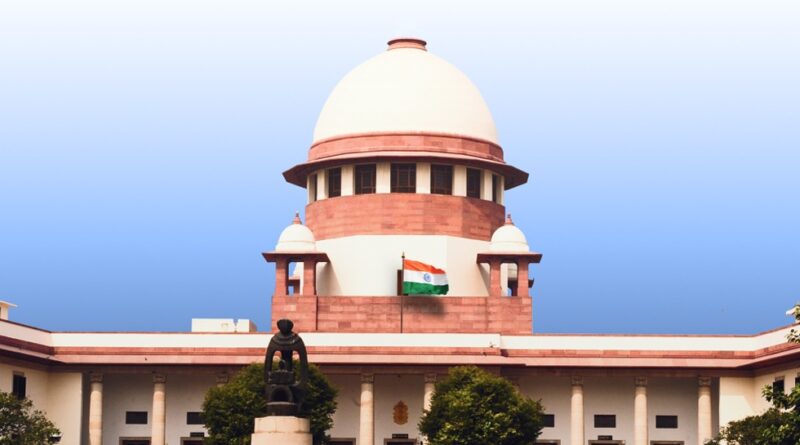
NEW DELHI, January 22, 2026 — The Supreme Court is poised to examine critical questions regarding the admissibility and probative value of video evidence authenticated under Section 65B of the Indian Evidence Act as it prepares for the final hearing of a 13-year-old election petition challenging Tamil Nadu Chief Minister MK Stalin’s 2011 Assembly victory.
THE LONG-PENDING CASE
The case relates to the 2011 Assembly polls in which Stalin, then treasurer of the Dravida Munnetra Kazhagam (DMK), defeated former Chennai mayor and AIADMK candidate Saidai Duraisamy by a narrow margin of approximately 2,700 to 2,800 votes from the Kolathur constituency.
Following his defeat, Duraisamy filed an election petition alleging corrupt practices including misuse of government machinery, distribution of money to voters, and expenditure exceeding the limit prescribed by the Election Commission, seeking to have Stalin’s election declared void.
MADRAS HIGH COURT TO SUPREME COURT
After prolonged proceedings, the Madras High Court dismissed Duraisamy’s petition on June 1, 2017, holding that Stalin’s victory was valid. Duraisamy subsequently filed an appeal before the Supreme Court which was admitted on August 18, 2017.
However, despite directions for early listing, the appeal remained pending for several years, becoming a testament to India’s judicial backlog crisis.
STALIN SEEKS EXPEDITIOUS HEARING
In a remarkable turn of events, in 2022, Stalin himself sought an early hearing of the appeal challenging his own election. A bench headed by then Chief Justice NV Ramana took note of submissions by senior advocates Kapil Sibal and Amit Anand Tiwari, who argued that the matter had been pending since 2017 despite relating to the 2011 elections.
During that hearing, the bench reportedly remarked sarcastically to Stalin’s counsel: “You are already elected, then what is your problem?” Sibal responded that the pendency of allegations of corrupt practices against a sitting Chief Minister warranted an expeditious hearing.
THE VIDEO EVIDENCE CONTROVERSY
At the heart of the legal battle lies a crucial evidentiary question: Tamil Nadu CM MK Stalin has contested the electronic evidence in the case, arguing that the ‘contents’ of the videos adduced as evidence were not proved.
This raises fundamental questions about Section 65B of the Indian Evidence Act, which governs the admissibility of electronic records. The provision requires a certificate identifying the electronic record, describing the manner of its production, furnishing particulars of the device involved, and being signed by a person in a responsible official position.
LEGAL SIGNIFICANCE: SECTION 65B JURISPRUDENCE
The Supreme Court’s consideration of this case comes against the backdrop of evolving jurisprudence on electronic evidence. In the landmark case of Arjun Panditrao Khotkar v. Kailash Kushanrao Gorantyal (2020), the Supreme Court held that a certificate under Section 65B(4) is a condition precedent to the admissibility of electronic evidence.
However, crucial questions remain:
- Does production of a Section 65B certificate automatically prove the contents of video evidence?
- What additional proof is required to establish what the video actually shows?
- Can the authenticity of the device and recording process be challenged even with a valid certificate?
- How should courts evaluate the probative value of authenticated electronic evidence?
CURRENT PROCEEDINGS
The matter is now being heard by a bench comprising Justices JK Maheshwari and Vijay Bishnoi. The bench has directed Duraisamy to file a concise note along with relevant documents summarizing all materials already on record.
The case was scheduled for hearing on January 21, 2026, marking a critical juncture in this protracted legal battle.
BROADER IMPLICATIONS
The Supreme Court’s eventual ruling on the video evidence question could have far-reaching implications beyond this individual case:
For Election Petitions: Election disputes increasingly rely on video recordings of rallies, speeches, and alleged violations. Clarity on proof requirements is essential for electoral jurisprudence.
For Electronic Evidence Generally: With digital evidence becoming ubiquitous in all forms of litigation, the court’s guidance on what constitutes sufficient proof beyond mere authentication will set important precedents.
For Section 65B Compliance: The distinction between admissibility (governed by Section 65B certificates) and proof of contents (requiring additional evidence) needs judicial clarification.
POLITICAL CONTEXT
The case carries significant political weight as Stalin currently serves as Tamil Nadu Chief Minister, having led the DMK to a landslide victory in the 2021 Assembly elections. The allegations stem from his 2011 victory when the DMK was in opposition.
Political observers note the irony that Stalin himself has been pushing for an expeditious hearing, suggesting confidence in the strength of his defense against the electoral malpractice allegations.
WHAT’S AT STAKE
If Duraisamy’s appeal succeeds and the Supreme Court sets aside the High Court’s dismissal, it could potentially:
- Order a retrial of the election petition
- Examine fresh evidence and arguments
- Set aside the 2011 election result if corrupt practices are proven
- Establish new evidentiary standards for election disputes
However, given that the election occurred 15 years ago and Stalin has since won subsequent elections including the 2021 polls, the practical political impact may be limited, though the legal and reputational implications remain significant.
THE SECTION 65B QUESTION
The core legal issue the Supreme Court must address is whether a Section 65B certificate, which authenticates that an electronic record was properly produced and stored, automatically proves what the video depicts, or whether additional corroborative evidence is required to establish the contents and context of the recording.
This distinction is crucial: authentication proves the video is genuine and unaltered, but proving what it actually shows and its legal significance may require witness testimony, forensic analysis, or other corroborating evidence.
The Supreme Court’s ruling will clarify the extent to which courts can rely on authenticated electronic evidence in determining facts, particularly in the high-stakes context of election petitions where the burden of proof is substantial.