‘This Is Not the Country I Grew Up In’: Naseeruddin Shah Slams Mumbai University Over Last-Minute Event Disinvitation
Veteran actor speaks out against university’s decision to drop him from Jashn-e-Urdu programme, alleging political censorship and dishonest conduct
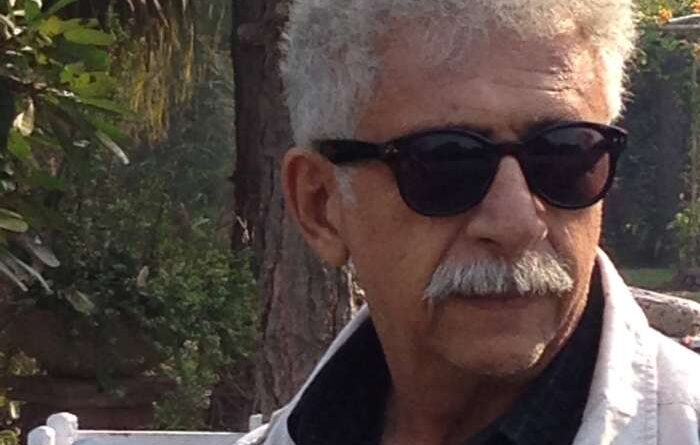
Mumbai, February 6, 2026 — Veteran actor Naseeruddin Shah has publicly condemned Mumbai University for disinviting him from a cultural event just hours before it was scheduled, in what he describes as an insulting and politically motivated decision that reflects the deteriorating state of academic freedom in India.
In a strongly worded opinion piece published in The Indian Express titled “When a university speaks power to truth,” the 75-year-old actor detailed how he was dropped from the Jashn-e-Urdu programme organized by the university’s Urdu department on February 1, allegedly without explanation or apology.
The Incident
According to Shah, he received notification late on the night of January 31 that his presence was no longer required at the event scheduled for the following day. What made matters worse, he wrote, was that the university then informed the audience that Shah had declined to attend—a claim he categorically denies.
“The university, after informing me that I needn’t attend, decided to rub a little salt in by announcing that I had refused to be there,” Shah wrote, calling the decision both insulting and dishonest.
The actor, who has been teaching and mentoring aspiring actors for over four decades, said the event held special meaning for him because of the opportunity to interact with students. He described such engagements as among the most rewarding experiences of his professional life, adding that he had gained more from these interactions than from formal teachers of acting.
Political Motivations Alleged
Shah suggested that the real reason for his disinvitation lay in his public criticism of the current political climate. Referring to comments reportedly made by a senior university official, he challenged the accusation that he “openly makes statements against the country.”
“Sure, I have never praised the self-proclaimed ‘Vishwaguru’,” Shah wrote, in an apparent reference to Prime Minister Narendra Modi. “In fact, I have been critical of the way he conducts himself. His narcissism offends me, and I haven’t been impressed by a single thing he’s done in 10 years.”
The actor emphasized that his criticism has always been directed at policies and governance, not at India itself. He demanded that university officials produce evidence of any statement in which he had spoken against the country.
A Broader Critique
In his opinion piece, Shah expressed concern over what he characterized as shrinking freedoms and a deteriorating social atmosphere in contemporary India. He invoked George Orwell’s dystopian novel “1984” to underline his unease with what he described as constant surveillance and an atmosphere of enforced conformity.
“This is not the country I grew up in and was taught to love,” Shah wrote. “The ‘thought police’ and ‘doublespeak’ have been deployed in full force, as has surveillance.”
The actor listed several issues that continue to trouble him, including:
- The prolonged detention of student activists without trial
- Bail granted to those convicted of serious crimes
- The rise of cow vigilantism
- Changes to history textbooks
- Political rhetoric targeting minorities
Drawing parallels with Orwell’s concept of the “Two Minutes Hate,” Shah questioned how long such an atmosphere of hostility could be sustained. He suggested that not praising those in power is increasingly being equated with disloyalty or sedition.
Academic Freedom Under Scrutiny
The disinvitation has prompted wider discussion about academic freedom and the space for dissent in Indian universities. Commentators have noted the implications for freedom of expression and the responsibilities of educational institutions to maintain spaces for diverse viewpoints.
Shah’s experience at Mumbai University follows other recent cancellations of academic and cultural events, raising concerns about the autonomy of universities and the influence of external political pressures on academic institutions.
The incident has also highlighted tensions between artists, intellectuals, and institutions over the boundaries of acceptable criticism in contemporary India.
A Legacy of Outspokenness
Naseeruddin Shah, an alumnus of the National School of Drama in New Delhi and the Film and Television Institute of India in Pune, has been known throughout his career for speaking candidly on social and political issues. The recipient of numerous awards, including three National Film Awards and three Filmfare Awards, as well as the Padma Shri and Padma Bhushan, Shah has often used his platform to voice concerns about communalism, intolerance, and threats to democratic values.
This is not the first time Shah has faced backlash for his political views. In recent years, he has been vocal about what he perceives as growing intolerance in Indian society, particularly toward minorities.
Mumbai University Yet to Respond
As of this report, Mumbai University has not issued an official statement addressing Shah’s allegations or explaining the reasons for the last-minute disinvitation. The university’s silence has only added to the controversy surrounding the incident.
The Jashn-e-Urdu programme, which was meant to celebrate Urdu language and literature, went ahead on February 1 without Shah’s participation.
Industry and Public Reaction
The incident has sparked reactions across social media and within the entertainment industry, with many expressing support for Shah and concern about the implications for artistic freedom. Others have debated the role of artists in political discourse and the extent to which institutions should accommodate dissenting voices.
The controversy comes at a time when several prominent figures in Indian cinema and culture have spoken out about what they see as increasing pressure to conform to particular political narratives or face professional consequences.
As the debate continues, Shah’s experience serves as a focal point for broader questions about freedom of expression, academic autonomy, and the treatment of dissenting voices in contemporary India.
Editor’s Note: This story is developing. Mumbai University has been contacted for comment and the article will be updated with their response if and when it is received.