When a City Forgets How to Breathe
A physiotherapist’s account of Delhi’s silent health emergency
Nikita Joshi
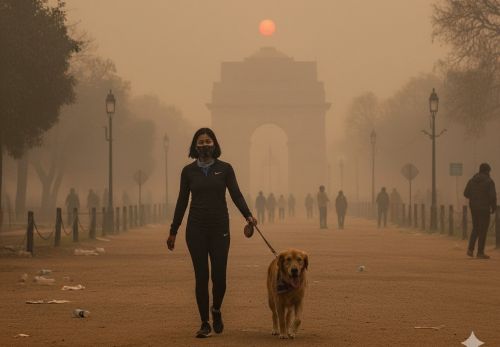
Every morning when I step out to walk my dog, I notice the sky. It’s the first thing I look at, but lately it’s never clear. Delhi wakes under a shroud of haze, its familiar skyline blurred by smog. The air feels heavier, the chest tighter, and every breath carries a quiet warning. As a physiotherapist and lifelong resident of this city, I see not only patients struggling with pain or mobility issues, but also a growing number facing breathlessness, fatigue, and delayed recovery—all silently linked to the air we breathe.
I remember Delhi’s winters from twenty years ago. The air felt cold but clean, the mornings clear, and the sun bright. Back then, the city wasn’t this crowded. There were open spaces, far more trees, and stretches of land that allowed the wind to move freely. Today, those same areas are filled with concrete: multistorey buildings, malls, and construction dust. The reasons—stubble burning, vehicle emissions, industrial waste—everyone already knows them. What we don’t talk about enough is how it feels to watch your city change like this.
And to see it now, gasping under layers of its own neglect. It feels like watching someone you love age too soon. Delhi isn’t just a city. It’s memory, rhythm, and history. Watching it fade is nothing short of grief.
What I Notice in My Patients
Over the past few years, I’ve noticed clear changes in my patients’ conditions. People recover more slowly after injury or surgery. There’s more fatigue, more breathlessness during exercises that once felt easy. Those with arthritis or joint pain report stiffness that worsens with poor air quality. Even young, healthy individuals mention feeling constantly tired or heavy in the chest. Air pollution isn’t just a respiratory issue anymore—it’s affecting muscles, energy levels, and overall recovery. As someone who works daily with the body’s ability to heal, this is deeply worrying.
What We Can Do Right Now
We can’t control the air outside, but we can protect ourselves to some extent. At home, if possible, keep air purifiers running during peak pollution hours. Grow indoor plants like areca palm or snake plant. Practice deep breathing exercises and stay hydrated—it helps your lungs and muscles cope better. Include foods rich in antioxidants (like amla, citrus fruits, and turmeric) to reduce inflammation. When you step outdoors, wear an N95 mask and avoid intense workouts in open spaces. At workplaces, encourage carpooling or remote consultations, and reduce unnecessary travel. Small, consistent actions can make a real difference to individual health.
What Delhi Needs from Its Leaders
It’s time for policy and empathy to work together. Delhi no longer wants to hear its leaders speak about sustainability on global platforms while the capital itself struggles to breathe. Delhi needs strict control over construction dust and industrial emissions, reliable public transport, and better waste management. Farmers need practical alternatives to crop burning, not penalties. Green spaces should be protected, not replaced. The government must act not only as an authority but as a guardian of public health. The people of this city deserve cleaner air—not as a privilege, but as a right.
A City Worth Fighting For
Despite everything, hope still exists. Delhi’s strength has always been its people: resilient, adaptable, and proud. This city has endured centuries of change and has always found a way to rebuild. We can do it again, but only if we start caring—collectively and urgently. Because Delhi isn’t just where we live. It’s who we are. And it deserves to breathe again.