Operation Absolute Resolve: A Detailed Explainer of the US Military Action in Venezuela
The unprecedented capture of President Nicolás Maduro raises critical questions about international law, sovereignty, and the future of US foreign policy in Latin America
January 4, 2026 – In what President Donald Trump described as one of the most stunning displays of American military might in history, the United States conducted a large-scale military operation in Venezuela that resulted in the capture and detention of President Nicolás Maduro. The extraordinary action has sent shockwaves through the international community and raises fundamental questions about sovereignty, international law, and the use of military force.
WHAT HAPPENED: THE OPERATION
Timeline of Events
August 2025: A CIA team quietly enters Venezuela to gather intelligence on Maduro’s movements, habits, and security arrangements.
November 2025: Trump makes a phone call to Maduro, essentially delivering an ultimatum to step down. The USS Gerald R. Ford, America’s most advanced aircraft carrier, enters the Caribbean as part of a military buildup.
December 2025: Trump approves the operation before Christmas. Elite troops train using a replica of Maduro’s compound built from intelligence gathering.
January 3, 2026 – 10:46 PM ET (Friday): President Trump gives the final order to launch Operation Absolute Resolve with the message “Good luck and Godspeed.”
January 4, 2026 – 1:01 AM ET (2:01 AM local time): US helicopters arrive at Maduro’s compound at Fuerte Tiuna, Venezuela’s largest military complex, where he and his wife resided.
Approximately 2:00-2:30 AM local time: Multiple explosions rock Caracas. Seven blasts are reported across the city, including at Fuerte Tiuna, La Carlota airport, and near the presidential palace Miraflores.
During the raid: Maduro and his wife Cilia Flores attempt to reach a steel-door safe room but are apprehended by Justice Department officials assisted by US military forces. One helicopter takes fire but remains flyable. The couple “gave up” according to military officials.
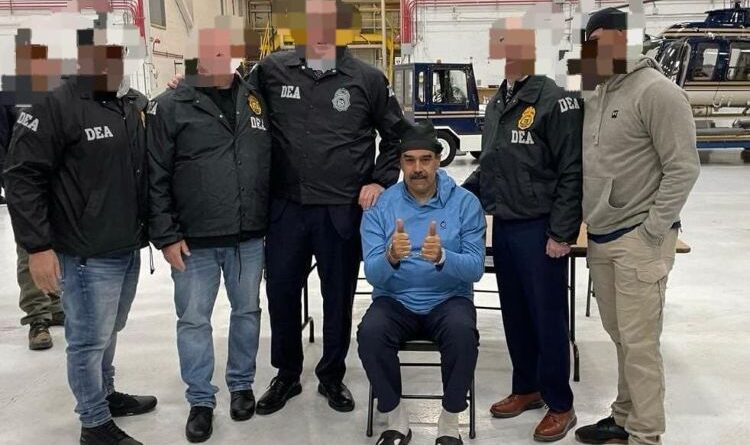
Post-capture: Maduro and Flores are placed aboard the USS Iwo Jima, which stops at Guantanamo Bay, Cuba. They are then transferred to a plane that lands at Stewart Air National Guard Base in New York on Saturday evening.
Scale of the Operation
The military operation involved extraordinary coordination and force:
- More than 150 aircraft including F-35 fighter jets, bombers, surveillance aircraft, intelligence aircraft, and helicopters
- Duration: Just over two hours from first strike to extraction
- Forces involved: Justice Department officials, CIA operatives, elite military units, fighter aircraft providing air cover, and drones for suppressive fire
- Planning: Months of meticulous preparation, including building a replica compound for rehearsals
- Intelligence: CIA team tracked everything from Maduro’s sleeping patterns and eating habits to his pets
Joint Chiefs Chairman Gen. Dan Caine emphasized the operation was designed to ensure they “cannot get it wrong,” with repeated training and rehearsals.
WHY NOW: THE BACKGROUND
The Narcoterrorism Allegations
The Trump administration’s justification centers on drug trafficking allegations:
The Cartel de los Soles: In 2020, during Trump’s first term, the US indicted Maduro on narcoterrorism charges, alleging he led a drug-trafficking organization known as the Cartel of the Suns (named after the sun insignias worn by high-ranking Venezuelan military officers).
The charges: Maduro faces accusations of conspiracy to import cocaine into the United States, using the Venezuelan state apparatus to facilitate drug trafficking, and working with Colombian guerrilla groups.
The bounty: The US offered $50 million for information leading to Maduro’s arrest and conviction.
Recent escalation: In November 2025, the Trump administration designated elements of the Venezuelan government, including Maduro, as part of a “foreign terrorist organization.”
The Political Context
Disputed election: Venezuela held presidential elections in July 2024, which Maduro claimed to win. However, the opposition, led by María Corina Machado and Edmundo González, alleged massive fraud and presented evidence suggesting González won by a large margin.
International recognition: The US and numerous other countries refused to recognize Maduro’s victory. Machado was awarded the Nobel Peace Prize in 2024 and dedicated it to Trump.
Previous pressure: During Trump’s first term, the US recognized opposition leader Juan Guaidó as interim president, though that effort ultimately failed to dislodge Maduro.
Migration and drugs: Trump has emphasized Venezuela’s role in migration flows to the US and drug trafficking as national security threats requiring action.
The Military Buildup
The operation followed months of escalating military pressure:
Maritime strikes: Beginning in late August 2025, US forces conducted strikes on boats allegedly transporting drugs, reportedly killing at least 83 people.
Naval blockade: The US deployed warships to create what it called a blockade of “all sanctioned oil tankers going into, and out of, Venezuela.”
December drone strike: The CIA conducted a drone strike on a port facility on the Venezuelan coast, marking the first known US attack inside the country prior to Saturday’s operation.
Phone call ultimatum: A week before the operation, Trump personally called Maduro telling him “You got to surrender” with the armada of US warships visible off Venezuela’s shores.
THE LEGAL QUESTIONS
The operation has sparked intense debate about its legality under both US and international law.
International Law Concerns
UN Charter violation: Under international law, specifically Article 2(4) of the UN Charter, the use of force against another state’s sovereignty is prohibited except in cases of self-defense (Article 51) or with UN Security Council authorization.
No self-defense claim: Legal experts note that the US has not demonstrated that Venezuela launched or was preparing an imminent armed attack on the United States. Drug trafficking allegations do not meet the strict threshold for self-defense under international law.
Armed aggression: UN experts have stated that a naval blockade constitutes “illegal armed aggression” under the 1974 General Assembly Definition of Aggression. Such blockades are considered acts of war.
Sovereignty violation: The operation violated Venezuela’s territorial sovereignty by conducting military strikes and capturing its head of state without consent or Security Council authorization.
US Constitutional Questions
Congressional authority: Democratic Senator Mark Warner questioned whether the operation violated constitutional separation of powers. The Constitution grants Congress, not the president alone, the power to declare war.
Trump’s justification: The administration invoked Article II of the Constitution, citing presidential authority as commander-in-chief. However, critics argue this doesn’t extend to unilateral invasions of sovereign nations.
Historical precedent: The operation represents the largest US military action in Latin America since the 1989 invasion of Panama to capture Manuel Noriega, also justified on drug trafficking grounds.
Accusations of Deception
Several Democratic members of Congress have accused Trump administration officials of lying:
Senator Andy Kim stated that Secretaries Marco Rubio and Pete Hegseth told senators during a December briefing that the policy was “not about regime change.” Kim wrote that they “blatantly lied to Congress.”
The revelation that CIA operatives had been in Venezuela since August, combined with months of planning, suggests regime change was always the intention.
INTERNATIONAL REACTIONS
The operation has drawn sharp condemnation from much of the international community, though some allies have supported it.
United Nations
Secretary-General António Guterres: Expressed being “deeply alarmed” and stated the developments “constitute a dangerous precedent.” He emphasized that “the rules of international law have not been respected.”
UN Human Rights Chief Volker Türk: Called for restraint and full respect for international law, stating “The protection of the people of Venezuela is paramount.”
Security Council meeting: Venezuela has requested an emergency session scheduled for Monday morning.
Latin American Reactions
Brazil (President Lula): Strongly condemned the action, stating it “seriously violates international law” and represents “the first step toward a world of violence, chaos, and instability.” Called for a vigorous UN response.
Colombia (President Gustavo Petro): Rejected “the aggression against the sovereignty of Venezuela and of Latin America.” Deployed forces to the Venezuelan border to prepare for potential refugee flows.
Cuba (President Miguel Díaz-Canel): Denounced the operation as criminal and an attack on Latin American sovereignty.
Mexico: Has expressed concern about the precedent and regional stability.
Argentina (President Javier Milei): Praised the operation, posting “Freedom lives” on social media. Milei is Trump’s closest ally in the region.
Global Powers
Russia: Foreign ministry denounced it as “an act of armed aggression” and reaffirmed solidarity with Venezuela. Moscow warned about US violations of international law.
China: Strongly opposed the operation, stating it “seriously violates international law and Venezuela’s sovereignty.” Called on the US to stop violating other countries’ sovereignty.
Iran: Condemned the attack as illegal aggression.
US Allies
United Kingdom: Prime Minister Keir Starmer took a cautious stance, saying he wanted to speak with Trump and establish facts before making firm statements, though he emphasized belief in upholding international law.
Denmark: Issued a muted response, notable given Trump’s recent threats to take control of Greenland.
European Union: No unified statement yet, with member states taking various positions from concern to silence.
US Political Division
Republicans: Largely supportive, viewing it as decisive action against a dictator and drug trafficker.
Democrats: Divided, with some expressing concern about precedent, constitutional process, and alleged deception by administration officials.
Intelligence Community concerns: Some officials worried the operation sets a precedent allowing any large country to invade smaller neighbors and capture their leaders.
VENEZUELA’S RESPONSE
Government Position
Vice President Delcy Rodríguez: Demanded immediate proof of life for Maduro and Flores, stating the government doesn’t know their whereabouts. Declared a national state of emergency.
Casualties: Venezuelan authorities report that the attack killed officials, military personnel, and civilians, though specific numbers have not been provided.
UN appeal: Venezuela requested an urgent UN Security Council meeting and condemned what it called serious military aggression.
Accusations: The government accused the US of attempting to seize Venezuela’s vast oil reserves and mineral resources.
Situation on the Ground
Caracas aftermath: Streets remained largely deserted hours after the operation. The smell of gunpowder lingered in the air. Most businesses, including pharmacies, supermarkets, and gas stations, remained closed.
Power outages: Several areas of Caracas experienced blackouts following the strikes.
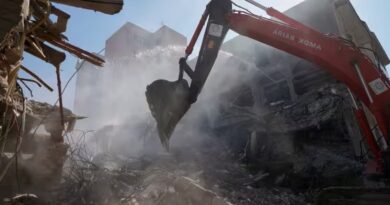
Military facilities: Fires broke out at Fuerte Tiuna and other military installations. Images show charred vehicles and heavily damaged structures.
Oil operations: State oil company PDVSA reported that production and refining operations remained normal with no damage to key facilities.
Opposition’s Position
María Corina Machado: The opposition leader has not ruled out welcoming US military action, previously stating she would welcome “more and more pressure so that Maduro understands that he has to go.”
Edmundo González: The opposition candidate who claims to have won the 2024 election has called for a peaceful transition but hasn’t specifically addressed the military operation.
WHAT HAPPENS NEXT
Immediate Legal Proceedings
Charges: Attorney General Pam Bondi announced Maduro would face narcoterrorism charges in US courts, with a news conference scheduled at Mar-a-Lago.
Jurisdiction: The case will be heard in New York, where the 2020 indictment was filed.
Legal process: While the capture violated international law, international law experts note that a criminal trial for Maduro in the US could potentially proceed under US domestic law.
Potential sentence: If convicted on all counts, Maduro could face life in prison.
Trump’s Plans for Venezuela
At his Saturday news conference, Trump made the extraordinary statement that the US would “run Venezuela” temporarily:
Interim administration: Trump indicated the US intends to oversee Venezuela until a transition of power can occur, though he provided few specifics.
Opposition involvement: The administration is expected to work with the Venezuelan opposition, particularly supporters of María Corina Machado and Edmundo González.
Timeline unclear: No specific timeline was provided for how long US oversight would last or what form it would take.
Oil resources: Questions remain about US intentions regarding Venezuela’s vast oil reserves, the largest proven reserves in the world.
Regional Implications
Migration concerns: Colombia is preparing for a potential refugee influx. Millions of Venezuelans have already fled the country in recent years.
Economic impact: Venezuela’s oil exports and economic situation remain uncertain under potential US control.
Military presence: The extent of ongoing US military presence in Venezuela is unclear.
Regional stability: Latin American leaders fear the operation sets a precedent for military intervention in sovereign nations.
International Law Precedent
Erosion of norms: The operation challenges the post-World War II international order built on sovereignty and the prohibition of aggressive war.
Other conflicts: The action undermines US credibility in condemning Russia’s invasion of Ukraine, which Moscow also attempts to justify through self-defense claims.
Future interventions: The precedent could embolden other powerful nations to use military force against smaller neighbors they deem threatening.
UN authority: The operation bypassing the UN Security Council weakens the UN’s role in maintaining international peace and security.
HISTORICAL CONTEXT
Past US Interventions in Latin America
Panama (1989): The closest parallel. The US invaded Panama and captured Manuel Noriega on drug trafficking charges. Noriega was convicted in US courts and served 17 years in prison.
Grenada (1983): US invasion to overthrow a Marxist government, justified on protecting American students.
Dominican Republic (1965): Military intervention during civil war.
Guatemala (1954), Chile (1973), Nicaragua (1980s): CIA-backed coups and support for opposition forces, though not direct military invasions.
Cold War era: Extensive US involvement in Latin American politics under the Monroe Doctrine and anti-communist policies.
The “War on Drugs” Justification
The use of drug trafficking as justification for military action has historical precedent:
Plan Colombia: Massive US military and financial assistance to Colombia’s government in fighting drug cartels.
Mexico: Extensive security cooperation and debate over potential US military action against cartels.
Legal framework: The narcoterrorism designation attempts to bring drug trafficking under the rubric of terrorism, potentially expanding legal justifications for military action.
Venezuela-US Relations Timeline
Hugo Chávez era (1999-2013): Sharp deterioration in relations, with the US supporting a failed 2002 coup attempt against Chávez.
Maduro assumes power (2013): Continues Chávez’s anti-US policies.
Obama sanctions (2015): Initial sanctions declaring Venezuela a national security threat.
Trump’s first term (2017-2021): Recognition of Juan Guaidó, extensive sanctions, and threats of military action that never materialized.
Biden administration (2021-2025): Maintained sanctions while occasionally easing them temporarily.
Trump’s second term (2025-present): Dramatic escalation culminating in Saturday’s operation.
KEY QUESTIONS MOVING FORWARD
- Will the UN Security Council take action? Russia and China are likely to push for condemnation, but the US holds veto power.
- How will other Latin American nations respond? Will there be unified regional opposition or will some governments tacitly support the action?
- What form will US administration of Venezuela take? Direct military occupation? Support for opposition government? International transitional authority?
- Will this operation succeed where past US interventions have failed? History suggests installing stable, democratic governments after military intervention is extraordinarily difficult.
- What are the domestic political ramifications? Will Congress investigate the operation? Will there be impeachment efforts?
- How will this affect other US foreign policy priorities? Will the focus on Venezuela detract from other regions? How will allies in Europe and Asia view US reliability?
- What happens to Venezuela’s oil? Will production increase under new management? Who benefits economically?
- Could other world leaders face similar operations? Does this create a precedent for extraterritorial enforcement of domestic laws?
- What is the endgame? Elections? Transitional government? Long-term occupation? No clear plan has been articulated.
- How will this affect the 2026 US midterm elections? Will voters reward Trump for decisive action or punish Republicans for an illegal war?
EXPERT ANALYSIS
Legal Scholars
International law experts universally condemn the operation as violating fundamental principles of sovereignty and the prohibition on the use of force. The lack of imminent threat or Security Council authorization makes the action clearly illegal under the UN Charter.
Military Strategists
While acknowledging the operation’s tactical brilliance, military experts warn about the difficulty of achieving lasting political change through military force. The Iraq War serves as a cautionary tale about the challenges of post-invasion governance.
Regional Specialists
Latin America experts express concern that the operation reinforces negative perceptions of US imperialism in the region, potentially strengthening anti-American sentiment and authoritarian leaders who can now claim the US threat is real.
Human Rights Organizations
Human rights groups are conflicted. While many oppose Maduro’s authoritarian government and human rights abuses, they also oppose military intervention and worry about civilian casualties and the precedent for international law.
CONCLUSION
Operation Absolute Resolve represents a watershed moment in US foreign policy and international relations. The capture of a sitting head of state through military force, justified primarily on drug trafficking allegations, challenges fundamental principles of sovereignty and international law that have governed the world order since World War II.
Whether viewed as decisive leadership against a narco-dictator or as illegal aggression that undermines the rules-based international order, the operation’s consequences will reverberate far beyond Venezuela. The coming days, weeks, and months will determine whether this action becomes a model for future interventions or a cautionary tale about the limits of military power in achieving political objectives.
What is certain is that the world is watching, and the precedent set in Caracas this weekend will shape international relations for years to come.