Trump Urges Australia to Grant Asylum to Iranian Women’s Football Team, Offers US Refuge Amid Safety Fears
US President warns players face likely death if returned to Iran following silent national anthem protest at Women’s Asian Cup; some team members already seeking protection in Australia
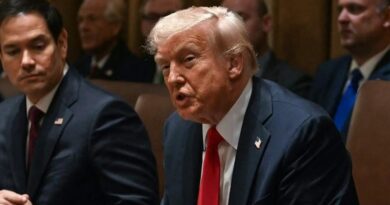
Sydney, March 9, 2026 – US President Donald Trump has publicly called on Australia to provide asylum to members of Iran’s national women’s football team, warning that forcing them to return home could result in severe punishment or death. In a post on Truth Social, Trump described Australia’s potential decision to repatriate the players as a “terrible humanitarian mistake,” stating they “will most likely be killed” upon return amid heightened tensions in the region.
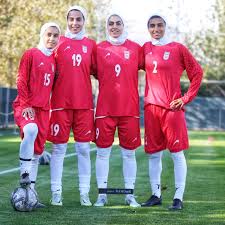
The controversy stems from the ongoing AFC Women’s Asian Cup hosted in Australia, where the Iranian team initially refused to sing their national anthem before a group-stage match against South Korea on February 28. The silent gesture was widely interpreted as a protest against Iran’s government, especially in the context of ongoing military conflict involving Iran. Iranian state media and commentators quickly labeled the players “traitors” and “wartime traitors,” with some calling for harsh action against them—a charge that can carry the death penalty under Iranian law.
Subsequent matches saw some players sing and salute the anthem under apparent pressure, including threats to their families back home, according to sources close to the team. After Iran’s elimination from the tournament, concerns escalated over the players’ safety if deported. Reports indicate that at least five players—named in some accounts as Fatemeh Pasandideh, Zahra Ghanbari, Zahra Sarbali, Atefeh Ramazanzadeh, and Mona Hamoudi—have left the team’s camp, sought police protection, and applied for asylum in Australia. Protesters, including members of the Iranian diaspora, have rallied outside venues chanting “free our girls” and “save our girls,” while human rights groups and figures like exiled Iranian opposition leader Reza Pahlavi have urged Canberra to intervene.
Trump’s intervention came directly via social media: “Australia is making a terrible humanitarian mistake by allowing the Iran National Woman’s Soccer team to be forced back to Iran, where they will most likely be killed. Don’t do it, Mr. Prime Minister, give ASYLUM. The U.S. will take them if you won’t.” He later claimed to have spoken with Australian Prime Minister Anthony Albanese about the matter, noting that some players felt compelled to return due to family safety concerns but adding that “five have already been taken care of, and the rest are on their way.”
The Australian government has so far declined to comment on individual cases, citing privacy reasons, though Assistant Minister for Foreign Affairs Matt Thistlethwaite emphasized that decisions would follow standard processes. Pressure continues to mount from activists, sports unions like FIFPRO, and international observers who argue the players face credible risks of arbitrary detention, torture, or execution.
This incident highlights broader tensions surrounding women’s rights and dissent in Iran, amplified by the current geopolitical climate. The players’ actions, initially a subtle form of defiance on the global stage, have now drawn high-level international attention and placed Australia in a delicate diplomatic position between humanitarian obligations and relations with Tehran.