:India’s First Passive Euthanasia: Supreme Court Ends 13-Year Vigil for Harish Rana’s Family
In a landmark ruling that brings India’s constitutional right to die with dignity off the page and into practice for the first time, the apex court authorises withdrawal of life support for a 32-year-old man in a permanent vegetative state — and tells Parliament it is long past time to legislate.
The Supreme Court’s judgment of 11 March 2026 in Harish Rana v. Union of India is the first time India’s eight-year-old right to die with dignity has actually been exercised in practice.
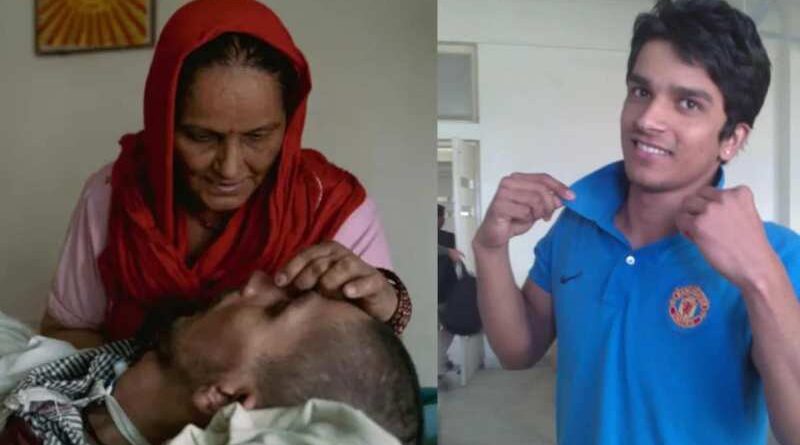
A bench of Justice J.B. Pardiwala and Justice K.V. Viswanathan passed the order on a petition filed by Ashok Rana seeking permission to remove all life-sustaining treatment being administered to his son. Harish Rana, once a bright undergraduate student at Punjab University, has lain unresponsive since 2013, when a fall from the fourth floor of his paying guest accommodation left him with catastrophic brain injuries and 100% quadriplegia. He is 32 years old. He has been in this condition for more than half his life.
What the Court Decided
The bench directed that the patient be admitted to palliative care at AIIMS, where withdrawal of treatment would be carried out through a carefully tailored plan ensuring dignity. The treatment in question is Clinically Assisted Nutrition and Hydration, or CANH — the feeding tube keeping Harish alive.
The court settled two legal questions that had remained unresolved since the landmark Common Cause ruling of 2018. The first was whether CANH constitutes medical treatment. The second was the meaning, scope and contours of the “best interest of the patient” principle in determining whether treatment should be withdrawn or withheld.
On the first question, after analysing international jurisprudence and medical practice, the court concluded that CANH is not merely basic care but a form of medical treatment. Since such feeding involves invasive medical procedures and clinical supervision, it falls within the category of life-sustaining treatment that may be withheld or withdrawn in appropriate circumstances.
On the second, the court held that the “best interest” assessment must encompass an evaluation of the futility of treatment, the absence of therapeutic purpose, the invasive and burdensome nature of continued medical intervention, and the indignity of artificially prolonging life in a state devoid of awareness, autonomy, or human interaction. Decision-makers must look at the patient’s welfare in the widest sense — not just medical, but also social and psychological.
Why It Took So Long
In 2018, a five-judge bench held in Common Cause v. Union of India that the constitutional right to life under Article 21 includes the right to a dignified death. The court said that a family could approach a court to seek permission to withdraw life-sustaining treatment from a person in a permanent vegetative state. The court simplified the procedure in 2023. And yet, in the eight years since, not a single such petition had been granted by the Supreme Court. Wednesday is the first.
Harish’s own path to this judgment was long and painful. The petitioner first approached the Delhi High Court in 2024, seeking permission for passive euthanasia. The High Court dismissed the petition, observing that the petitioner was not terminally ill. The Supreme Court, in August 2024, also refused to entertain the plea but directed Uttar Pradesh to bear treatment expenses. His condition continued to worsen. His old parents were finding it difficult to sustain his life through treatment, having even sold their house.
No Court Order Needed Next Time
One significant clarification in Wednesday’s ruling concerns procedure. The court clarified that if both the primary and secondary medical boards certify withdrawal of life-sustaining treatment in accordance with the Common Cause guidelines, judicial intervention is not necessary. In the present case, however, the matter was brought before the court given that it is among the first cases testing the operational framework of the 2018 judgment.
Justice K.V. Viswanathan, in a concurring opinion, addressed an error that had repeatedly blocked families from even reaching this stage. He held that the High Court had erred in concluding that the case fell outside the scope of Common Cause because the patient was not terminally ill, and clarified that terminal illness is not a prerequisite for considering withdrawal of life-sustaining treatment.
A Call to Parliament
The court used the occasion to press for legislation that has been demanded since 2006. Parliament has not enacted a law on the right to die with dignity, despite calls for legislation from the Law Commission in 2006, from the Supreme Court in 2018, and now again in 2026. Wednesday’s judgment itself notes that in the absence of legislation, end-of-life decisions risk being shaped, quietly, by a family’s financial exhaustion rather than by any honest assessment of the patient’s interests.
The court urged the government to consider bringing in a comprehensive law on passive euthanasia, noting it would “provide clarity, coherence and certainty in matters that are deeply practical and emotionally sensitive.”