KANGANA RANAUT SAYS RAHUL GANDHI MAKES WOMEN IN PARLIAMENT “UNCOMFORTABLE”, SPARKS POLITICAL STORM
BJP MP’s “tapori” jibe at Leader of Opposition draws sharp rebukes from opposition parties, while former PM Deve Gowda and Home Minister Shah pile on from different angles.
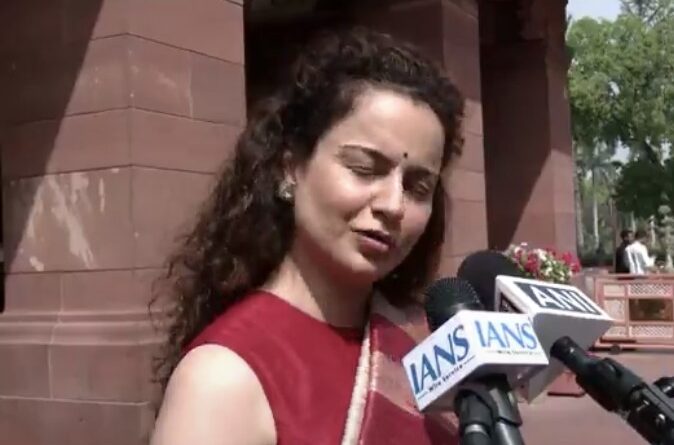
NEW DELHI, March 18, 2026 — BJP MP and actor-turned-politician Kangana Ranaut ignited a fresh controversy on Wednesday when she said outside Parliament that Rahul Gandhi’s behaviour makes women legislators feel uncomfortable, calling the Leader of Opposition a “tapori” — street rowdy — who disrupts people giving interviews and calls out to them with an “aaja…aaja.”
“He comes like a tapori, speaks rudely in the tu-tadak style. He disturbs people who are giving interviews. He says — come on, come on,” Kangana said, adding pointedly: “He should look at his own sister. Her behaviour is very good.”
The remarks triggered an immediate backlash from opposition politicians, who accused Kangana of crossing a line of basic parliamentary decorum.
OPPOSITION FIRES BACK
Congress MP Jyotimani was blunt in her response. “Kangana Ranaut’s words reflect her own character,” she said. “Just wearing good clothes or being a celebrity does not make someone a good person. This is the level of her politics, which is why she really has no right to speak about Rahul Gandhi.”
Punjab Congress president Amarinder Singh Raja Warring took a swipe at Kangana’s film industry background. “Kangana seems to think Parliament is a studio, where you dress up perfectly, get fully ready and act. Why does she think Rahul behaves like a tapori? Rahul Gandhi has not come here to make a film,” he said.
Shiv Sena (Uddhav faction) MP Priyanka Chaturvedi, who has worked alongside Rahul Gandhi across party lines in Parliament, pushed back against the personal nature of the attack. “There can be personal or political differences, but saying such things about Rahul Gandhi is wrong. I have worked with Rahul Gandhi for ten years. I have seen his work and his respect for women. Levelling such allegations against him is quite strange,” she said.
Chaturvedi also drew a pointed parallel: “A few days ago, PM Modi was saying he felt uncomfortable with Congress’s women MPs — which is why they did not come to Parliament. Now Kangana is speaking about Rahul.”
THE CONTEXT: A CUP OF TEA THAT WON’T GO AWAY
Kangana’s remarks come in the wake of a controversy that erupted on March 12, when Rahul Gandhi sat on the steps of Parliament’s Makar Dwar with opposition MPs during a protest over the LPG price crisis, drinking tea and eating biscuits. What began as a demonstration quickly became a political flashpoint.
Since then, 84 former bureaucrats, 116 former military officers, and four lawyers have jointly written an open letter demanding that Rahul Gandhi apologise to the people of the country for the incident. Home Minister Amit Shah, addressing a rally in Guwahati on March 15, asked: “Does he not realise which place is appropriate for having snacks? Parliament is the supreme institution of our democracy. Sitting there and protesting is not democratic tradition either. But you have gone two steps further than protest — you are eating tea and pakodas there. This is damaging India’s image across the world.”
Former Prime Minister H.D. Deve Gowda, 92, also entered the fray, writing a two-page letter on March 16 to Congress Parliamentary Party chairperson Sonia Gandhi, urging her to counsel her MPs to maintain parliamentary decorum. “As a senior leader of the opposition, please speak with your MPs and advise them to uphold parliamentary dignity,” the JD(S) veteran wrote. He specifically cited continuous sloganeering, banner displays, and sit-in protests during the Budget Session as damaging the dignity of democratic institutions, and said staging demonstrations on Parliament’s steps with tea and snacks diminishes the institution.
Congress has defended the protest as a legitimate act of opposition in the face of a government it accuses of stonewalling debate on the LPG crisis.
THE BIGGER PICTURE
The episode has become the latest front in a sustained BJP effort to cast Rahul Gandhi as unfit for the dignity of his constitutional role as Leader of the Opposition — a charge Congress dismisses as deliberate political targeting of the one leader the ruling party most fears. Whether the “tapori” barb gains traction or backfires on those who deploy it will depend, in part, on which frame voters ultimately accept: opposition as legitimate dissent, or dissent as undignified spectacle.