Haryana Arms Its Revenue Field Force with 4,156 Smart Tablets in Landmark Digital Overhaul
Patwaris and Kanungos set to ditch decades of manual paperwork as GPS-enabled, 5G-connected devices bring real-time land records, crop surveys and disaster assessments to the fingertips of frontline officials
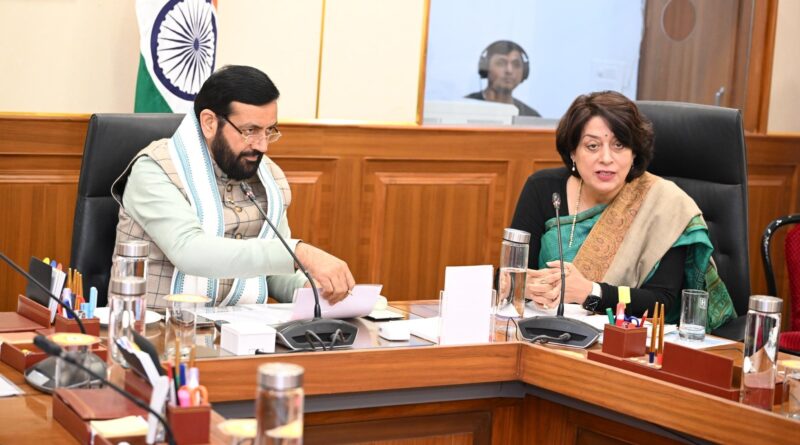
Haryana has launched one of its most consequential reforms in revenue administration in years, approving the procurement of 4,156 smart tablets for Patwaris and Kanungos — the frontline officials who form the backbone of the state’s land records and agricultural services system. The initiative, cleared by Chief Minister Nayab Singh Saini and Revenue and Disaster Management Minister Vipul Goel, is designed to drag a system long dependent on manual records and hand-drawn maps firmly into the digital age.
Financial Commissioner for Revenue and Disaster Management, Dr. Sumit Misra, who announced the details, framed the move as a deliberate push to take technology beyond government offices and urban centres to the field level, where officials interact directly with citizens — particularly farmers in rural and agricultural areas.
For decades, Patwaris and Kanungos have worked with paper-heavy processes that made even routine tasks slow, physically demanding and prone to error. Under the new system, these officials will be able to conduct field surveys, record data, capture GPS-tagged photographs and upload information directly to central servers in real time. A voice-to-text functionality has also been built in to simplify data entry, cut manual effort and sharpen accuracy — a feature particularly significant for officials working in challenging outdoor conditions.
The tablets themselves have been specified with field durability firmly in mind. Each device will carry a large display, advanced processing capability, sufficient onboard storage and a battery rated for a full day of fieldwork. Connectivity via 5G and LTE, combined with GPS and high-quality imaging, is intended to ensure the devices perform reliably even in remote locations where conventional office-grade equipment would fall short.
A critical layer of the initiative is the integration of all 4,156 devices with a Mobile Device Management system, backed by a two-year cloud-hosted licence. This will allow the government to centrally monitor, update, secure and manage every deployed device in real time — providing a level of oversight and accountability that the previous paper-based system simply could not offer. Dr. Misra stressed that transparency has been built into every aspect of the rollout, from the procurement process — which will strictly follow prescribed government norms — to the day-to-day operation of each device in the field.
The practical benefits for citizens are expected to be substantial. Farmers, who have historically had to make repeated visits to government offices for land record updates, crop survey confirmations or disaster damage assessments, stand to gain the most. Faster, more reliable and doorstep delivery of services is the stated goal, with the reduction of procedural delays and the minimisation of discrepancies in revenue records seen as direct outcomes.
Dr. Misra described the initiative as an important step towards building a more transparent, responsive and citizen-centric governance system at the grassroots level, adding that more accurate land records management, crop surveys and disaster assessments would be among the most immediate gains.
The reform sits within a broader pattern of digital governance initiatives being pursued by the Saini administration, which has consistently positioned technology adoption as a tool for improving both administrative efficiency and public accountability across departments.