India Deploys AI and Big Data to Tackle Preterm Births in World’s Largest Pregnancy Cohort Study
The GARBH-INi initiative has enrolled 12,000 women and built a vast biospecimen repository, as India races to develop homegrown solutions to one of its most pressing maternal health challenges
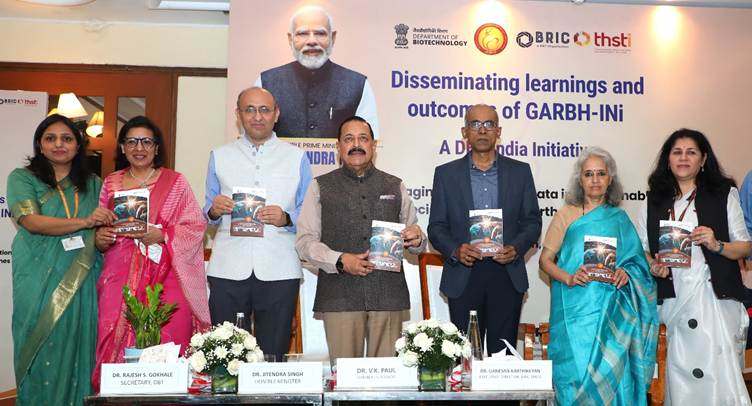
India is harnessing artificial intelligence, multi-omics research and big data to combat preterm births, Union Minister Dr. Jitendra Singh announced on Monday, calling the GARBH-INi programme a landmark step in the country’s science-led approach to maternal and child healthcare.
Addressing a dissemination event at India Habitat Centre in New Delhi, Dr. Singh highlighted that India carries a disproportionately large share of the global burden of preterm births — a leading cause of neonatal mortality and long-term health complications — making indigenous, tailored solutions a national priority.
A Study of Unprecedented Scale
At the heart of the initiative is India’s — and South Asia’s — largest pregnancy cohort study, enrolling approximately 12,000 pregnant women under the Department of Biotechnology’s GARBH-INi (Interdisciplinary Group for Advanced Research on Birth Outcomes) programme. The study has generated a repository of over 1.6 million well-characterised biospecimens and more than one million ultrasound images, creating a formidable scientific foundation for advanced research into pregnancy outcomes.
The programme integrates clinical epidemiology, multi-omics biomarkers and artificial intelligence to build personalised prediction models suited specifically to Indian populations — a critical distinction given that solutions developed for Western populations often fail to account for the unique genetic, microbiome and nutritional profiles of Indian women.
Homegrown AI Tools and Diagnostic Breakthroughs
Among the key outcomes announced, Dr. Singh cited the development of AI-based pregnancy dating models calibrated for Indian populations, microbiome-based predictors of preterm birth risk, rapid diagnostic tools, and genetic markers for early risk assessment. A national biorepository and the GARBH-INi-DRISHTI data-sharing platform have also been established, enabling wider access for researchers and contributing to global scientific publications.
Underlining the significance of indigenous innovation, the Minister stated that such tools are critical to improving maternal and child health outcomes at scale across the country.
Industry Partnerships and Technology Transfers
The event also saw the formalisation of key industry partnerships. Technology for microbiome-based biotherapeutics was transferred to Sundyota Numandis Probioceuticals Pvt. Ltd., while Letters of Intent were signed with DOTO Health Private Limited and Qure.ai Technologies Private Limited for AI-enabled ultrasound reporting systems and risk stratification platforms under the GARBH-INi-AnandiMaa initiative — signalling a clear move from laboratory research towards real-world clinical deployment.
Linking Science to India 2047
Dr. Singh placed the initiative firmly within India’s broader development vision, noting that the children born today will define the country’s strength and productivity in 2047. “By strengthening maternal and child health through science-driven initiatives like GARBH-INi, India is shaping a healthier, more productive generation,” he said.
He also pointed to India’s remarkable bioeconomy growth — from roughly 10 billion USD in 2014 to approximately 195 billion USD today — as evidence of biotechnology’s transformative role in the country’s rise as a global healthcare innovator.
NITI Aayog Member Dr. V.K. Paul, who also addressed the gathering, called on the programme’s next phase to focus on effectively deploying the predictive tools and platforms already developed, urging stronger collaborations and deeper outcome analysis.
The event was also attended by Biotechnology Secretary Dr. Rajesh S. Gokhale and THSTI Executive Director Dr. Ganesan Karthikeyan, alongside leading scientists and researchers from across the country.