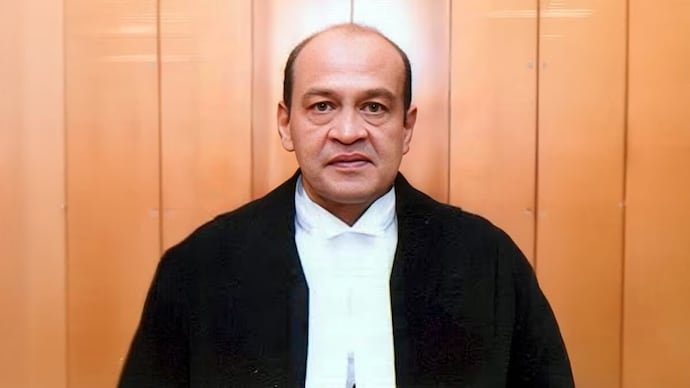
Justice Yashwant Varma Resigns as Allahabad High Court Judge Amid Cash Recovery Scandal
“With deep anguish”: Judge submits resignation to President while parliamentary impeachment probe continues over burnt currency notes found at his Delhi residence
New Delhi, April 10, 2026: Justice Yashwant Varma, a judge of the Allahabad High Court facing serious corruption allegations, has tendered his resignation to the President of India, citing “deep anguish.” The development comes more than a year after a fire at his official Delhi residence led to the discovery of large quantities of burnt and half-burnt ₹500 currency notes.
Justice Varma, who was transferred from the Delhi High Court to Allahabad following the incident, took oath as an Allahabad High Court judge on April 5, 2025, but was not assigned any judicial work pending investigations. Reports indicate he sent his resignation letter dated April 9, 2025, which was made public the following day by legal news portal Bar and Bench.
In the resignation letter, Justice Varma wrote: “I do not wish to trouble your esteemed office with the reasons which have compelled me to write this letter. However, with deep anguish, I hereby tender my resignation from the office of Judge, High Court of Allahabad, with immediate effect. It has been an honour to serve in this august office.”
The Cash Discovery Incident
The controversy erupted on the night of March 14, 2025, when a fire broke out at Justice Varma’s official bungalow at 30, Tughlaq Crescent in New Delhi. Firefighters responding to the blaze reportedly found piles of burnt and partially burnt wads of ₹500 notes in an outhouse or storeroom. The discovery triggered widespread outrage and raised questions about unexplained cash in a judge’s possession. Justice Varma was out of town at the time of the incident.
Following the event, the Supreme Court constituted an in-house inquiry committee. The collegium recommended his transfer to the Allahabad High Court, where he was barred from judicial duties. An in-house panel later indicted him, with witnesses and evidence suggesting the storeroom was under the control of the judge and his family. Justice Varma has consistently denied the allegations, claiming no cash was recovered from the main residential premises and describing the process as flawed.
Impeachment Proceedings and Legal Challenges
The case escalated into parliamentary territory when motions for his removal were moved in both Houses of Parliament in July 2025. While the Rajya Sabha did not admit the motion, the Lok Sabha Speaker admitted one signed by 146 MPs and constituted a three-member inquiry committee under the Judges (Inquiry) Act, 1968, in August 2025. The panel includes a Supreme Court judge, a High Court Chief Justice, and a senior advocate.
Justice Varma challenged the Lok Sabha Speaker’s decision in the Supreme Court, arguing that the process was invalid since the Rajya Sabha had rejected a similar motion. However, the Supreme Court dismissed his plea in January 2026, upholding the Speaker’s authority to proceed independently and ruling that there was no illegality in constituting the inquiry committee.
The Judges (Inquiry) Act, 1968, provides a framework for investigating charges against judges. Once a motion is admitted in either House, the presiding officer can form a three-member committee to probe the allegations before the matter is taken up for debate and voting in Parliament, requiring a special majority for removal.
Justice Varma’s resignation comes while the parliamentary inquiry is still underway. Resignation allows him to potentially retain certain benefits, unlike removal through impeachment, which would strip a judge of post-retirement perks.
This case has spotlighted issues of judicial accountability, the independence of the judiciary, and the delicate balance between in-house probes and parliamentary impeachment processes under the Indian Constitution.