The War That Won’t Stay Stopped: Israel, Iran, and a Ceasefire Under Siege
A US-brokered pause in the bloodiest Middle East conflict in decades is fraying at the edges — with Netanyahu pushing for a third round, Trump eyeing a deal, and Tehran standing defiant. Here is everything you need to know
By NewsArc Bureau | 8 min read
Benjamin Netanyahu this week chaired the second meeting of his security cabinet to discuss renewing military operations against Iran — a sign that the ceasefire of April 8, 2026, which paused over five weeks of devastating US-Israeli strikes, may not hold much longer. Even as American and Iranian diplomats meet in Islamabad to negotiate a long-term peace deal, Israel’s political establishment is, by multiple accounts, itching for a third round.
Seven weeks of airstrikes, missile barrages, and regional disruption culminated in that tenuous ceasefire — yet the guns may not be silent for long. What started as a targeted campaign to neutralise Iran’s nuclear programme rapidly spiralled into a regional war with profound human, economic, and geopolitical consequences.
How Did We Get Here?
Tensions had been building for years over Iran’s nuclear enrichment, its ballistic missile arsenal, and its deep military reach through proxy groups like Hezbollah in Lebanon. The breaking point came in early 2026 when the Trump administration — reversing its “America First” stance on foreign interventionism — aligned with Netanyahu’s long-held position that Iran’s nuclear programme constituted an existential threat requiring military, not diplomatic, resolution.
The initial 12-day conflict in June 2025 struck several nuclear sites but left the Iranian regime intact. A second, far more intense phase began on February 28, 2026, targeting Iran’s supreme leadership, Revolutionary Guard commanders, and military infrastructure across the country. Between the two phases, nine to twelve sites involved in nuclear weapons development were struck, according to independent assessments. Supreme Leader Ali Khamenei was killed in the opening salvoes.
Timeline of the Conflict
June 2025 — First 12-day conflict: US-Israeli strikes on Iranian nuclear facilities. Ceasefire holds — briefly.
February 28, 2026 — US and Israel launch a massive airstrike campaign on Iran. Supreme Leader Khamenei killed.
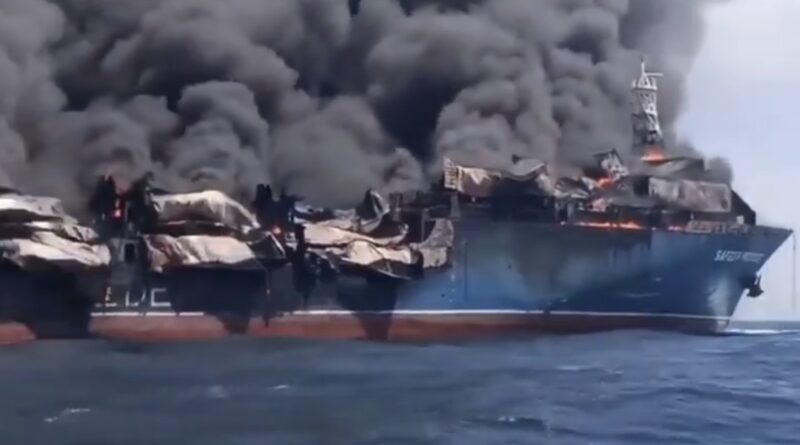
March 2026 — Iran retaliates against Israel and Gulf states hosting US bases. The Strait of Hormuz is disrupted; global oil markets convulse. Trump warns of attacking Iran’s “civilisation” unless it surrenders.
April 7–8, 2026 — Pakistan brokers a two-week ceasefire between the US and Iran after 40 days of fighting. Israel endorses the truce, but Netanyahu says it will “return to battle at any moment.”
April 16, 2026 — A US-brokered Israel-Lebanon ceasefire takes effect, extended by three weeks on April 23.
May 2026 — Islamabad talks stall. Netanyahu’s security cabinet meets twice to discuss renewing the Iran campaign. Trump and Netanyahu clash in a tense phone call over next steps.
May 25–26, 2026 — Israel orders escalation against Hezbollah in southern Beirut. A senior Israeli official admits the country is currently “defenseless” against the Hezbollah drone threat.
Why Does Netanyahu Want to Fight Again?
Analysts point to three interlocking political and strategic pressures. First, Netanyahu is still haunted by the October 7, 2023 Hamas attack — a wound that demands, in his political calculation, a dramatic strategic victory. Gaza and Lebanon have not provided it. Second, Israel’s security establishment believes the campaign left unfinished business: Iran’s ballistic missile capability is intact, its enriched uranium stockpiles partially preserved, and its regime not toppled. Third, the US-Iran ceasefire was negotiated entirely without Israeli participation — a diplomatic humiliation that the opposition has weaponised relentlessly.
Yair Lapid, Israel’s opposition leader, described the emerging US-Iran agreement as a “disaster,” noting that “the regime did not fall, it grew stronger,” and that the deal does not address Iran’s ballistic missile threat. An anchor on Israel’s Channel 14 publicly leaked apparent plans for a renewed strike on Tehran — an extraordinary breach that illustrated the pressure building within Israel’s political-military circles to act.
“My guess is there are three interlocking reasons why Netanyahu is looking to restart the war. Firstly, there’s the distance he wants to put between him and October 7 — he needs a big strategic victory and he’s not going to get that in Gaza or Lebanon, so this is it.” — Alon Pinkas, former Israeli ambassador
Where Do the US and Iran Stand?
The United States and Iran are engaged in indirect talks mediated by Pakistan, covering four main issues: freedom of navigation through the Strait of Hormuz, Iran’s nuclear and ballistic missile programme, post-war reconstruction and sanctions relief, and the terms of a long-term peace agreement. The Islamabad talks have repeatedly stalled.
Trump initially signalled openness to diplomacy when Iran presented a ten-point framework, only to later dismiss the plan as fraudulent. Iran, for its part, has rejected American demands as excessive, with the central sticking points being sovereignty over the Strait of Hormuz and the fate of Iran’s enriched uranium stockpile. Trump halted a planned resumption of strikes to allow Gulf Arab states and Pakistani mediators to continue diplomatic outreach — a direct point of tension with Netanyahu, who pushed for renewed military action in a tense hour-long phone call with the US president on May 20.
“We are prepared to return to combat at any moment required. Our finger remains on the trigger. This is not the end of the campaign, but a step along the way to achieving all our objectives.” — Benjamin Netanyahu, April 8, 2026
What Has the War Cost?
The human and economic toll has been enormous. Thousands of Iranians have died, along with dozens in Israel and Gulf Arab states. More than a million people have been displaced in Lebanon alone — over one-sixth of the country’s population — as the Israel-Hezbollah war resumed alongside the Iran campaign. The disruption to Strait of Hormuz shipping routes caused fuel shortages across parts of Asia and sent shockwaves through global commodity markets. Iran’s military infrastructure has been severely degraded, and Tehran now sits in an unprecedented position of strategic weakness — yet the regime has not collapsed.
What Happens Next?
Three scenarios are plausible.
In the first, diplomacy holds: the Islamabad talks eventually yield a framework agreement covering nuclear limits, sanctions relief, and Hormuz navigation rights, providing Netanyahu with enough cover to avoid a third round domestically.
In the second, Israel acts unilaterally: with or without American backing, Israel resumes strikes on Iran — potentially dragging the US back into a conflict it has been trying to exit.
In the third, stalemate: the ceasefire holds in name while low-level attrition continues — Hezbollah drones, Israeli airstrikes in Lebanon, proxy skirmishes across the region — with no resolution and escalating domestic pressures on all sides.
What is clear is that the ceasefire of April 8 was not the end of the campaign. Whether the next step is diplomacy or devastation may depend on a phone call, a leaked briefing, or a single drone that crosses the wrong border.