Selective Justice? Two HCS-Promoted IAS Officers Suspended in Rs 590 Crore Fraud While Four UPSC-Recruited Colleagues Walk Away With Mere Portfolio Changes
As CM Nayab Saini links the suspensions to a massive multi-department bank fraud, uncomfortable questions arise about whether Haryana applies one rule for officers who rose through the ranks and another for those who cleared the UPSC examination
CHANDIGARH, APRIL 11, 2026
The Government of Haryana placed two senior IAS officers under immediate suspension through orders dated April 8, 2026, signed by Chief Secretary Anurag Rastogi. The two officers are Shri Pardeep Kumar-I, IAS (HY:2011), who was serving as Director, State Transport and Special Secretary, Transport Department, and Shri Ram Kumar Singh, IAS (HY:2012), who was posted as Special Secretary, Revenue and Disaster Management Department and Additional CEO, Panchkula Metropolitan Development Authority. Both were placed under suspension with immediate effect under sub Rule (1) of Rule 3 of the All India Services (Discipline and Appeal) Rules, 1969 — a provision reserved for cases of serious misconduct.
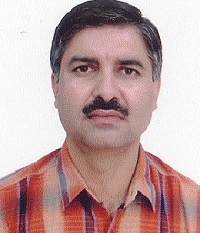
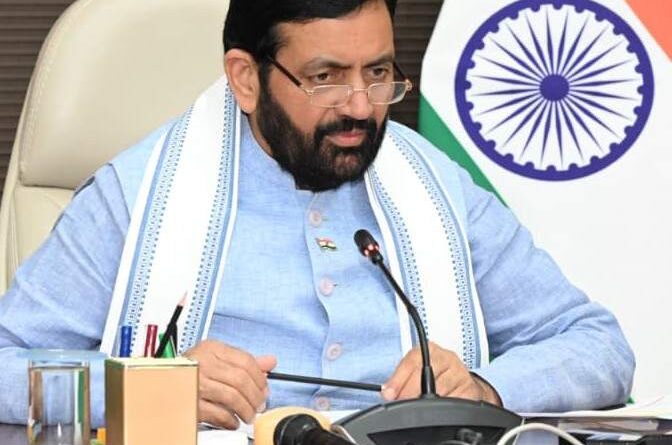
The suspension orders are silent on the reason, which is standard bureaucratic practice. But Chief Minister Nayab Saini, speaking to reporters subsequently, confirmed what official circles had already been whispering: the action is linked to an alleged bank fraud of Rs 590 crore involving multiple Haryana government departments.
What the Chief Minister did not explain — and what is now being asked loudly in administrative corridors — is why accountability appears to stop at precisely these two officers.
According to sources with knowledge of the matter, at least four other IAS officers have been identified in connection with the same fraud. Their names are making the rounds in official circles. Yet not one of them has been suspended. Instead, they have been quietly divested of their important departments and key portfolios — an action that carries no formal stigma on their service records, leaves their pay and perquisites intact, and does not interrupt their careers in any meaningful legal sense.
The detail that has not gone unnoticed is this: both suspended officers — Pardeep Kumar-I and Ram Kumar Singh — were promoted to the IAS from the Haryana Civil Service (HCS), the state’s provincial administrative cadre. The four officers who have been spared suspension are understood to be direct recruits to the IAS through the Union Public Service Commission (UPSC) examination.
“There is a growing perception that two separate rules are being applied,” said a retired IAS officer who served in Haryana and spoke on condition of anonymity. “Suspension is a drastic step — it signals guilt in the public eye even before any inquiry is completed. Divestment of portfolio, on the other hand, is a routine administrative reshuffle. It carries no comparable stigma. If officers from both categories are suspected in the same case, the minimum that fairness demands is identical treatment.”
The distinction between HCS-promoted IAS officers and UPSC-recruited IAS officers is a longstanding fault line in Indian bureaucratic culture. Direct recruits are often perceived, informally, as belonging to a more prestigious tier within the same service. Whether that informal hierarchy is now being reflected in how disciplinary action is calibrated is the question that observers, retired bureaucrats and opposition politicians are pressing.
The Haryana government has not officially responded to questions about the differential treatment. No statement has been issued explaining why suspension — with its attendant public humiliation and financial impact — was deemed appropriate for two officers while four others implicated in the same matter faced only a quiet change of posting.
Opposition leaders have begun raising the issue publicly. At least one faction has demanded a Central Bureau of Investigation inquiry, arguing that only a central agency can ensure impartiality given the number of state departments involved and the apparent reluctance of the state government to apply uniform standards.
For now, Pardeep Kumar-I and Ram Kumar Singh remain formally suspended, attached to the office of the Chief Secretary in Chandigarh, entitled only to a subsistence allowance under Rule 4 of the All India Services (Discipline and Appeal) Rules, 1969. The four others continue in government service — reassigned but unsuspended, their careers formally uninterrupted.
Whether the difference in treatment reflects the actual weight of evidence against each individual officer, or whether it reflects something more troubling about how Haryana’s establishment protects officers from one stream while making an example of those from another — that is a question the government owes the public a straight answer to.