Beyond Dynasties: How BJP Rewrote Haryana’s Political Script
A meticulously researched new book traces the BJP’s transformative rise from the ruins of dynastic politics to the threshold of a new political order
By M S Chopra
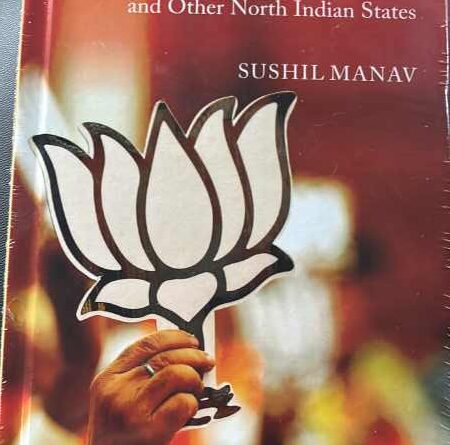
It is often said that history does not explain itself — it must be interpreted through well-researched ground realities. Sushil Manav’s recently published book, Beyond Dynasties: Bharatiya Janata Party’s Transformative Surge in Haryana and Other Northern Indian States, does precisely that. Written in a lucid, accessible style and grounded in substantive research, it is a compelling read. Unlike earlier works on Haryana’s politics — which tended to be predominantly anecdotal — Manav probes the undercurrents that quietly transformed the contours of the state’s political landscape. This intellectual rigour and academic objectivity place the book in an altogether different genre.
The book primarily examines the BJP’s transformative surge in Haryana, while also drawing on developments in Delhi, Uttarakhand, and Uttar Pradesh to lend broader context and sharper clarity to its central arguments about Haryana.
Over four decades of journalistic experience, Sushil Manav has acquainted himself intimately with the state’s complex socio-political tapestry. The BJP’s stunning victory in the 2024 Haryana Assembly Elections appears to have inspired — or perhaps provoked — him to delve deep into this remarkable phenomenon. He delineates what he witnessed in a storytelling manner, with the candour and honesty characteristic of a seasoned journalist.
Manav takes the reader on a carefully constructed journey, beginning with an era he aptly terms the age of dynastic fiefdom — a period defined by the politics of power and chaudhar, the dominance of caste identities, defections, patronage, favouritism, and attendant political vices. Bereft of any ideological anchor, the political ship of Haryana drifted through several stormy upheavals that bled and bruised its polity until 2014. He then traces how the new dispensation repaired, reformed, and redefined Haryana’s political landscape through three core pillars: transparent governance, social engineering, and strategically adaptive electoral campaigns. He examines the processes that brought about a perceptible shift from transactional politics to transformational politics in the state.
The book also identifies the deep-seated challenges confronting this new political order and explores the conditions necessary for its sustenance and stability. Haryana’s success in dismantling entrenched dynastic politics, the author argues, offers a potent model for other regions grappling with similar challenges.
“The state, once a microcosm of traditional Indian politics, has now become a laboratory for its future,” the book concludes — a fitting epitaph for a political transformation still very much in the making.
(The writer of this Book Review is a retired officer from the Ministry of Parliamentary Affairs, Government of India)