NewsArc Explainer: Why Dharmendra Pradhan Is Unlikely to Resign Despite India’s Exam Scandal Crisis
From NEET paper leaks to CBSE marking failures, India’s education system is under fire — but history and politics suggest the minister’s chair is safe
By NewsArc Bureau
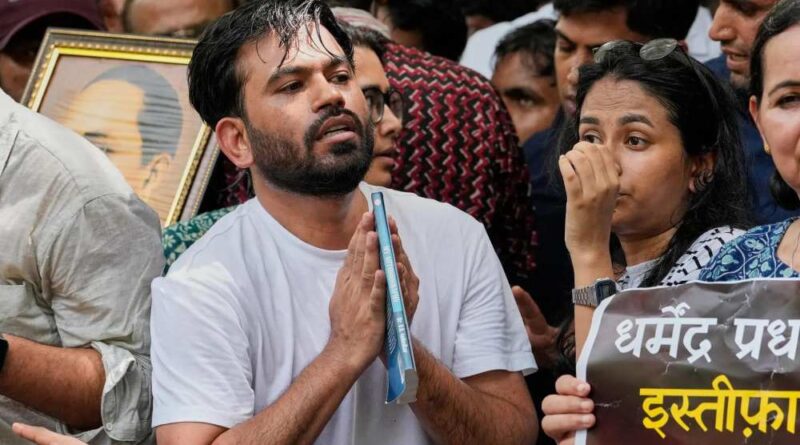
India’s streets are restless. At Jantar Mantar on June 6, the Cockroach Janata Party — a protest collective — held what it called its first ground-level demonstration, with a single demand: Education Minister Dharmendra Pradhan must resign.
Five weeks have passed since the NEET 2026 paper leak scandal broke. Three weeks since the CBSE Class 12 on-screen marking controversy erupted. Opposition parties have sustained their calls for Pradhan’s removal. Five students, according to protesters, have died by suicide in the aftermath of the exam crises. Yet political analysts and senior journalists who track the Modi government closely say one thing with near unanimity: the resignation is not coming.
Here is why.
THE PATTERN: BJP GOVERNMENTS DON’T DO RESIGNATIONS
The unwritten rule was stated plainly back in June 2015 by Home Minister Rajnath Singh, when opposition demands were mounting for the resignations of External Affairs Minister Sushma Swaraj and Rajasthan Chief Minister Vasundhara Raje over the Lalit Modi controversy. Singh said bluntly: “No, no — ministers don’t resign in this government. This is the NDA government, not the UPA government.”
That statement has effectively become standing policy.
Political analyst Rashid Kidwai notes that the only exception in the entire Modi era was MJ Akbar, who stepped down as Minister of State for External Affairs in 2018 amid the #MeToo movement. Every other demand for a ministerial resignation — regardless of the controversy — has been rebuffed.
Senior journalist Neerja Chaudhary draws the contrast with the UPA era, when ministers including Ashok Chavan were forced to quit under pressure. “The Modi government takes its lessons from exactly that experience,” she says. “Their strategy and conviction is: we will do what we need to do.”
THE LOGIC: A RESIGNATION MEANS ADMITTING A MISTAKE
Rashid Kidwai puts the political calculus plainly. If the government asks Pradhan to resign, it signals that the government was at fault. That is a message the Modi administration is structurally resistant to sending.
“The government does not want to show, in any manner, that it accepted the resignation of a minister because of pressure or accusations,” Kidwai says. “Right now, the pressure on the government is not that overwhelming either.”
Senior journalist Ajay Singh reinforces the point: appointments are not made on demand, and resignations do not happen on demand. The equation changes only if an investigative agency formally levels charges — not the opposition, not the street.
THE MAN: PRADHAN IS TOO VALUABLE TO SACRIFICE
Dharmendra Pradhan has been a cabinet minister since the first Modi government took office in May 2014. He handled the Petroleum, Skill Development and Steel ministries before becoming Education Minister in July 2021.
His most consequential achievement was the Pradhan Mantri Ujjwala Yojana, the flagship free LPG connection scheme for women from poor households, implemented under his watch as Petroleum Minister. With over 10.55 crore connections distributed, it built him a durable reputation as a delivery-oriented leader.
He also supervised the implementation of the New Education Policy 2020, another of PM Modi’s flagship projects. Insiders consider him close to the Prime Minister’s Office and to the BJP’s top leadership.
His profile is notably low-key — serious, non-controversial in manner, distant from media spectacle. He has also played significant organisational roles in state elections from Uttarakhand to Odisha to Bihar. He is not a minister the party can easily replace or afford to throw under the bus.
THE COUNTER-NARRATIVE: FIX THE SYSTEM, NOT THE MINISTER
Rather than conceding political ground, the government has moved to construct a reform narrative. The steps taken are substantial in number if not yet in outcome.
In the NEET 2026 case, the CBI along with the Rajasthan SOG and state police forces are investigating. Thirteen arrests have been made, including two members of NTA’s own paper-setting committee — a biology lecturer and a chemistry professor from Pune. The May 3 examination has been cancelled and is scheduled to be re-held on June 21, with the Army and Air Force involved in the logistics of question paper transportation and delivery. The PMO and Defence Ministry are jointly overseeing the re-examination.
On the CBSE on-screen marking (OSM) controversy — where the pass percentage dropped from 88.39% to 85.2% and over four lakh students applied for re-evaluation — the board’s Chairman Rahul Singh and Secretary Himanshu Gupta have been removed. A probe committee has been formed under S. Radha Chauhan of the Capacity Building Commission, with a one-month deadline for its report. IIT Madras and IIT Kanpur have been brought in to address security vulnerabilities in the CBSE portal.
On May 28, Pradhan himself publicly accepted responsibility for lapses in scanning approximately 98 lakh answer scripts of 17 lakh students.
THE SCORECARD: FIVE EXAM FAILURES ON PRADHAN’S WATCH
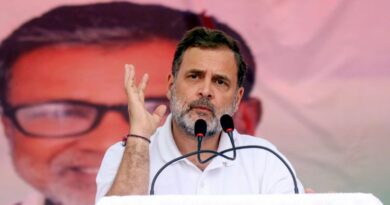
Opposition leader Rahul Gandhi has said no examination has been conducted honestly under this minister, claiming one crore children have been affected. The record during Pradhan’s tenure is difficult to defend:
NEET 2024: Over 24 lakh students appeared. Results showed 67 students scored a perfect 720 out of 720, including six from the same centre in Jhajjar, Haryana. The Supreme Court confirmed the paper leak was undeniable. The CBI arrested the mastermind. NTA was stripped of recruitment exam responsibilities.
UGC NET 2024: The paper appeared for sale on Telegram at five to six lakh rupees on the day of the exam itself. The exam was cancelled, referred to the CBI, and re-held in computer-based format. The CBI’s closure report, however, found no conclusive evidence of a leak.
NEET 2026: Three NTA insiders from Pune — a retired chemistry lecturer, a biology teacher, and a physics teacher — are alleged to have prepared a “guess paper” from the actual question paper, which was sold for up to 15 lakh rupees and circulated openly on WhatsApp and Telegram.
CBSE 12th OSM Controversy: CBSE used on-screen marking technology for the first time, awarding the contract to Hyderabad-based Coampt Edutech. The company, formerly known as Globarena Technologies, had faced allegations of marking irregularities in Telangana’s Class 12 exams in 2019, when over three lakh out of 9.74 lakh students failed. Opposition parties alleged that rules were diluted to give Coampt the contract, bypassing stronger contenders like TCS, and raised questions about a personal connection between the company’s director and the minister’s family.
THE BOTTOM LINE
The political architecture of the Modi government makes a voluntary ministerial resignation structurally improbable — independent of the scale of the controversy. The government’s bet is that systemic reform, administrative accountability at the bureaucratic level, and the passage of time will defuse the pressure. Whether 22.79 lakh students who sat a compromised exam and crores more whose board results are in question will accept that answer is a different matter entirely.
PULL QUOTE: “If the government accepts Pradhan’s resignation, it signals that the government was at fault. But in the Modi government, this is very unlikely — the pressure is not yet that overwhelming.” — Political analyst Rashid Kidwai