Eight IAS Officers Face CBI Scrutiny in Haryana’s Rs 645-Crore Bank Heist That Fooled Half a Dozen Government Departments
A brazen conspiracy hatched inside a Chandigarh bank branch — using shell companies, fake investment documents, and cash-for-gold laundering — has now ensnared some of Haryana’s most senior bureaucrats, with the CBI closing in on eight IAS officers across multiple batches and government portfolios.
What began as a routine account closure request has unravelled into one of Haryana’s most damaging financial scandals in recent memory. The Central Bureau of Investigation is now seeking to formally question eight Indian Administrative Service officers and one Indian Forest Service officer in connection with the Rs 645-crore IDFC First Bank fraud — a scam that drained public money from at least seven government departments and two civic bodies over more than two years.
The Haryana government has cleared the way for the CBI to interrogate five of the eight IAS officers, granting the mandatory statutory sanction under Section 17-A of the Prevention of Corruption Act. A fresh application seeking the same clearance for three additional officers was filed by the CBI on Friday. The central government has separately cleared the questioning of an IFS officer who headed one of the bodies that lost public funds.
The Officers in the Crosshairs
The five IAS officers for whom interrogation sanction has already been granted span nearly two decades of administrative experience. They include Vineet Garg (1991 batch), Pankaj Agarwal (2000 batch), Mohammed Shayin (2002 batch), and two officers promoted through the Haryana Civil Services — Pradeep Kumar (2011 batch) and Ram Kumar Singh (2012 batch) — both of whom have been under suspension since 9 April.
The three officers for whom fresh sanction has been sought are Saket Kumar (2005 batch), D.K. Behera (2007 batch) and Mani Ram (2009 batch). In addition, the Centre has cleared the CBI to question Navneet Kumar Srivastava, an IFS officer of the AGMUT cadre (2014 batch), who was serving as Chief Executive Officer of the Chandigarh Renewable Energy and Science and Technology Promotion Society (CREST) — one of the institutions whose accounts were plundered.
A senior Haryana government official told this reporter that the CBI’s interrogation requests are driven by material gathered from the disclosure statements of those already in custody. The central agency needs the officers’ responses to specific details contained in those disclosures before it can advance its investigation further.
All five IAS officers who held portfolios connected to the defrauded departments have since been moved to other assignments. Saket Kumar, who oversaw development, panchayats, cooperation and power generation, has been relieved of all responsibilities. Pankaj Agarwal, formerly principal secretary of irrigation and mining, has been transferred to the architecture department. Vineet Garg — who chaired the Haryana State Pollution Control Board, the single largest victim of the fraud — now heads printing and stationery. Mohammed Shayin has been stripped of public health and finance duties, retaining only housing. D.K. Behera was moved from the Governor’s secretariat to revenue and disaster management.
How the Fraud Was Engineered
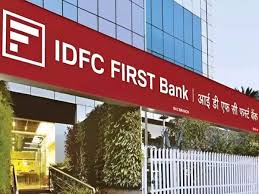
The conspiracy came to light in February when an official in the development and panchayats department tried to shut down a government account and discovered that actual balances bore no resemblance to official records. The discrepancy traced back to the Sector 32 branch of IDFC First Bank in Chandigarh.
IDFC First Bank subsequently disclosed the unauthorised transactions to stock exchanges, acknowledged that its employees had acted in collusion with external parties, and returned Rs 578 crore to the Haryana government — both principal and accrued interest. The state then handed the matter to the CBI. The Enforcement Directorate, pursuing a parallel investigation under the Prevention of Money Laundering Act, later told a special PMLA court in Panchkula that the true scale of the fraud was significantly larger — Rs 645.59 crore in total — and that funds belonging to two private schools in Panchkula had also been misappropriated.
At the heart of the operation was Ribhav Rishi, the branch manager who ran the Sector 32 branch from April 2023 to August 2025. Investigators say Rishi constructed an elaborate illusion: government funds that departments believed had been placed in fixed deposits were never actually invested. Instead, departments received forged Fixed Deposit Receipt documents, while the real money was quietly routed through three shell companies floated in the names of Rishi’s personal assistant, his driver’s wife, his mother and a chartered accountant. The laundered money was then transferred to jewellers, who provided equivalent cash that was distributed further down the chain.
Running a parallel operation at the same branch was relationship manager Abhay Kumar, whose wife’s company — Swastik Desh Projects — received at least Rs 203.50 crore siphoned from multiple accounts, including Rs 70.26 crore from the Haryana State Pollution Control Board, Rs 38.47 crore from Panchkula Municipal Corporation, and Rs 27.46 crore from the Haryana School Shiksha Pariyojna Parishad.
The Scale of Loss
The Haryana State Pollution Control Board suffered the largest loss at Rs 169.27 crore. CREST lost Rs 82.02 crore; Panchkula Municipal Corporation Rs 80 crore; Chandigarh Municipal Corporation Rs 73.50 crore; the Haryana School Shiksha Pariyojna Parishad Rs 53.86 crore; Haryana Power Generation Corporation Limited Rs 50 crore; and the Haryana Labour Welfare Board Rs 50 crore.
A separate but connected fraud of Rs 116.84 crore was subsequently uncovered in the accounts of Chandigarh Smart City Limited — again involving forged FDR documents and again traceable to Rishi. That second scheme only came to light after an employee connected to both cases stopped reporting for work following the exposure of the primary scam.
The Investigative Trail
Fifteen people have so far been arrested, including serving and former government officials. Three accounts officers have been dismissed from service. In a grim footnote to the case, one account officer who had received a CBI notice to appear for questioning died after jumping from the eighth floor of the Haryana Civil Secretariat.
On the evening of 14 May, CBI teams carried out coordinated searches at seven locations across Chandigarh and Panchkula — covering residences of the accused, jewellery showrooms, premises of alleged beneficiaries and private establishments linked to the probe — and seized documents, financial records and digital evidence currently undergoing forensic analysis.
A central question driving the investigation is why so many Panchkula-headquartered government departments chose to open accounts at specific Chandigarh branches of IDFC First Bank and AU Small Finance Bank, in apparent violation of norms requiring public accounts to be maintained at the nearest branch. Investigators suspect a coordinated effort to direct funds toward these particular branches, and audio and digital recordings recovered during the probe reportedly contain conversations implicating senior officials. Forensic analysis of those recordings is ongoing.
The Warning That Went Unheeded
Perhaps the most troubling detail to emerge is that alarm bells had been rung months before the fraud became public. In a letter dated 7 July 2025 — more than half a year before the account-closure attempt that exposed the scam — the Haryana finance department wrote to all department heads, flagging non-compliance with account-opening guidelines and specifically calling out Panchkula offices for opening accounts in Chandigarh without valid justification. Departments were instructed to audit all accounts within a fortnight and submit compliance reports by 30 July 2025. Whether those audits were ever conducted has not been established.