THE COCKROACH UPRISING
How a Supreme Court judge’s contemptuous slur accidentally created India’s most disruptive political movement in years — and why the government’s panicked crackdown may only make it stronger
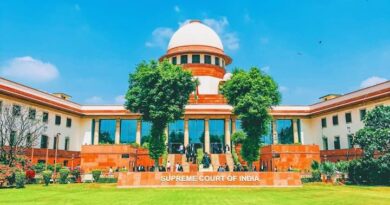
NEW DELHI / MUMBAI, May 24, 2026 — In the annals of political blunders, few have backfired as spectacularly and as swiftly as one judicial aside in a Delhi courtroom. On May 15, 2026, Chief Justice of India Surya Kant, hearing a case about fraudulent professional credentials, made an offhand remark about India’s youth. During the hearing, the CJI made sharp oral observations: “There are already parasites of society who attack the system and you want to join hands with them? There are youngsters like cockroaches, they don’t get any employment, they don’t have any place in profession. Some of them become media, some of them become social media, some of them become RTI activists, some of them become other activists, and they start attacking everyone.”
Within 24 hours, that single word — cockroach — had become the most potent act of political judo in recent Indian memory.
The Spark
A single word spoken from India’s highest bench has done what years of student protests, opposition rallies, and unemployment marches could not: it created a unified, cross-party, cross-caste, pan-India political identity for a generation that had none.
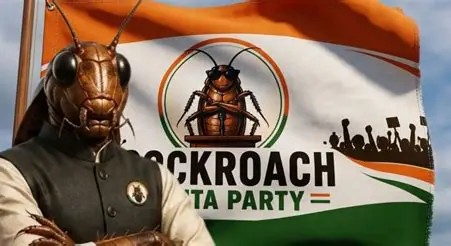
The following day, Abhijeet Dipke announced the launch of a “platform for all the ‘cockroaches’ out there” on X, listing the eligibility criteria as being unemployed, lazy, chronically online, and able to rant professionally. The party’s website went live under the tagline “Voice of the Lazy & Unemployed.”
Dipke is no accidental activist. He is a 30-year-old digital media strategist from Aurangabad, Maharashtra, currently completing a master’s in public relations at Boston University. He previously worked on social media strategy for the Aam Aadmi Party during the 2020 Delhi elections.
The CJI Clarifies — But the Internet Has Already Moved On
On May 16 — the very same day the CJP launched — Chief Justice Surya Kant issued a public clarification, insisting his words had been wrenched out of context. The clarification stated that his comments were directed solely at individuals entering professions such as law with fake or bogus degrees, not at the youth of the country. CJI Surya Kant expressed pain over the misquotation of his remarks by sections of the media.
He rejected the interpretation that his comments were aimed at the youth. “It is totally baseless to suggest that I criticised the youth of our nation,” he said. “What I had specifically criticised were those who have entered professions like the Bar with the aid of fake and bogus degrees. Such persons have sneaked into media, social media, and other noble professions and hence they are like parasites.”
He called Indian youth “the pillars of a developed India,” saying: “It is not an exaggeration to say that Indian youth have great regard and respect for me, and I too see them as the pillars of a developed India.”
The clarification, however, arrived too late to matter — and may have compounded the damage. In the internet ecosystem it entered, it functioned as a second news cycle — a second set of clips, a second round of memes, and a widespread reading that the clarification was damage control rather than correction. The phrase “pillars of a developed India” — which was intended as a compliment — became itself a subject of satirical treatment, juxtaposed against the “cockroach” framing to underline what many viewed as the gap between judicial rhetoric about youth and judicial instinct toward youth.
The controversy resonated with many young Indians grappling with unemployment and limited opportunities, with supporters of the movement arguing that questioning authority through RTIs and public criticism is a democratic right rather than a cause for ridicule.
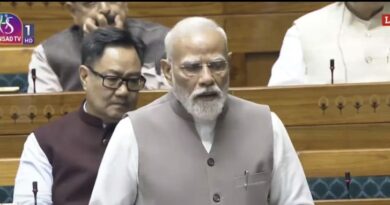
The Wire put the controversy in starker terms. These were not words spoken by a politician at an election rally or by a television anchor in prime-time fury. They were spoken, on the record, by the occupant of the highest judicial office in the Republic of India, the officer constitutionally charged with being the final guardian of every citizen’s dignity.
The Phenomenon
What happened next defied every metric of political mobilisation. Within 78 hours of launch, the Instagram account crossed 3 million followers. It then surpassed 10 million in under five days, overtaking the official handle of the ruling Bharatiya Janata Party. As of May 22, the account displayed over 20 million followers. The movement also crossed 200,000 followers on X, and claims to have registered over 350,000 members through online forms.
The movement was not merely digital theatre. Alongside its online presence, the movement organised offline protests and community service activities. Volunteers dressed in cockroach costumes conducted clean-up drives, including on the Yamuna River, and participated in public demonstrations. In one of the more surreal scenes, activists participated in a cleanliness drive in Kalindi Kunj wearing makeshift cockroach antennae and carrying placards declaring, “I am a cockroach.”
Why It Resonated: The Numbers Behind the Rage
The CJP’s explosive growth is not explained by meme culture alone. It is rooted in a structural economic crisis that India’s political class has long preferred to ignore. While India produces more than eight million graduates a year, the unemployment rate among them stands at 29.1 percent — nine times higher than for those who never attended school. More than a quarter of India’s population is Gen Z, also the biggest such cohort in the world.
The remarks landed in a particularly volatile moment. The CJI’s remark did not emerge in a vacuum. It landed in a specific moment — a month after the NEET UG 2026 examination had to be cancelled and rescheduled following a multi-state paper leak involving WhatsApp-circulated question papers, coaching centre networks, and organised cheating that had compromised the integrity of the country’s most consequential medical entrance examination for 22.79 lakh students.
Though the movement is not registered within the Election Commission of India, it campaigns against broader societal, economic, and political issues affecting the Indian youth, including high graduate unemployment, flaws in the nationwide exam organisation, wealth concentration, and judicial corruption.
The Manifesto: Satire with Substance
The CJP’s politics are sharp beneath the comedy. In its manifesto, the Cockroach Janta Party said it will cancel the licences of “all media houses owned by Ambani and Adani,” referring to two of India’s richest men — Mukesh Ambani and Gautam Adani — who own prominent television channels and are seen as being close to Modi, “to make way for a truly independent media.”
Its motto on X reads: “A political front of the youth, by the youth, for the youth. Secular – Socialist – Democratic – Lazy.” The movement has even attracted institutional political figures. Among those who signed up are political heavyweights, including Mahua Moitra, an opposition parliamentarian from West Bengal state, and Kirti Azad, a former parliamentarian.
Most significantly, the movement began exploring whether to field a candidate in Bihar’s upcoming Bankipur Assembly by-election — a sign that what started as a joke may be moving toward genuine electoral ambition.
The Crackdown: Swatting the Cockroaches
The government’s response has been swift — and, critics argue, deeply self-defeating. The primary online platforms of the satirical political front were restricted following directives from the Ministry of Electronics and Information Technology (MeitY) on May 21, 2026, citing national security concerns.
According to X, the original CJP account, “CJP_2029”, was withheld in India in response to a legal demand. After the account was blocked, a new one was made named “@cockroachisback,” which already garnered nearly 200,000 followers.
The CJP’s Instagram page had attracted more than 22 million followers since it was launched before action was taken. Dipke said his personal Instagram account had also been hacked, as well as the Instagram account of the CJP.
The enforcement drive has sparked sharp political polarisation. Major opposition leaders and public figures, such as Congress MP Shashi Tharoor, have openly criticised the government’s block, calling it an unnecessary restriction on democratic satire and public sentiment. The BJP attempted its own counter-narrative: BJP president Rajeev Chandrasekhar claimed that the emerging CJP trend on social media was part of a cross-border “influence operation” aimed at destabilising India.
What It Means: A Generational Reckoning
The CJI’s clarification, the government’s ban, and the BJP’s conspiracy framing have collectively failed to achieve one thing: making the cockroach go away. If anything, each countermove has validated the movement’s central thesis — that the establishment treats dissent as infestation, not as democracy.
The party’s founder Dipke told the Associated Press that “five years ago, nobody was ready to speak up against Modi or the government,” adding that the times are now “changing.”
“The chief justice’s comments reflected deep-rooted prejudice and antipathy towards activists and youth in general,” said Prashant Bhushan, a prominent Supreme Court lawyer and rights activist. “People are finally asking questions and demanding accountability.”
As one observer noted, there is an irony in the choice of insect: “Cockroaches are resilient; they survive.” In trying to crush the movement, India’s establishment may have proved the metaphor correct. The clarification did not erase the original remark. The bans did not silence the accounts. The harder the boot comes down, the more the cockroaches scatter — and multiply.