Haryana notifies rules for private coaching centres — registration mandatory, ₹10,000 fee, no classes during school hours
New rules under the 2024 Act make police verification of staff, fire safety certificates and display of fee structure compulsory for every coaching institute in the state; three-year registration to cost ₹10,000, annual renewal ₹5,000
Newsarc Bureau
Chandigarh: Every coaching centre in Haryana — from small-town tuition shops to sprawling exam-prep chains — will now have to register with the district administration, submit to police verification of its staff, and post its fee structure on a public notice board, according to rules notified by the state government this week.
The Haryana Private Coaching Institutes (Registration and Regulation) Rules, 2026, framed under the Haryana Registration and Regulation of Private Coaching Institutes Act, 2024, were notified by Additional Chief Secretary Apoorva Kumar Singh on 24 August. They come into force from the date of publication in the official gazette.
Under the rules, every private coaching institute — whether set up before or after the parent Act came into force — must apply online to the concerned district authority, along with a registration fee of ₹10,000. The district authority has 30 days to scrutinise the application. If papers are incomplete, the institute gets 10 days to fix the deficiencies.
A satisfied district authority will issue a registration certificate valid for three years. Renewal, due a month before expiry, will cost ₹5,000 and be valid for a year, with the district authority again required to act within a tighter window — 10 days to flag defects, one month to issue the renewed certificate.
The rules spell out, in granular detail, what an applicant must disclose and provide. The application form asks for the coaching centre’s courses and curriculum, number and capacity of classrooms, maximum students permitted per batch, and the educational qualifications and biodata of every teacher, counsellor and non-teaching staff member.
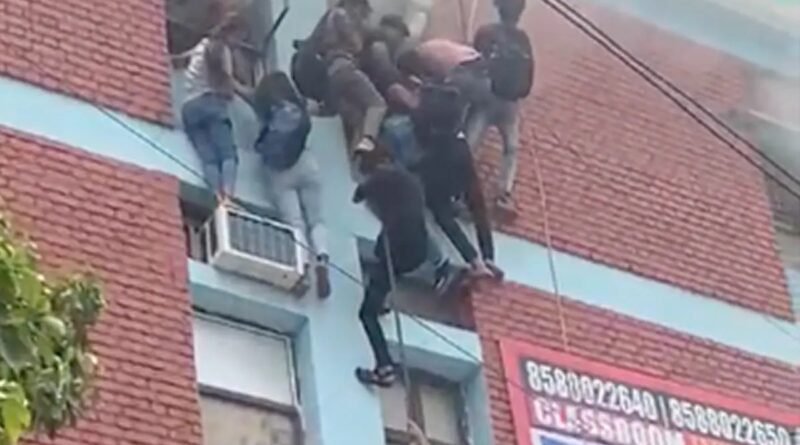
Infrastructure gets equal scrutiny. The form asks whether the centre has furniture, lighting, drinking water, separate toilets for men and women, fire safety measures, first aid, parking, a library, Wi-Fi, a smart board, a computer lab, a hostel and a canteen. It must also declare whether the building is barrier-free for students with disabilities, whether it holds a fire safety certificate and a structural stability certificate from the competent authority, and — pointedly — whether the character and antecedents of every staff member have been verified by the police.
Proprietors will have to swear an affidavit binding themselves to strict conduct rules. They can call themselves only a “registered coaching institute” — the words “recognised” or “approved” are barred from any signboard, prospectus or communication. Coaching classes cannot be held for school or college students during their regular school or college hours. Tutor qualifications, class timetables, fee structure and general information must be displayed both on the institute’s website and on a notice board at a prominent place on the premises.
No one convicted of an offence involving moral turpitude can be employed as a tutor, and any change in teaching staff must be reported to the district authority immediately. Proprietors must also declare that no disciplinary or legal proceedings are pending against them.
Every registered institute will further be required to maintain — and upload on its website — detailed records: ownership or rent documents for its premises, total built-up area, batch-wise enrolment with registration forms, student details including contact numbers and the schools they attend, course fees and refund policy in case a student drops out, tutor credentials, class timetables, a list of students who took the coaching and how many succeeded, hostel fee details where applicable, the grievance-redressal mechanism for students and staff, and annual accounts audited by a chartered accountant.
The rules give the district authority sweeping access — it can call for any other record from the institute “from time to time.”
The move brings Haryana in line with a national push to regulate the coaching industry after a string of student suicides and fire-safety lapses at coaching hubs elsewhere in the country prompted the Centre to issue guidelines in 2024.