Delhi HC declines to shift Sonam Wangchuk to private hospital, backs government’s decision to hospitalise him
Court says activist did not check himself into hospital voluntarily despite deteriorating health; Centre directed to respond to Gitanjali Angmo’s plea within three days
NewsArc Bureau | New Delhi
The Delhi High Court on Sunday declined to order the transfer of activist Sonam Wangchuk from Safdarjung Hospital to a private facility of his choosing, in an interim order passed during a special weekend hearing on a petition filed by his wife, Dr Gitanjali Angmo.
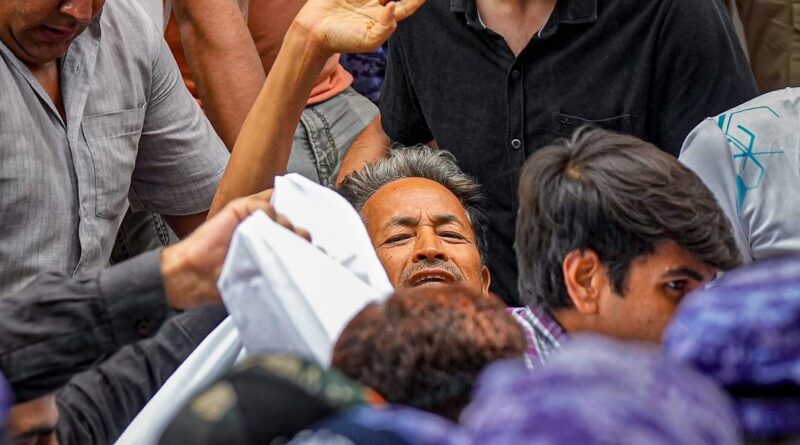
Justice Mini Pushkarna, hearing the matter, held that the government’s move to shift Wangchuk to hospital from his hunger-strike site at Jantar Mantar could not be termed arbitrary, noting that he had not admitted himself to any facility on his own despite his worsening condition. No coercive medical steps appeared to have been taken against him, the court observed, pointing out that he had consented to ORS without sugar and to potassium chloride tablets.
WHAT THE COURT SAID
The bench also took note of the Centre’s submission that Angmo and Wangchuk’s brother had been allowed to meet him and given a separate room at the hospital, and concluded that no interim relief was warranted at this stage. Notice was issued to the respondents, with the Centre asked to file its reply within three days.
A request by the Additional Solicitor General to record that doctors could take any intervention necessary to save Wangchuk’s life drew objections from Senior Advocate Kapil Sibal, representing the activist, who argued this could be read as permitting forced treatment. After back-and-forth in court, the judge settled on language stating that any decision on his medical condition would be taken by the treating medical team as per protocol.
ARGUMENTS IN COURT
Sibal told the bench that after the high court’s July 16 order, Wangchuk was taken to Safdarjung Hospital on July 18 and that his lawyers and doctors had since been denied access to him. He argued that since no case had been registered against Wangchuk and he was not in detention, he ought to be free to choose his hospital, adding that Medanta had agreed to admit him.
Appearing for the Centre, Additional Solicitor General Chetan Sharma said Wangchuk’s health had deteriorated sharply after an 18-day fast, prompting the police action, and that his treatment was being overseen by doctors from both Safdarjung and AIIMS. He urged the family to trust the government doctors treating him.
A doctor from AIIMS’s emergency medicine department, who has been monitoring Wangchuk, told the court that he had begun taking ORS and potassium tablets orally but had refused intravenous fluids. Several of his parameters, including potassium and sodium levels, were described as borderline, with his body showing signs of ketosis.
Sibal countered that Wangchuk had previously fasted for 35 days in Ladakh without complication, and that he wished to recover in surroundings of his choosing, with access to family and lawyers. Angmo, present in court, alleged that a potassium reading cited by the hospital as dangerously low was contradicted by an independent lab test after the hospital delayed releasing a blood sample for over ten hours.
THE PETITION
Angmo’s writ petition describes Wangchuk’s hospitalisation as an illegal and unconstitutional confinement carried out under the cover of medical necessity, after he was removed from his hunger strike protesting alleged irregularities in the NEET-UG examination and demanding the Union Education Minister’s resignation. It seeks his discharge, transfer to a hospital of the family’s choosing, full and continuous disclosure of medical records, unhindered access for his lawyers and doctors, and a bar on any treatment being administered without his informed consent.
The plea contends that no FIR, arrest order or detention order exists to justify holding Wangchuk at Safdarjung, and argues that an adult citizen retains the right to bodily autonomy and to refuse medical treatment, a right it says cannot be overridden by an order passed without notice to him.
The matter will be heard further after the Centre files its response.