
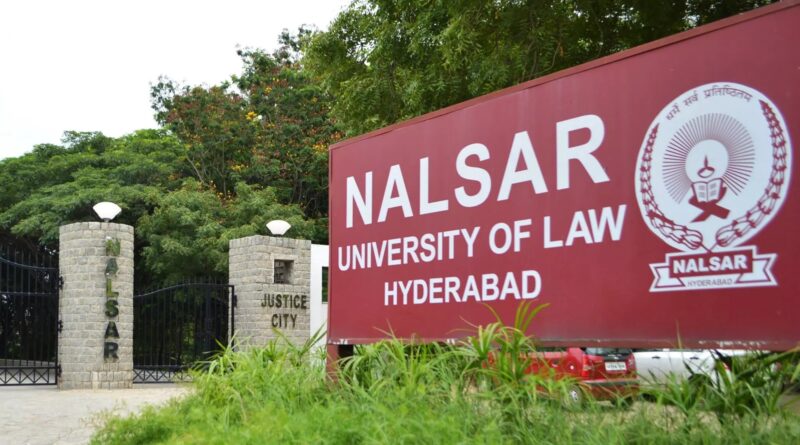
Bar Council of India chief’s NALSAR row: How a CJI convocation invite snowballed into an apology
A protest over Chief Justice Surya Kant’s convocation invite triggered an enrolment ban, a backlash from two premier law schools, and an eventual climbdown by BCI chairperson Manan Kumar Mishra
NewsArc Bureau, New Delhi
A controversy that began with a student protest at NALSAR University of Law over the invitation extended to Chief Justice of India Surya Kant for its convocation has ended, for now, with an apology from Bar Council of India (BCI) chairperson Manan Kumar Mishra, after a week of escalating friction between the regulator, students, and the legal academic community.
WHAT SPARKED THE ROW
A section of NALSAR students objected to CJI Surya Kant being invited as the convocation guest, launching an internal campaign against the invite. In response, Mishra, in his capacity as BCI Chairman, wrote to the university announcing that no graduate from NALSAR’s 2026 batch would be enrolled as an advocate. He also sought an inquiry report from the Vice Chancellor identifying everyone linked to the protest campaign, and used terms such as “groupism” and “dirty politics” to describe it, while suggesting faculty may have “misled” or “instigated” students.
STUDENTS PUSH BACK
The Student Bar Council of NALSAR issued a strong statement condemning the letter, arguing that Mishra’s directive fell outside the BCI’s statutory functions and amounted to an intrusive attempt to identify and surveil students, alumni, and faculty involved in a peaceful, lawful protest. The Council said invoking Section 49 of the Advocates Act, 1961 could not justify such a demand, and accused the BCI chief of reviving an “anti-national” framing that denies students ownership of their political views. It pointed to Mishra’s position as a sitting Rajya Sabha MP on a BJP ticket as relevant context, and demanded an unconditional apology, asserting that even the Supreme Court and the CJI are not beyond legitimate public scrutiny in a democracy.
Students and alumni of the National Law School of India University (NLSIU), Bengaluru — where Mishra was also scheduled to attend a convocation — separately condemned the BCI’s action and objected to his participation in their ceremony.
THE WITHDRAWAL AND APOLOGY
Facing sustained backlash, Mishra withdrew the blanket enrolment ban on NALSAR’s 2026 batch, but continued to draw criticism over how the decision was originally taken and the language used against the students. On Independence Day, he issued a three-page letter expressing regret, stating that if his words or communications had hurt the sentiments of law students, he “sincerely” apologised. The letter did not name NALSAR or refer directly to the dispute, but addressed the broader question of student participation in convocations, saying no student should be compelled to attend or to abstain, and that such choices must rest with students themselves. He described the bond between the judiciary, the Bar, universities, and law students as one that runs deeper than any single controversy, calling for dialogue, mutual respect, and a resolution free of “outside influence.”
WHY IT MATTERS
The episode has reopened debate on the limits of the Bar Council’s regulatory powers over law schools and students’ political expression, and on whether disciplinary or enrolment-related action can be used to respond to dissent within academic institutions. The NALSAR Student Council’s statement cited Supreme Court precedents on the right to lawful dissent under Article 19(1)(a), underlining that the controversy touches on constitutional protections for free expression within legal education.
Rất đáng đọc, cảm ơn tác giả. Công ty Letco cung cấp dịch vụ du học Hàn Quốc trọn gói, tư vấn tận tâm và minh bạch chi phí. Tìm hiểu tại letco.vn.