The Weight of the Robe: India’s Top Judge Burns the Midnight Oil for Justice
Supreme Court Justice MM Sundresh lifts the curtain on the punishing daily grind of Chief Justice Surya Kant, saying the nation’s top judicial post demands far more than most people realise
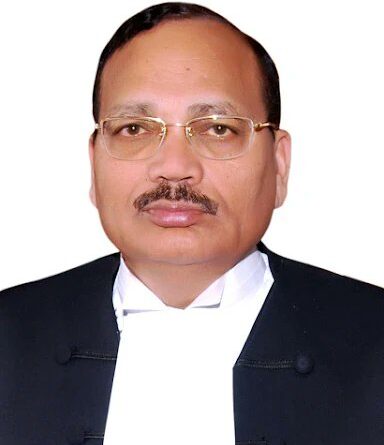
MADURAI, APRIL 20, 2026 — Behind the polished marble of the Supreme Court and the solemnity of constitutional law lies a far more human reality — one of sleepless nights, relentless paperwork, and a daily schedule that would exhaust most. Supreme Court Justice MM Sundresh offered the nation a rare and candid glimpse into that reality on Sunday, revealing that Chief Justice of India (CJI) Surya Kant typically works between 17 and 18 hours a day.
Speaking at the inauguration of new court buildings at the Madurai District Court campus and a guest house for the Madurai Bench of the Madras High Court, Justice Sundresh said the office of the Chief Justice is far from easy. He remarked in Tamil that the CJI retires for the night only around 3 AM and is back on his feet by 7 in the morning — a schedule that leaves barely four hours for rest.
“It is not easy to be the Chief Justice of this great country,” Justice Sundresh stated plainly — words that resonated with the judges and legal professionals gathered at the Madurai event.
CJI Surya Kant was himself present at the event, alongside Supreme Court Justices JK Maheshwari and R Mahadevan, as well as several judges of the Madras High Court.
In his own address at the inauguration, CJI Kant underlined the central role of trial courts within India’s justice architecture, arguing that while constitutional courts define the law, it is the district judiciary that gives it practical meaning in the everyday lives of ordinary citizens.
He also touched on what he called an inseparable link between judicial welfare and the quality of justice itself. The CJI stressed that improving the working conditions of judges and judicial officers is not merely an administrative matter but a core issue tied directly to the standard of justice that citizens receive.
The other dignitaries also used the platform to articulate their vision for a more robust judiciary. Justice JK Maheshwari described justice as a constitutional duty owed to every citizen — not a privilege but an obligation that the system must fulfil with impartiality and fairness, free from any external influence.
Justice R Mahadevan, meanwhile, called for judicial infrastructure to remain dynamic and responsive to society’s evolving needs, pointing out that practical factors such as court locations and transport availability can be decisive in determining whether a litigant even approaches the judiciary in the first place.
A CJI who leads from the front
Justice Sundresh’s remarks are consistent with what has been observed since Justice Surya Kant was sworn in as the 53rd Chief Justice of India on November 24, 2025. Since taking charge, CJI Kant introduced a new listing protocol from December 1, 2025, to fast-track hearings involving personal liberty and matters requiring urgent relief.
He also broke with tradition during the winter break, becoming the first Chief Justice to sit on vacation benches during the shorter winter recess — personally hearing urgent matters involving life, liberty, and pressing judicial intervention.
The Madurai event, with its new courtrooms and judicial guest house, stands as a symbol of exactly the kind of institutional investment that CJI Kant has championed — ensuring that justice is not only dispensed from the top, but felt at the grassroots level where most Indians first encounter the law.