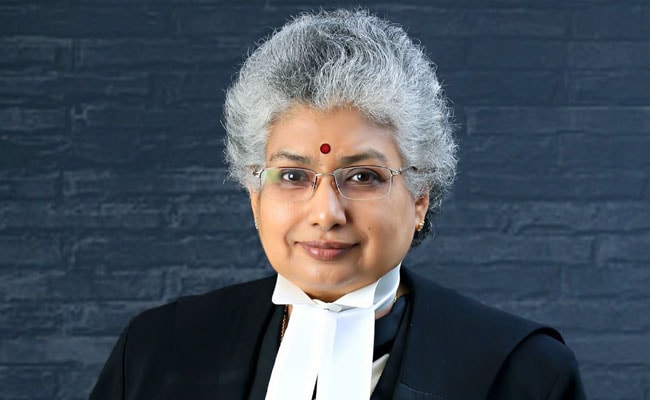
‘Weed Out the Corrupt’: Justice Nagarathna Demands Zero Tolerance for Greed in the Judiciary
Supreme Court judge delivers a sharp call to action at Bengaluru conference, warning that ethically compromised judges have no place on the Bench — and flags rising dangers of AI in courtrooms
BENGALURU, April 19, 2026 — In a hard-hitting address that sent a clear message to judicial officers across the country, Supreme Court Justice B.V. Nagarathna on Saturday declared that judges who succumb to greed and temptation must be removed from the judicial system without hesitation, stressing that a corrupt decision stains not just the individual judge, but the entire institution of justice.
Speaking at the 22nd Biennial State Level Conference of Judicial Officers in Bengaluru — themed “Reimagining the Judiciary in the Era of Artificial Intelligence” — Justice Nagarathna said that salaries and allowances for judges in the district judiciary have seen adequate increases following the acceptance of the 2nd National Judicial Pay Commission’s recommendations by the Supreme Court. With financial concerns thus addressed, she argued, there remains no justification for ethical lapses.
“Judges who are unable to live within their known sources of income and fall prey to greed and temptation must be weeded out of the system. I must add that judges must be free from external pressures — or from their colleagues,” she said, before adding pointedly: “They must develop courage and independence. There cannot be any ‘coordination’ in decision-making. A tainted decision by a judge is a black mark on the judge and on the Judiciary itself.”
Justice Nagarathna also turned her attention to the growing role of Artificial Intelligence in legal proceedings, sounding a note of caution. She drew from her own experience to flag concerns about fake case laws being cited by lawyers due to blind reliance on AI, noting that there had already been instances where AI produced incorrect or entirely fabricated case law citations — even before her own Bench at the Supreme Court.
One such case cited was titled “Mercy vs. Mankind” — a case that simply did not exist. In another instance, a quote attributed to a Supreme Court judgment was found to be absent from the ruling itself.
While acknowledging that AI can assist in areas such as case filing, scrutiny, listing, transcription, and legal research, Justice Nagarathna underscored that it must remain a facilitative tool and cannot substitute human adjudication.
On the question of institutional fairness, she called for a fair, transparent, and responsive administration by High Courts, particularly regarding promotions, postings, and transfers under Article 235, stressing that no judicial officer must feel left unsupported due to inaction by High Court registries.
She also called for a holistic approach to ensuring safety, dignity, and enabling work conditions for women judges — requiring not only adequate infrastructure but also robust safeguards against bias and harassment within judicial institutions.
Closing her address, Justice Nagarathna reaffirmed a vision of justice rooted in human values. “The future of justice cannot be shaped by AI, but by judges only — supported by tools, but guided always by constitutional values, rule of law, and commitment to equity and fairness,” she said.
The conference was also attended by Chief Justice of India Surya Kant, Supreme Court Justice Aravind Kumar, Karnataka High Court Chief Justice Vibhu Bakhru, and Karnataka Chief Minister Siddaramaiah, among other dignitaries.